
Nonfiction
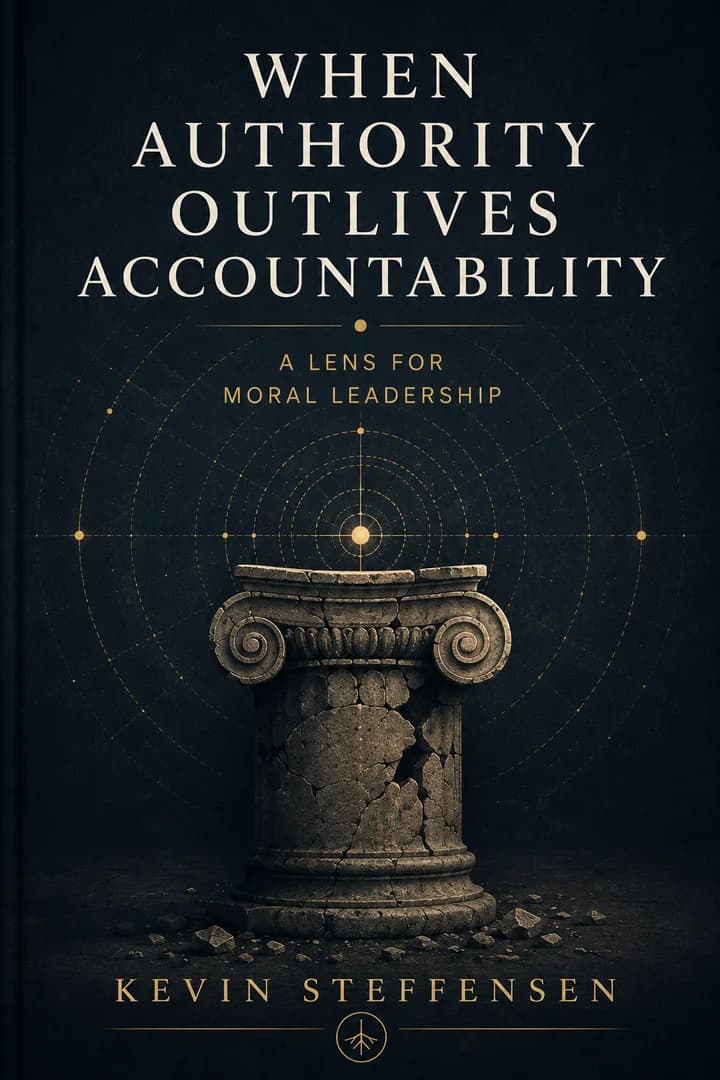
When Authority Outlives Accountability
A Lens for Moral Leadership
By Kevin Steffensen
A leadership lens on how authority can persist after accountability erodes, and what moral leadership requires to restore integrity in that gap.
A leadership lens on how authority can persist after accountability erodes, and what moral leadership requires to restore integrity in that gap.
Offered under open publishing terms (CC BY-SA). Download formats are free where available; purchase links support print editions.
- Type
- Nonfiction · monograph
- Author
- Kevin Steffensen
- Published
- 2026
- Chapters
- 15 chapters
- Formats
- EPUB, PDF, DOCX, Print
On these shelves
Also in Leadership and Authority
View all 6 →
When Others Look to You
Renewal and Erosion in Leadership
When Authority Is Misread
How Communication and Moral Judgment Shape Leadership at Scale
When Accountability No Longer Expires
How Legitimate Authority Learns to Survive Harm
When Moral Seriousness Scales
Judgment Under Distance and Pressure

When Others Become Leaders
What Enduring Influence Leaves Behind

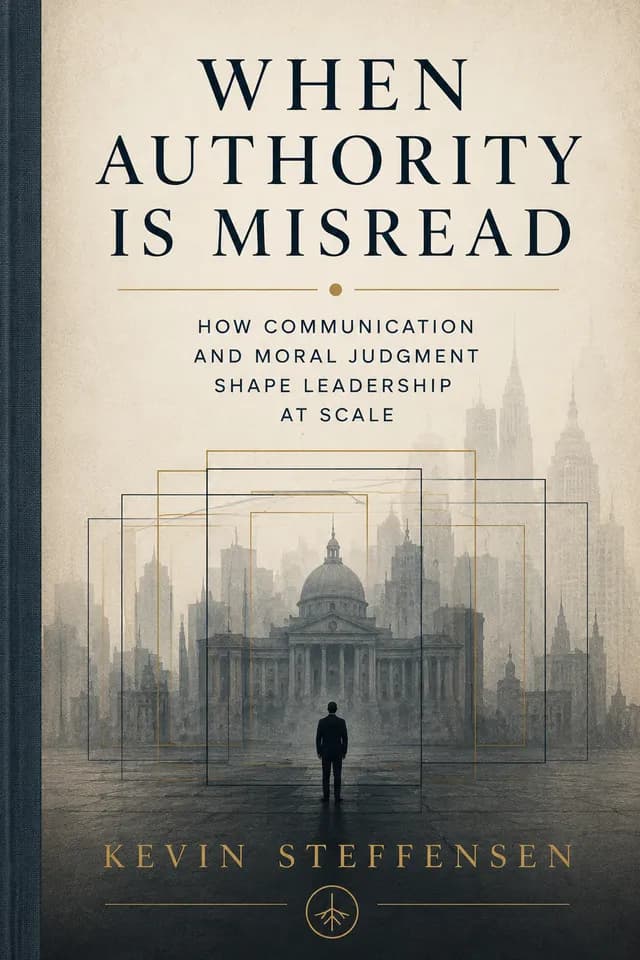
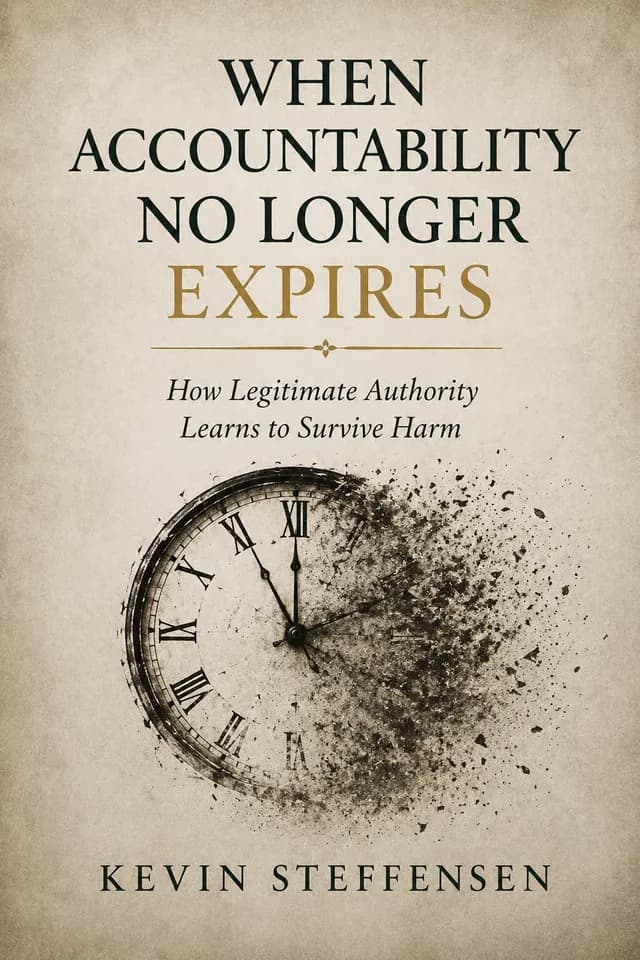
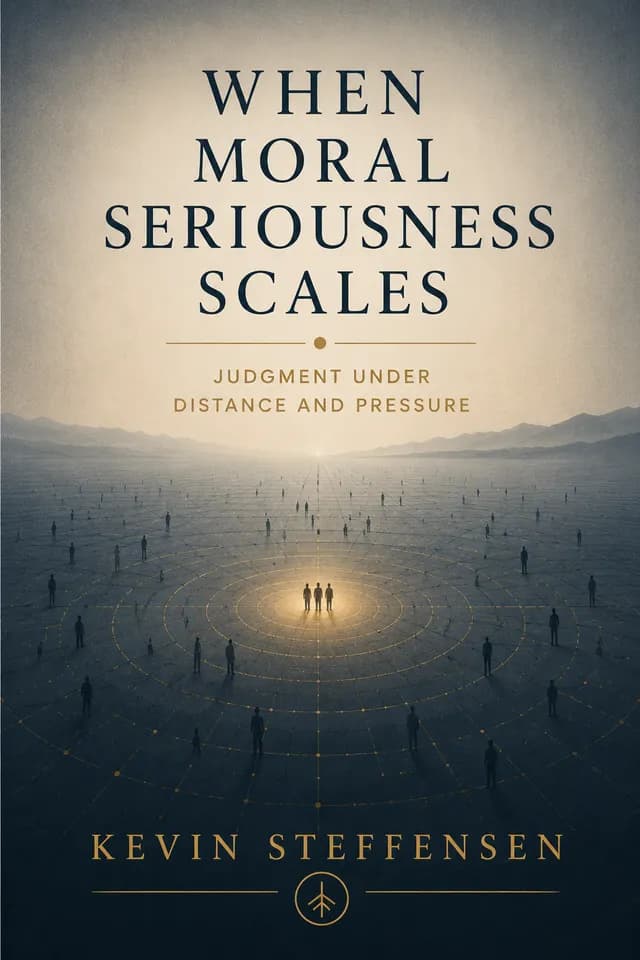
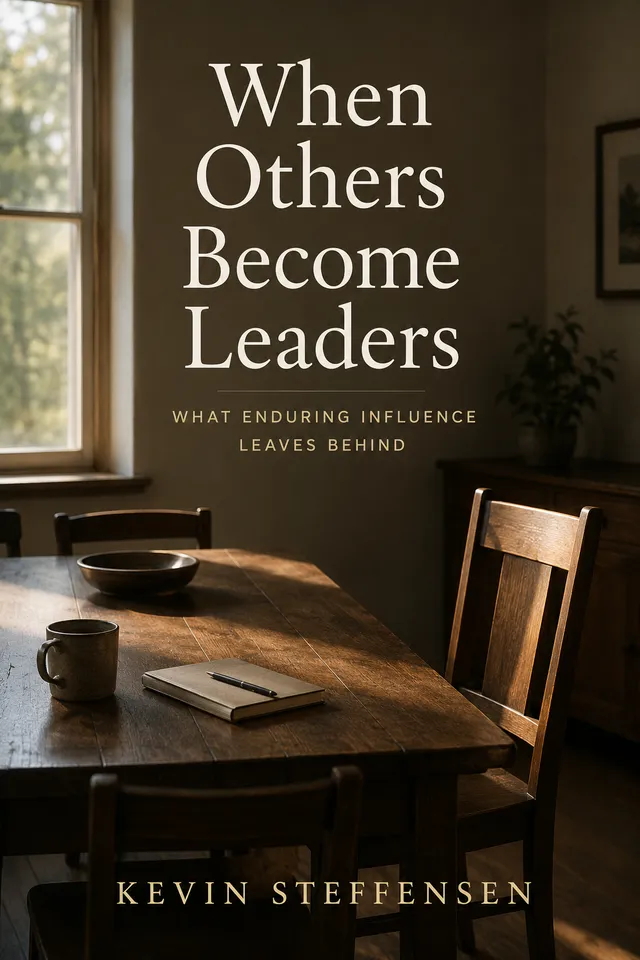
The question this book explores
How do we evaluate leadership when moral posture, effectiveness, and legitimacy over time diverge?
Why this book exists
Praise and blame collapse into ideology when leadership dimensions are treated as one. This book separates moral posture toward harm, effectiveness, and legitimacy transfer so judgment can slow without demanding purity.
Who it is for
Leaders, operators, and readers of institutional ethics who need a diagnostic lens when authority persists after accountability thins.
What it is not
- It is not a ranking of leaders or a formula for success.
- It does not collapse moral restraint into weakness or effectiveness into virtue.
- It is not the institutional endurance book (see When Accountability No Longer Expires).
Central ideas
A curated handful of concepts and patterns this book develops — not the full inventory.
Concept
Moral Posture Toward Harm
Moral posture toward harm asks how a leader handles harm when they have power to choose otherwise
Moral Posture Toward Harm — open concept pageConcept
Effectiveness
Effectiveness names what gets amplified, deferred, or mistaken for control when people look to leadership—not the same as morality or intent. It marks the capacity to produce intended movement, but not the same as goodness, justification, or accountability. Care is expected to visibly matter, responsibility is resisted when results are not steerable, symbolic action stands in for effectiveness. The question effectiveness raises—what good is responsibility without visible improvement? Where is effectiveness demanded as moral proof? What integrity remains when outcomes do not change? Effectiveness can become a trap when it substitutes for presence, when KPIs replace moral contact, when ineffectiveness is read as futility and responsibility is abandoned when results lag. The counterbalance—separate responsibility from visible success, value presence and notice over control, act without effectiveness as moral reassurance.
Effectiveness — open concept pageConcept
Legitimacy Over Time
Legitimacy over time asks what authority was created, transferred, or normalized
Legitimacy Over Time — open concept pageConcept
Authority
Authority names who can coordinate action when full agreement is impossible. It becomes important whenever groups must move before every perspective aligns. It helps preserve direction and collective capacity, but can fail when operational power outruns justified recognition or visible consequence. It differs from legitimacy because authority is the capacity to steer; legitimacy is whether that capacity reads as earned and revisable enough to coordinate trust rather than performative compliance.
Authority — open concept pageConcept
Accountability
Accountability names whether consequence still reaches the people who can respond. It becomes important when scale, narrative, or abstraction thins contact between action and effect. It helps preserve correction and proportionate answerability, but can fail when moral sorting replaces sustained contact with outcomes. It differs from responsibility because accountability emphasizes exposure to consequence; responsibility includes the ongoing obligation to account even when control is partial.
Accountability — open concept pageConcept
Harm
Harm names where cost lands when influence is exercised—who absorbs it, who is kept in view, and what displacement is treated as acceptable. It marks the lived consequence of action, authority, design, or coordination. The visibility dimension matters—who is harmed in particular, not on average? Can they name it? Can they respond? Does the system register it or treat it as acceptable loss? Harm continues while interpretation expands, briefings make harm legible without smaller, people can still tell when something is doing harm. The question harm raises—is harm unchanged outside while we analyze inside? When does naming harm substitute for reducing it? The failure mode—harm persists while moral work feels complete, delays continue after excellent postmortems, harm becomes statistical at scale. The restoration path—return to particular harms and people, check effects outside the room after briefings, stop when outcomes for people are unchanged, pair analysis with named remedy attempts, accept harm as inevitable without abandoning response.
Harm — open concept pagePattern
Admiration Becomes Insulation
Admiration enables trust, imitation, and moral aspiration toward people who seem to carry more than their share of complexity. Heroic narratives stabilize; contradiction becomes hard to absorb without collapsing the story. - Harm is reframed as tradeoff - Context expands selectively around the admired figure - Accountability weakens to preserve narrative coherence - Scrutiny feels like betrayal of belonging The admired person is protected less by trust than by narrative attachment. A leader's harmful call is debated as "what the role required" while proportionate inquiry is treated as disloyalty.
Admiration Becomes Insulation — open pattern pagePattern
Blame Compresses Complexity
Blame can clarify responsibility and acknowledge harm when systems have produced injury someone must answer for. Villain narratives simplify systems into individuals; structural incentives and shared participation disappear. - Emotional resolution arrives faster than understanding - Learning narrows once a face is assigned - Complexity is traded for moral closure - Scale is experienced as someone else's failure Blame offers relief faster than contact with how the field actually produced the outcome. After a failure, the organization fires one manager while the incentives that shaped everyone's choices stay unnamed.
Blame Compresses Complexity — open pattern pagePattern
Leaders Feel the Consequences
A decision creates cost, risk, or gain for people in a group. Where people decide and where costs land can separate. - Incentives favor visible wins over visible cost - In large settings, effects land unevenly - Distance makes harm easier to miss - Pushing pain downhill is easier Those who decide stay tied to what their choices do to others. If we called it, we sit with the fallout. Leaders feel the consequences on this; we're not sliding the pain down a layer.
Leaders Feel the Consequences — open pattern page
Inside this book
How the book is organized — parts, chapters, and what each section investigates.
About 68 min of reading across 15 sections in 3 parts.
Part I — The Three Dimensions
5 sections
Part I — The Three Dimensions
5 sectionsShow summaryHide summary
Leadership morality is read less as character label than as how a leader handles harm when they have power to choose otherwise — where cost is placed, how it is justified, and whether it is treated as unavoidable, regrettable, or useful.
Central questionHow should we evaluate a leader’s moral posture toward harm without collapsing into character praise or blame?
Part II — Integration and Use
5 sections
Part II — Integration and Use
5 sectionsOther sections
5 sections
Other sections
5 sections- Preface2 min
- Acknowledgements2 min
Where it fits
Suggested reading order and nearby volumes — not a mandatory sequence.
Continue exploring
- Next book — When Accountability No Longer Expires
Reading trails featuring this book
Editorial paths that include this book as one stop in a longer sequence.
Full related inventoryShowHide
Complete concept, pattern, and thinker lists for readers who want the full semantic map.
Major concepts
Concept
Adaptability
The capacity of coordinated action to change direction when reality pushes back. Together with scalability, it sorts groups into the four states adaptive, entrenched, regenerative, and stalled, and underpins how renewal and erosion are read.
View Concept →
Concept
Adaptability
The capacity of coordinated action to change direction when reality pushes back. Together with scalability, it sorts groups into the four states adaptive, entrenched, regenerative, and stalled, and underpins how renewal and erosion are read.
Concept
Adaptation
Adaptation marks moral life responding to conditions that will not wait—scarcity, violence, scale, displacement. In Before Certainty Arrives, what begins as adaptation can outlive the pressures that first made it necessary. It helps preserve workable coordination under constraint, but can fail when adaptive tools are mistaken for permanent moral truth. It differs from inheritance because adaptation names responsive change; inheritance names what gets carried forward after conditions shift. It differs from drift because adaptation is active response; drift is gradual decoupling while machinery still runs.
View Concept →
Concept
Adaptation
Adaptation marks moral life responding to conditions that will not wait—scarcity, violence, scale, displacement. In Before Certainty Arrives, what begins as adaptation can outlive the pressures that first made it necessary. It helps preserve workable coordination under constraint, but can fail when adaptive tools are mistaken for permanent moral truth. It differs from inheritance because adaptation names responsive change; inheritance names what gets carried forward after conditions shift. It differs from drift because adaptation is active response; drift is gradual decoupling while machinery still runs.
Concept
Authority
Authority names who can coordinate action when full agreement is impossible. It becomes important whenever groups must move before every perspective aligns. It helps preserve direction and collective capacity, but can fail when operational power outruns justified recognition or visible consequence. It differs from legitimacy because authority is the capacity to steer; legitimacy is whether that capacity reads as earned and revisable enough to coordinate trust rather than performative compliance.
View Concept →
Concept
Authority
Authority names who can coordinate action when full agreement is impossible. It becomes important whenever groups must move before every perspective aligns. It helps preserve direction and collective capacity, but can fail when operational power outruns justified recognition or visible consequence. It differs from legitimacy because authority is the capacity to steer; legitimacy is whether that capacity reads as earned and revisable enough to coordinate trust rather than performative compliance.
Concept
Bureaucracy
Bureaucracy extends permanence into practice—rules replacing discretion, procedures replacing judgment, roles replacing relationships. At industrial scale it functions as moral infrastructure, coordinating strangers through files, stamps, and queues that must still recognize a name long enough for life to continue. Bureaucracy makes expectations visible and portable—the same form, the same stamp, the same queue number tomorrow—so thousands can coordinate without knowing one another's names. The room feels like Tuesday before the first form is stamped; box seven rather than box four determines whether a lease continues. No one feels cruel; no one feels fully responsible either. Bureaucracy coordinates while meaning quietly thins, systems function without anyone tracing harm, and the machinery keeps its appointments whether or not it still fits the lives it was meant to serve.
View Concept →
Concept
Bureaucracy
Bureaucracy extends permanence into practice—rules replacing discretion, procedures replacing judgment, roles replacing relationships. At industrial scale it functions as moral infrastructure, coordinating strangers through files, stamps, and queues that must still recognize a name long enough for life to continue. Bureaucracy makes expectations visible and portable—the same form, the same stamp, the same queue number tomorrow—so thousands can coordinate without knowing one another's names. The room feels like Tuesday before the first form is stamped; box seven rather than box four determines whether a lease continues. No one feels cruel; no one feels fully responsible either. Bureaucracy coordinates while meaning quietly thins, systems function without anyone tracing harm, and the machinery keeps its appointments whether or not it still fits the lives it was meant to serve.
Concept
Coercion
Coercion names authority maintained through threat or enforcement that strips public interpretation of relevance. Compliance matters; belief does not. Public disagreement functions as self-exposure rather than interpretation, rituals of affirmation substitute for evaluative agreement, and private understanding persists without public consequence. Silence signals uncertainty while visible conformity signals safety. Show trials, denunciations, and orchestrated demonstrations mark the shift—meaning becomes script to enact rather than claim to evaluate. Coercion succeeds when each act of compliance raises the perceived cost for others, when dissent carries not just social cost but extreme risk. At its limit, public interpretation as shared evaluative process disappears, and exposure or reform fail to constrain authority.
View Concept →
Concept
Coercion
Coercion names authority maintained through threat or enforcement that strips public interpretation of relevance. Compliance matters; belief does not. Public disagreement functions as self-exposure rather than interpretation, rituals of affirmation substitute for evaluative agreement, and private understanding persists without public consequence. Silence signals uncertainty while visible conformity signals safety. Show trials, denunciations, and orchestrated demonstrations mark the shift—meaning becomes script to enact rather than claim to evaluate. Coercion succeeds when each act of compliance raises the perceived cost for others, when dissent carries not just social cost but extreme risk. At its limit, public interpretation as shared evaluative process disappears, and exposure or reform fail to constrain authority.
Concept
Contestability
Contestability names the condition where dispute can reopen without threatening shared coherence—where challenge does not mean collapse. It becomes important when legitimacy depends on more than coercion, when correction and revision matter for trust and adaptation. It helps preserve the capacity to learn from reality and adjust to changed conditions, but it thins when authority relocates legitimacy beyond ordinary revision—when sacred framing, canon, or procedure makes questioning feel dangerous. Contestability depends on whether revision feels survivable or indistinguishable from rupture. When small groups operate under mutual visibility, authority can be argued for even after it is obeyed. But under pressure—breakdown, threat, or instability—dissent begins to read as moral failure rather than political disagreement, and the range of acceptable interpretation narrows. Contestability thins while inherited certainty still coordinates; systems can run on compliance long after persuasion fades. It marks the moment just before certainty becomes difficult to question at all.
View Concept →
Concept
Contestability
Contestability names the condition where dispute can reopen without threatening shared coherence—where challenge does not mean collapse. It becomes important when legitimacy depends on more than coercion, when correction and revision matter for trust and adaptation. It helps preserve the capacity to learn from reality and adjust to changed conditions, but it thins when authority relocates legitimacy beyond ordinary revision—when sacred framing, canon, or procedure makes questioning feel dangerous. Contestability depends on whether revision feels survivable or indistinguishable from rupture. When small groups operate under mutual visibility, authority can be argued for even after it is obeyed. But under pressure—breakdown, threat, or instability—dissent begins to read as moral failure rather than political disagreement, and the range of acceptable interpretation narrows. Contestability thins while inherited certainty still coordinates; systems can run on compliance long after persuasion fades. It marks the moment just before certainty becomes difficult to question at all.
Concept
Correction
Correction names the lived work of narrowing the gap between what was assumed and what is actually happening. It becomes important whenever systems, beliefs, or coordination can drift while still feeling operational. It helps preserve shared reality and learning, but can fail when every correction spawns new framing instead of updated contact with conditions. It differs from repair because correction updates belief and behavior; repair addresses damaged standing and trust. It differs from revisability because correction is the act; revisability is the designed capacity to keep correcting.
View Concept →
Concept
Correction
Correction names the lived work of narrowing the gap between what was assumed and what is actually happening. It becomes important whenever systems, beliefs, or coordination can drift while still feeling operational. It helps preserve shared reality and learning, but can fail when every correction spawns new framing instead of updated contact with conditions. It differs from repair because correction updates belief and behavior; repair addresses damaged standing and trust. It differs from revisability because correction is the act; revisability is the designed capacity to keep correcting.
Concept
Distance
Distance names separation between decision and consequence, between action and its effects, between authority and those it governs. It becomes important as coordination extends beyond direct relational encounter—as scale grows and abstraction layers multiply. Distance makes harm harder to trace, feedback slower to arrive, and responsibility harder to locate. It helps coordination reach across space and time, enabling larger and more complex forms of collective action, but it thins the connection between choosers and those who live with the outcomes. As distance opens, action and reflection no longer meet in the same place; decisions travel while bodies receive the consequences; institutions record outcomes in ways that differ from how people experience them. Distance becomes built into the architecture of moral life at scale—not as failure but as structure. The question it raises is: how far does decision travel before consequence is felt? Who can see the full chain between policy and harm? Distance differs from mediation (routing through intermediaries) in that distance is the gap itself, while mediation is what fills or crosses the gap.
View Concept →
Concept
Distance
Distance names separation between decision and consequence, between action and its effects, between authority and those it governs. It becomes important as coordination extends beyond direct relational encounter—as scale grows and abstraction layers multiply. Distance makes harm harder to trace, feedback slower to arrive, and responsibility harder to locate. It helps coordination reach across space and time, enabling larger and more complex forms of collective action, but it thins the connection between choosers and those who live with the outcomes. As distance opens, action and reflection no longer meet in the same place; decisions travel while bodies receive the consequences; institutions record outcomes in ways that differ from how people experience them. Distance becomes built into the architecture of moral life at scale—not as failure but as structure. The question it raises is: how far does decision travel before consequence is felt? Who can see the full chain between policy and harm? Distance differs from mediation (routing through intermediaries) in that distance is the gap itself, while mediation is what fills or crosses the gap.
Concept
Friction
Friction becomes important when speed threatens to bypass discernment—when the pressure for immediate response or continuous flow begins to compress the space where reflection, correction, or challenge might occur. Good friction preserves time and space for deliberation; bad friction is needless obstruction that protects neither coordination nor judgment. Friction can be protective adaptation under real constraint—postponed quarrels when immediate unity matters more than resolving grievance—or it can mark the erosion of judgment when compliance replaces discernment because no one can trace harm in time. Friction thins as scale favors throughput over discernment, as delay begins to read as weakness, and as law or procedure narrows discretion so coordination can persist without constant renegotiation. It differs from contestability in that friction is the slowness itself, while contestability is the capacity to reopen what has been settled.
View Concept →
Concept
Friction
Friction becomes important when speed threatens to bypass discernment—when the pressure for immediate response or continuous flow begins to compress the space where reflection, correction, or challenge might occur. Good friction preserves time and space for deliberation; bad friction is needless obstruction that protects neither coordination nor judgment. Friction can be protective adaptation under real constraint—postponed quarrels when immediate unity matters more than resolving grievance—or it can mark the erosion of judgment when compliance replaces discernment because no one can trace harm in time. Friction thins as scale favors throughput over discernment, as delay begins to read as weakness, and as law or procedure narrows discretion so coordination can persist without constant renegotiation. It differs from contestability in that friction is the slowness itself, while contestability is the capacity to reopen what has been settled.
Concept
Governance Coupling
The degree to which formal oversight structures preserve real consequence return to decision-capable authority. Governance coupling weakens when signal is filtered, delayed, or politically insulated, even if nominal accountability mechanisms still exist.
View Concept →
Concept
Governance Coupling
The degree to which formal oversight structures preserve real consequence return to decision-capable authority. Governance coupling weakens when signal is filtered, delayed, or politically insulated, even if nominal accountability mechanisms still exist.
Concept
Institutional memory
Institutional memory names what organizations retain and transmit across personnel turnover and generational change—protocols shaped by past failure, stories that carry warnings, habits that encode lessons, procedures that prevent forgotten harm from recurring. It becomes important because individuals leave but institutions continue; what is learned must somehow persist in structure rather than only in personal experience. Institutional memory helps organizations avoid repeating costly mistakes, preserve hard-won knowledge, and maintain continuity through transitions. Archives, law, training programs, handoff documents, and cultural stories all serve as institutional memory— distributing cognition across time so that pain can become structure rather than repetition. But institutional memory can also fail by forgetting selectively, by preserving metrics that outlive the problems they measured, by letting ritual replace inquiry, by making success feel like bureaucracy worth cutting. The question institutional memory raises is: what pain did this institution convert into structure, and what did it forget instead? Where does memory strong enough to learn coexist with revision strong enough to unlearn?
View Concept →
Concept
Institutional memory
Institutional memory names what organizations retain and transmit across personnel turnover and generational change—protocols shaped by past failure, stories that carry warnings, habits that encode lessons, procedures that prevent forgotten harm from recurring. It becomes important because individuals leave but institutions continue; what is learned must somehow persist in structure rather than only in personal experience. Institutional memory helps organizations avoid repeating costly mistakes, preserve hard-won knowledge, and maintain continuity through transitions. Archives, law, training programs, handoff documents, and cultural stories all serve as institutional memory— distributing cognition across time so that pain can become structure rather than repetition. But institutional memory can also fail by forgetting selectively, by preserving metrics that outlive the problems they measured, by letting ritual replace inquiry, by making success feel like bureaucracy worth cutting. The question institutional memory raises is: what pain did this institution convert into structure, and what did it forget instead? Where does memory strong enough to learn coexist with revision strong enough to unlearn?
Concept
Interpretation
Interpretation names the ongoing work of deciding what something means enough to coordinate on. It becomes important whenever shared action depends on more than immediate perception—across time, distance, conflict, or institutional scale. It helps preserve continuity between experience and obligation, but can fail when interpretation hardens into category and stops tracking changing conditions. In the authority arc, sacred authority compresses interpretation while writing and law later externalize it so disputes can be settled without shared presence. It differs from private understanding because interpretation must be able to coordinate judgment or contest authority in shared space; it differs from meaning because interpretation is the active reconstruction, not only what gets stabilized.
View Concept →
Concept
Interpretation
Interpretation names the ongoing work of deciding what something means enough to coordinate on. It becomes important whenever shared action depends on more than immediate perception—across time, distance, conflict, or institutional scale. It helps preserve continuity between experience and obligation, but can fail when interpretation hardens into category and stops tracking changing conditions. In the authority arc, sacred authority compresses interpretation while writing and law later externalize it so disputes can be settled without shared presence. It differs from private understanding because interpretation must be able to coordinate judgment or contest authority in shared space; it differs from meaning because interpretation is the active reconstruction, not only what gets stabilized.
Concept
Judgment
Judgment names the capacity to decide when understanding is incomplete but harm, coordination, or responsibility will not wait. It becomes important whenever action must proceed under partial information and real consequence. It helps preserve proportionality, answerability, and room for revision, but can fail when judgment hardens into dogma, paralysis, or punitive finality. It differs from certainty because judgment accepts incomplete sight; it differs from preference because judgment weighs consequence beyond taste; it differs from optimization because judgment keeps contestability and human proportion in view; it differs from rule-following because judgment must still respond when rules lag reality.
View Concept →
Concept
Judgment
Judgment names the capacity to decide when understanding is incomplete but harm, coordination, or responsibility will not wait. It becomes important whenever action must proceed under partial information and real consequence. It helps preserve proportionality, answerability, and room for revision, but can fail when judgment hardens into dogma, paralysis, or punitive finality. It differs from certainty because judgment accepts incomplete sight; it differs from preference because judgment weighs consequence beyond taste; it differs from optimization because judgment keeps contestability and human proportion in view; it differs from rule-following because judgment must still respond when rules lag reality.
Concept
Legitimacy
Legitimacy names the standing that lets authority coordinate without constant coercion. It becomes important when scale, abstraction, or time separate decision-makers from lived consequence. It helps preserve trust and willing participation, but can fail when smooth operation is mistaken for moral standing or when scrutiny is treated as disloyalty. It differs from alignment because legitimacy still invites proportionate inquiry; alignment can bind through belonging signals alone.
View Concept →
Concept
Legitimacy
Legitimacy names the standing that lets authority coordinate without constant coercion. It becomes important when scale, abstraction, or time separate decision-makers from lived consequence. It helps preserve trust and willing participation, but can fail when smooth operation is mistaken for moral standing or when scrutiny is treated as disloyalty. It differs from alignment because legitimacy still invites proportionate inquiry; alignment can bind through belonging signals alone.
Concept
Legitimacy Over Time
Legitimacy over time asks what authority was created, transferred, or normalized
View Concept →
Concept
Legitimacy Over Time
Legitimacy over time asks what authority was created, transferred, or normalized
Concept
Moral Posture Toward Harm
Moral posture toward harm asks how a leader handles harm when they have power to choose otherwise
View Concept →
Concept
Moral Posture Toward Harm
Moral posture toward harm asks how a leader handles harm when they have power to choose otherwise
Concept
Public interpretation
Public interpretation names evaluative activity that still connects reasons to standing across boundaries. It becomes important whenever legitimacy depends on more than enforcement or belonging alone. It helps preserve contestability and repair, but can fail when communication intensifies while evaluative space vanishes. It differs from private understanding because public interpretation must be able to matter publicly; it differs from interpretive collapse because collapse is the loss of this shared function, not failed comprehension alone.
View Concept →
Concept
Public interpretation
Public interpretation names evaluative activity that still connects reasons to standing across boundaries. It becomes important whenever legitimacy depends on more than enforcement or belonging alone. It helps preserve contestability and repair, but can fail when communication intensifies while evaluative space vanishes. It differs from private understanding because public interpretation must be able to matter publicly; it differs from interpretive collapse because collapse is the loss of this shared function, not failed comprehension alone.
Concept
Responsibility
Responsibility names what continues after action—the obligation to remain responsive to what one's choices set in motion. It becomes important when systems scale beyond any one person's control but moral weight still accumulates. It helps preserve sustained answerability, but can fail when responsibility collapses into futility or when symbolic gestures replace contact with effects. It differs from accountability because responsibility names the enduring relation; accountability names whether consequence still reaches those who can respond.
View Concept →
Concept
Responsibility
Responsibility names what continues after action—the obligation to remain responsive to what one's choices set in motion. It becomes important when systems scale beyond any one person's control but moral weight still accumulates. It helps preserve sustained answerability, but can fail when responsibility collapses into futility or when symbolic gestures replace contact with effects. It differs from accountability because responsibility names the enduring relation; accountability names whether consequence still reaches those who can respond.
Concept
Thinking
Thinking names reflective interpretation, explanation, and deliberation made possible by enough stability, time, and distance from immediate constraint. It becomes important when coordination is secure enough that action can be accompanied by—or followed by—reflection on why, not only what. Thinking is not detached from action; it is a way of slowing response enough for judgment to form, for alternatives to be considered, for consequences to be imagined before they arrive. It helps preserve discernment, learning, and moral reasoning, but it requires conditions: distance from urgent threat, cognitive and social surplus, shared language for deliberation, and enough stability that questioning does not destabilize survival itself. Under severe pressure, coordinated action may precede explanation—people act together before they renegotiate why, and meaning accumulates later, if at all. Roles can precede reasons when constraint is visible; practices can work before they are explained; certainty can coordinate when explanation is too slow for the problem at hand. Thinking thins when scale or urgency removes the conditions it requires—when no one can trace harm, when managed doubt persists far from those who wait, when compliance replaces judgment because discernment has become too costly. The question thinking raises is: what must hold before there is time to think? Where is thinking a capacity scale has not yet removed? The counterbalance is to notice coordination before explanation without calling early arrangements irrational, to recognize thinking as conditioned by structure rather than absent by nature, and to ask what held long enough to live before asking what is true.
View Concept →
Concept
Thinking
Thinking names reflective interpretation, explanation, and deliberation made possible by enough stability, time, and distance from immediate constraint. It becomes important when coordination is secure enough that action can be accompanied by—or followed by—reflection on why, not only what. Thinking is not detached from action; it is a way of slowing response enough for judgment to form, for alternatives to be considered, for consequences to be imagined before they arrive. It helps preserve discernment, learning, and moral reasoning, but it requires conditions: distance from urgent threat, cognitive and social surplus, shared language for deliberation, and enough stability that questioning does not destabilize survival itself. Under severe pressure, coordinated action may precede explanation—people act together before they renegotiate why, and meaning accumulates later, if at all. Roles can precede reasons when constraint is visible; practices can work before they are explained; certainty can coordinate when explanation is too slow for the problem at hand. Thinking thins when scale or urgency removes the conditions it requires—when no one can trace harm, when managed doubt persists far from those who wait, when compliance replaces judgment because discernment has become too costly. The question thinking raises is: what must hold before there is time to think? Where is thinking a capacity scale has not yet removed? The counterbalance is to notice coordination before explanation without calling early arrangements irrational, to recognize thinking as conditioned by structure rather than absent by nature, and to ask what held long enough to live before asking what is true.
Concept
Trust
Trust names the bridge that lets people act together when no one holds the whole scene. It becomes important when verification must extend beyond firsthand sight—through specialists, records, institutions, or repeated experience. It helps preserve participation across partial perspectives, but can fail when trust stops tracking reality and closure feels safer than checking. It differs from certainty because trust accepts incomplete verification; it differs from blind belief because it still depends on signals that can be tested, strained, or withdrawn.
View Concept →
Concept
Trust
Trust names the bridge that lets people act together when no one holds the whole scene. It becomes important when verification must extend beyond firsthand sight—through specialists, records, institutions, or repeated experience. It helps preserve participation across partial perspectives, but can fail when trust stops tracking reality and closure feels safer than checking. It differs from certainty because trust accepts incomplete verification; it differs from blind belief because it still depends on signals that can be tested, strained, or withdrawn.
Concept
Uncertainty
Uncertainty names the condition moral and social systems are built to navigate—the space where coordination must happen before truth is settled, where lives are fragmented and behavior must hold together under incomplete information. It becomes important because human action cannot wait for perfect knowledge; groups must decide, move, and coordinate even when the future is unclear, when disagreement is costly, when explanation cannot travel fast enough to settle disputes before consequences arrive. Uncertainty is not a problem to eliminate but a condition to navigate—the ground on which moral life operates. Certainty emerges as an adaptive response to uncertainty, compressing ambiguity into stable expectations so action can proceed. But uncertainty itself is neither failure nor freedom; it is the default state that requires coordination tools. The After Certainty project explores how to practice judgment, accountability, and responsiveness inside uncertainty rather than demanding that uncertainty be resolved before moral life can begin. The question uncertainty raises is: what uncertainty is this system trying to reduce? Is ambiguity dangerous because the stakes are genuinely high, or because failure now scales? Uncertainty differs from ignorance in that uncertainty is about incomplete information in contexts requiring action, while ignorance is simply lack of knowledge.
View Concept →
Concept
Uncertainty
Uncertainty names the condition moral and social systems are built to navigate—the space where coordination must happen before truth is settled, where lives are fragmented and behavior must hold together under incomplete information. It becomes important because human action cannot wait for perfect knowledge; groups must decide, move, and coordinate even when the future is unclear, when disagreement is costly, when explanation cannot travel fast enough to settle disputes before consequences arrive. Uncertainty is not a problem to eliminate but a condition to navigate—the ground on which moral life operates. Certainty emerges as an adaptive response to uncertainty, compressing ambiguity into stable expectations so action can proceed. But uncertainty itself is neither failure nor freedom; it is the default state that requires coordination tools. The After Certainty project explores how to practice judgment, accountability, and responsiveness inside uncertainty rather than demanding that uncertainty be resolved before moral life can begin. The question uncertainty raises is: what uncertainty is this system trying to reduce? Is ambiguity dangerous because the stakes are genuinely high, or because failure now scales? Uncertainty differs from ignorance in that uncertainty is about incomplete information in contexts requiring action, while ignorance is simply lack of knowledge.
Concept
Vitality
Vitality names the condition of a group, system, or relationship when adaptability holds—when the work stays open to revision, feedback still works, and mistakes surface before they harden into identity conflicts—whether coordinated reach is already broad or still developing. It becomes important as a measure of organizational health beyond simple functioning; systems can continue operating long after their vitality has drained. Vitality helps preserve adaptability and responsiveness; it keeps groups from becoming brittle, enables learning from error, and maintains the capacity for correction. It depends on people knowing who must decide, how to escalate, and how to repair; on questions and dissent taking time but preventing bigger breaks; on hard news staying speakable and pushback remaining possible without loss of standing. Vitality can fail when meetings speed up by skipping inconvenient signals, when the social cost of speaking rises while vitality language persists, when reach holds but adaptability falls and the group becomes entrenched rather than regenerative. The question vitality raises is: can people still push back without losing their place at the table? Does friction in the room buy smaller failures now instead of compounded harm later?
View Concept →
Concept
Vitality
Vitality names the condition of a group, system, or relationship when adaptability holds—when the work stays open to revision, feedback still works, and mistakes surface before they harden into identity conflicts—whether coordinated reach is already broad or still developing. It becomes important as a measure of organizational health beyond simple functioning; systems can continue operating long after their vitality has drained. Vitality helps preserve adaptability and responsiveness; it keeps groups from becoming brittle, enables learning from error, and maintains the capacity for correction. It depends on people knowing who must decide, how to escalate, and how to repair; on questions and dissent taking time but preventing bigger breaks; on hard news staying speakable and pushback remaining possible without loss of standing. Vitality can fail when meetings speed up by skipping inconvenient signals, when the social cost of speaking rises while vitality language persists, when reach holds but adaptability falls and the group becomes entrenched rather than regenerative. The question vitality raises is: can people still push back without losing their place at the table? Does friction in the room buy smaller failures now instead of compounded harm later?
Major patterns
Supporting · Obscuring
Distance Conceals Consequence
Those with the greatest authority may have the least direct contact with what their decisions produce. - Authority often sits far from effects - Distance makes consequence optional in practice The farther decisions are separated from their effects by time, place, role, abstraction, or organizational layers, the easier it becomes for consequences to disappear.
View Pattern →
Supporting · Obscuring
Distance Conceals Consequence
Those with the greatest authority may have the least direct contact with what their decisions produce. - Authority often sits far from effects - Distance makes consequence optional in practice The farther decisions are separated from their effects by time, place, role, abstraction, or organizational layers, the easier it becomes for consequences to disappear.
Supporting · Corrective
Responsibility Follows Leverage
Collective explanations can dissolve responsibility, while individual blame can conceal unequal power and structural production. - Leverage is uneven - Blame and collectivity can both obscure capacity The greater a person's or institution's capacity to shape outcomes, prevent harm, benefit from a system, or repair consequences, the greater its responsibility.
View Pattern →
Supporting · Corrective
Responsibility Follows Leverage
Collective explanations can dissolve responsibility, while individual blame can conceal unequal power and structural production. - Leverage is uneven - Blame and collectivity can both obscure capacity The greater a person's or institution's capacity to shape outcomes, prevent harm, benefit from a system, or repair consequences, the greater its responsibility.
Related songs
Song
Applause Is an Alibi
Dark cabaret art rock: halo and monster enter on cue while applause and booing pretend to be evidence, until the lighting itself is finally distrusted.
View Song →
Song
Applause Is an Alibi
Dark cabaret art rock: halo and monster enter on cue while applause and booing pretend to be evidence, until the lighting itself is finally distrusted.
Song
Somebody Feels It
Deep roots dub reggae: delayed vocals insist that every cost pushed downstream still lands—somebody, somewhere, carries the rest of the night.
View Song →
Song
Somebody Feels It
Deep roots dub reggae: delayed vocals insist that every cost pushed downstream still lands—somebody, somewhere, carries the rest of the night.
Major thinkers
Person
Albert O Hirschman
Economist and social theorist of exit, voice, and loyalty—how people respond when institutions disappoint.
View Thinker →
Person
Albert O Hirschman
Economist and social theorist of exit, voice, and loyalty—how people respond when institutions disappoint.
Person
Amy C Edmondson
Organizational scholar known for psychological safety, teaming, and learning under uncertainty in high-stakes work.
View Thinker →
Person
Amy C Edmondson
Organizational scholar known for psychological safety, teaming, and learning under uncertainty in high-stakes work.
Person
Brené Brown
Researcher and writer on vulnerability, shame resilience, and courage in leadership and belonging.
View Thinker →
Person
Brené Brown
Researcher and writer on vulnerability, shame resilience, and courage in leadership and belonging.
Person
Charles A. E Goodhart
Economist known for Goodhart's Law—when a measure becomes a target, it ceases to be a good measure.
View Thinker →
Person
Charles A. E Goodhart
Economist known for Goodhart's Law—when a measure becomes a target, it ceases to be a good measure.
Person
Christina Maslach
Researchers of burnout, emotional exhaustion, and organizational conditions that erode care work.
View Thinker →
Person
Christina Maslach
Researchers of burnout, emotional exhaustion, and organizational conditions that erode care work.
Person
Daniel Kahneman
Psychologist of judgment and decision-making—biases, heuristics, and noise in expert choice.
View Thinker →
Person
Daniel Kahneman
Psychologist of judgment and decision-making—biases, heuristics, and noise in expert choice.
Person
Donald T Campbell
Social scientist of evolutionary epistemology and Campbell's Law—corrupting influence of measured targets.
View Thinker →
Person
Donald T Campbell
Social scientist of evolutionary epistemology and Campbell's Law—corrupting influence of measured targets.
Person
Edgar H Schein
Organizational psychologist of culture, career anchors, and how tacit assumptions persist beneath stated values.
View Thinker →
Person
Edgar H Schein
Organizational psychologist of culture, career anchors, and how tacit assumptions persist beneath stated values.
Person
Francis Fukuyama
Political scientist of state capacity, trust, social capital, and how institutions gain or lose governing legitimacy.
View Thinker →
Person
Francis Fukuyama
Political scientist of state capacity, trust, social capital, and how institutions gain or lose governing legitimacy.
Person
Hannah Arendt
Political theorist whose work helps frame authority, judgment, responsibility, violence, and public action.
View Thinker →
Person
Hannah Arendt
Political theorist whose work helps frame authority, judgment, responsibility, violence, and public action.
Person
James G March
Organizational theorists of ambiguous preferences, garbage can decision-making, and institutional choice under uncertainty.
View Thinker →
Person
James G March
Organizational theorists of ambiguous preferences, garbage can decision-making, and institutional choice under uncertainty.
Person
Johan P. Olsen
Organizational theorists of ambiguous preferences, garbage can decision-making, and institutional choice under uncertainty.
View Thinker →
Person
Johan P. Olsen
Organizational theorists of ambiguous preferences, garbage can decision-making, and institutional choice under uncertainty.
Person
John C. Hershey
Behavioral decision researchers on heuristics, framing, and departures from expected utility.
View Thinker →
Person
John C. Hershey
Behavioral decision researchers on heuristics, framing, and departures from expected utility.
Person
Jonathan Baron
Behavioral decision researchers on heuristics, framing, and departures from expected utility.
View Thinker →
Person
Jonathan Baron
Behavioral decision researchers on heuristics, framing, and departures from expected utility.
Person
Jonathan Shay
Psychiatrist and classicist linking combat trauma, moral injury, and Homeric narrative of leadership betrayal.
View Thinker →
Person
Jonathan Shay
Psychiatrist and classicist linking combat trauma, moral injury, and Homeric narrative of leadership betrayal.
Person
Lee Ross
Social psychologists of person perception, situational attribution, and the limits of intuitive psychology.
View Thinker →
Person
Lee Ross
Social psychologists of person perception, situational attribution, and the limits of intuitive psychology.
Person
Max Weber
Sociologist of bureaucracy, authority types, rationalization, and the iron cage of modern institutions.
View Thinker →
Person
Max Weber
Sociologist of bureaucracy, authority types, rationalization, and the iron cage of modern institutions.
Person
Michael P. Leiter
Researchers of burnout, emotional exhaustion, and organizational conditions that erode care work.
View Thinker →
Person
Michael P. Leiter
Researchers of burnout, emotional exhaustion, and organizational conditions that erode care work.
Person
Murray Bowen
Psychiatrist and theorist of family systems—differentiation, anxiety transmission, and multigenerational patterns.
View Thinker →
Person
Murray Bowen
Psychiatrist and theorist of family systems—differentiation, anxiety transmission, and multigenerational patterns.
Person
Philip E Tetlock
Researchers on integrative complexity and how leaders structure thinking under conflict and uncertainty.
View Thinker →
Person
Philip E Tetlock
Researchers on integrative complexity and how leaders structure thinking under conflict and uncertainty.
Person
Philip Selznick
Sociologist of leadership, institutional integrity, and how organizations acquire character and mission.
View Thinker →
Person
Philip Selznick
Sociologist of leadership, institutional integrity, and how organizations acquire character and mission.
Person
Philip Zimbardo
Social psychologist known for the Stanford prison experiment and research on situational power over behavior.
View Thinker →
Person
Philip Zimbardo
Social psychologist known for the Stanford prison experiment and research on situational power over behavior.
Person
Richard Nisbett
Social psychologists of person perception, situational attribution, and the limits of intuitive psychology.
View Thinker →
Person
Richard Nisbett
Social psychologists of person perception, situational attribution, and the limits of intuitive psychology.
Person
Robert Michels
Sociologist of the iron law of oligarchy—how democratic organizations tend toward leadership concentration.
View Thinker →
Person
Robert Michels
Sociologist of the iron law of oligarchy—how democratic organizations tend toward leadership concentration.
Person
Ronald A Heifetz
Leadership scholar of adaptive work—mobilizing people to tackle problems that require learning and loss.
View Thinker →
Person
Ronald A Heifetz
Leadership scholar of adaptive work—mobilizing people to tackle problems that require learning and loss.
Person
Stanley Milgram
Social psychologist whose obedience experiments showed how ordinary people defer to authority even against conscience.
View Thinker →
Person
Stanley Milgram
Social psychologist whose obedience experiments showed how ordinary people defer to authority even against conscience.
Organization
Substance Abuse and Mental Health Services Administration
U.S. federal agency publishing behavioral health data, treatment guidelines, and population-level mental health surveys.
View Thinker →
Organization
Substance Abuse and Mental Health Services Administration
U.S. federal agency publishing behavioral health data, treatment guidelines, and population-level mental health surveys.
Person
Zygmunt Bauman
Sociologist of liquid modernity—how mobility, fragmentation, and insecurity reshape identity, community, and moral obligation.
View Thinker →
Person
Zygmunt Bauman
Sociologist of liquid modernity—how mobility, fragmentation, and insecurity reshape identity, community, and moral obligation.
Research sources
book
Between Past and Future
Arendt, Hannah. Between Past and Future. New York: Penguin Books, 2006.
View Source →
book
Between Past and Future
Arendt, Hannah. Between Past and Future. New York: Penguin Books, 2006.
book
Eichmann in Jerusalem: A Report on the Banality of Evil
Arendt, Hannah. Eichmann in Jerusalem: A Report on the Banality of Evil. New York: Penguin Books, 2006.
View Source →
book
Eichmann in Jerusalem: A Report on the Banality of Evil
Arendt, Hannah. Eichmann in Jerusalem: A Report on the Banality of Evil. New York: Penguin Books, 2006.
book
On Violence
Arendt, Hannah. On Violence. New York: Harcourt, Brace & World, 1970.
View Source →
book
On Violence
Arendt, Hannah. On Violence. New York: Harcourt, Brace & World, 1970.
book
Responsibility and Judgment
Arendt, Hannah. Responsibility and Judgment. Edited by Jerome Kohn. New York: Schocken Books, 2003.
View Source →
book
Responsibility and Judgment
Arendt, Hannah. Responsibility and Judgment. Edited by Jerome Kohn. New York: Schocken Books, 2003.
book
The Human Condition
Arendt, Hannah. The Human Condition. 2nd ed. Chicago: University of Chicago Press, 1998.
View Source →
book
The Human Condition
Arendt, Hannah. The Human Condition. 2nd ed. Chicago: University of Chicago Press, 1998.
article
Outcome Bias in Decision
Baron, Jonathan, and John C. Hershey. "Outcome Bias in Decision Evaluation." Journal of Personality and Social Psychology 54, no. 4 (1988): 569–579.
View Source →
article
Outcome Bias in Decision
Baron, Jonathan, and John C. Hershey. "Outcome Bias in Decision Evaluation." Journal of Personality and Social Psychology 54, no. 4 (1988): 569–579.
book
Modernity and the Holocaust
Bauman, Zygmunt. Modernity and the Holocaust. Ithaca, NY: Cornell University Press, 2000.
View Source →
book
Modernity and the Holocaust
Bauman, Zygmunt. Modernity and the Holocaust. Ithaca, NY: Cornell University Press, 2000.
book
Family Therapy in Clinical Practice
Bowen, Murray. Family Therapy in Clinical Practice. New York: Jason Aronson, 1978.
View Source →
book
Family Therapy in Clinical Practice
Bowen, Murray. Family Therapy in Clinical Practice. New York: Jason Aronson, 1978.
book
Dare to Lead: Brave Work. Tough Conversations. Whole
Brown, Brené. Dare to Lead: Brave Work. Tough Conversations. Whole Hearts. New York: Random House, 2018.
View Source →
book
Dare to Lead: Brave Work. Tough Conversations. Whole
Brown, Brené. Dare to Lead: Brave Work. Tough Conversations. Whole Hearts. New York: Random House, 2018.
article
Assessing the Impact of Planned Social Change.
Campbell, Donald T. "Assessing the Impact of Planned Social Change." Evaluation and Program Planning 2, no. 1 (1979): 85-87.
View Source →
article
Assessing the Impact of Planned Social Change.
Campbell, Donald T. "Assessing the Impact of Planned Social Change." Evaluation and Program Planning 2, no. 1 (1979): 85-87.
book
The Fearless Organization: Creating Psychological Safety in the Workplace for Learning, Innovation, and Growth
Edmondson, Amy C. The Fearless Organization: Creating Psychological Safety in the Workplace for Learning, Innovation, and Growth. Hoboken, NJ: Wiley, 2018.
View Source →
book
The Fearless Organization: Creating Psychological Safety in the Workplace for Learning, Innovation, and Growth
Edmondson, Amy C. The Fearless Organization: Creating Psychological Safety in the Workplace for Learning, Innovation, and Growth. Hoboken, NJ: Wiley, 2018.
book
Trust: The Social Virtues and the Creation of Prosperity
Fukuyama, Francis. Trust: The Social Virtues and the Creation of Prosperity. New York: Free Press, 1995.
View Source →
book
Trust: The Social Virtues and the Creation of Prosperity
Fukuyama, Francis. Trust: The Social Virtues and the Creation of Prosperity. New York: Free Press, 1995.
article
Problems of Monetary Management: The U.K.
Goodhart, Charles A. E. "Problems of Monetary Management: The U.K. Experience." In Papers in Monetary Economics, vol. 1. Sydney: Reserve Bank of Australia, 1975.
View Source →
article
Problems of Monetary Management: The U.K.
Goodhart, Charles A. E. "Problems of Monetary Management: The U.K. Experience." In Papers in Monetary Economics, vol. 1. Sydney: Reserve Bank of Australia, 1975.
book
Leadership Without Easy Answers
Heifetz, Ronald A. Leadership Without Easy Answers. Cambridge, MA: Belknap Press of Harvard University Press, 1994.
View Source →
book
Leadership Without Easy Answers
Heifetz, Ronald A. Leadership Without Easy Answers. Cambridge, MA: Belknap Press of Harvard University Press, 1994.
book
Exit, Voice, and Loyalty: Responses to Decline in Firms, Organizations, and States
Hirschman, Albert O. Exit, Voice, and Loyalty: Responses to Decline in Firms, Organizations, and States. Cambridge, MA: Harvard University Press, 1970.
View Source →
book
Exit, Voice, and Loyalty: Responses to Decline in Firms, Organizations, and States
Hirschman, Albert O. Exit, Voice, and Loyalty: Responses to Decline in Firms, Organizations, and States. Cambridge, MA: Harvard University Press, 1970.
book
The Rhetoric of Reaction: Perversity, Futility, Jeopardy
Hirschman, Albert O. The Rhetoric of Reaction: Perversity, Futility, Jeopardy. Cambridge, MA: Belknap Press of Harvard University Press, 1991.
View Source →
book
The Rhetoric of Reaction: Perversity, Futility, Jeopardy
Hirschman, Albert O. The Rhetoric of Reaction: Perversity, Futility, Jeopardy. Cambridge, MA: Belknap Press of Harvard University Press, 1991.
book
Thinking, Fast and Slow
Kahneman, Daniel. Thinking, Fast and Slow. New York: Farrar, Straus and Giroux, 2011.
View Source →
book
Thinking, Fast and Slow
Kahneman, Daniel. Thinking, Fast and Slow. New York: Farrar, Straus and Giroux, 2011.
book
Rediscovering Institutions: The
March, James G., and Johan P. Olsen. Rediscovering Institutions: The Organizational Basis of Politics. New York: Free Press, 1989.
View Source →
book
Rediscovering Institutions: The
March, James G., and Johan P. Olsen. Rediscovering Institutions: The Organizational Basis of Politics. New York: Free Press, 1989.
book
The Truth About Burnout: How Organizations Cause Personal Stress and What to Do About It
Maslach, Christina, and Michael P. Leiter. The Truth About Burnout: How Organizations Cause Personal Stress and What to Do About It. San Francisco: Jossey-Bass, 1997.
View Source →
book
The Truth About Burnout: How Organizations Cause Personal Stress and What to Do About It
Maslach, Christina, and Michael P. Leiter. The Truth About Burnout: How Organizations Cause Personal Stress and What to Do About It. San Francisco: Jossey-Bass, 1997.
book
Political Parties: A Sociological Study of the
Michels, Robert. Political Parties: A Sociological Study of the Oligarchical Tendencies of Modern Democracy. Translated by Eden and Cedar Paul. New York: Free Press, 1962.
View Source →
book
Political Parties: A Sociological Study of the
Michels, Robert. Political Parties: A Sociological Study of the Oligarchical Tendencies of Modern Democracy. Translated by Eden and Cedar Paul. New York: Free Press, 1962.
book
Obedience to Authority: An Experimental View
Milgram, Stanley. Obedience to Authority: An Experimental View. New York: Harper & Row, 1974.
View Source →
book
Obedience to Authority: An Experimental View
Milgram, Stanley. Obedience to Authority: An Experimental View. New York: Harper & Row, 1974.
article
The Intuitive Psychologist and His Shortcomings: Distortions in the Attribution Process
Ross, Lee. "The Intuitive Psychologist and His Shortcomings: Distortions in the Attribution Process." In Advances in Experimental Social Psychology, edited by Leonard Berkowitz, vol. 10, 173–220. New York: Academic Press, 1977.
View Source →
article
The Intuitive Psychologist and His Shortcomings: Distortions in the Attribution Process
Ross, Lee. "The Intuitive Psychologist and His Shortcomings: Distortions in the Attribution Process." In Advances in Experimental Social Psychology, edited by Leonard Berkowitz, vol. 10, 173–220. New York: Academic Press, 1977.
book
Organizational Culture and Leadership
Schein, Edgar H. Organizational Culture and Leadership. 5th ed. Hoboken, NJ: Wiley, 2017.
View Source →
book
Organizational Culture and Leadership
Schein, Edgar H. Organizational Culture and Leadership. 5th ed. Hoboken, NJ: Wiley, 2017.
book
Leadership in Administration: A Sociological Interpretation
Selznick, Philip. Leadership in Administration: A Sociological Interpretation. New York: Harper & Row, 1957.
View Source →
book
Leadership in Administration: A Sociological Interpretation
Selznick, Philip. Leadership in Administration: A Sociological Interpretation. New York: Harper & Row, 1957.
book
Achilles in Vietnam: Combat Trauma and the Undoing
Shay, Jonathan. Achilles in Vietnam: Combat Trauma and the Undoing of Character. New York: Atheneum, 1994.
View Source →
book
Achilles in Vietnam: Combat Trauma and the Undoing
Shay, Jonathan. Achilles in Vietnam: Combat Trauma and the Undoing of Character. New York: Atheneum, 1994.
institutional document
SAMHSA's
Substance Abuse and Mental Health Services Administration. SAMHSA's Concept of Trauma and Guidance for a Trauma-Informed Approach. HHS Publication No. 14-4884. Rockville, MD: SAMHSA, 2014.
View Source →
institutional document
SAMHSA's
Substance Abuse and Mental Health Services Administration. SAMHSA's Concept of Trauma and Guidance for a Trauma-Informed Approach. HHS Publication No. 14-4884. Rockville, MD: SAMHSA, 2014.
book
Expert Political Judgment: How Good Is It? How Can We Know?
Tetlock, Philip E. Expert Political Judgment: How Good Is It? How Can We Know?. Princeton, NJ: Princeton University Press, 2005.
View Source →
book
Expert Political Judgment: How Good Is It? How Can We Know?
Tetlock, Philip E. Expert Political Judgment: How Good Is It? How Can We Know?. Princeton, NJ: Princeton University Press, 2005.
book
Economy and Society: An Outline of Interpretive Sociology
Weber, Max. Economy and Society: An Outline of Interpretive Sociology. Vol. 1. Edited by Guenther Roth and Claus Wittich. Berkeley: University of California Press, 1978.
View Source →
book
Economy and Society: An Outline of Interpretive Sociology
Weber, Max. Economy and Society: An Outline of Interpretive Sociology. Vol. 1. Edited by Guenther Roth and Claus Wittich. Berkeley: University of California Press, 1978.
article
Politics as a Vocation.
Weber, Max. "Politics as a Vocation." In From Max Weber: Essays in Sociology, edited by H. H. Gerth and C. Wright Mills, 77–128. New York: Oxford University Press, 1946.
View Source →
article
Politics as a Vocation.
Weber, Max. "Politics as a Vocation." In From Max Weber: Essays in Sociology, edited by H. H. Gerth and C. Wright Mills, 77–128. New York: Oxford University Press, 1946.
book
The Lucifer Effect: Understanding How Good People
Zimbardo, Philip. The Lucifer Effect: Understanding How Good People Turn Evil. New York: Random House, 2007.
View Source →
book
The Lucifer Effect: Understanding How Good People
Zimbardo, Philip. The Lucifer Effect: Understanding How Good People Turn Evil. New York: Random House, 2007.