
Pattern
Blame Compresses Complexity
Blame offers relief faster than contact with how the field actually produced the outcome.
Blame can clarify responsibility and acknowledge harm when systems have produced injury someone must answer for. Villain narratives simplify systems into individuals; structural incentives and shared participation disappear. - Emotional resolution arrives faster than understanding - Learning narrows once a face is assigned - Complexity is traded for moral closure - Scale is experienced as someone else's failure Blame offers relief faster than contact with how the field actually produced the outcome. After a failure, the organization fires one manager while the incentives that shaped everyone's choices stay unnamed.
Setup
Blame can clarify responsibility and acknowledge harm when systems have produced injury someone must answer for.
Problem
Villain narratives simplify systems into individuals; structural incentives and shared participation disappear.
Forces
- Emotional resolution arrives faster than understanding
- Learning narrows once a face is assigned
- Complexity is traded for moral closure
- Scale is experienced as someone else's failure
Observation
Blame offers relief faster than contact with how the field actually produced the outcome.
Example
After a failure, the organization fires one manager while the incentives that shaped everyone's choices stay unnamed.
At a glance
What it does
Blame offers relief faster than contact with how the field actually produced the outcome.
Why it matters
Villain narratives simplify systems into individuals; structural incentives and shared participation disappear.
Key risk
the moral work feels complete once blame has a face
Counterbalance
map structural participation before closing the story
Recognition signals
- the moral work feels complete once blame has a face
- systems and incentives disappear after a villain is named
- ordinary participation is no longer examined
- outrage offers relief faster than structural learning
Questions to ask
- What incentives remain visible after we name the villain?
- How might similar dynamics operate closer to home?
- What learning is lost when harm has a recognizable face?
Counterbalances
- map structural participation before closing the story
- practice attention to effects instead of personalities
- keep accountability without narrative loyalty
Trajectory
Early signals
- harm attaches quickly to one careless actor and one institution
- moral energy concentrates through identification
Intensification
- the thread adapts facts to preserve the sorting
- complexity collapses around a stable target
Failure modes
- wrongdoing is treated as exceptional not systemic
- learning narrows once outrage has a target
Restoration paths
- replace heroes and villains with patterns
- restore contact with consequences and limits
Manifestations
leadership
- executive dismissal ends the moral inquiry
- scapegoating replaces incentive review
organizations
- compliance closes when one role is sanctioned
- training blames attitude instead of structure
Appears in chapters
- Chapter 3 — Releasing the Need for Heroes and Villains
- Chapter 8 — Staying Human at Scale
- Appendix — Stabilizers and Distortions
- Chapter 8 — Individuals, Structures, and the Collapse into Absolutes
- Introduction — The Walk to the Parking Lot
- Part I — What the Result Shows
- Chapter 1 — What the Scoreboard Leaves Out
- Chapter 2 — When the Star Becomes the Explanation
And 4 more chapters with this association.
Related books3 books
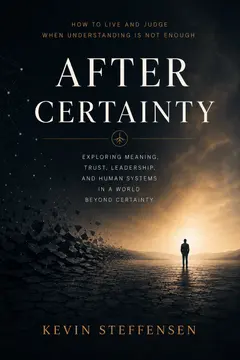
Book
After Certainty
How to Live and Judge When Understanding is not Enough
How to live and judge once explanation reaches its limits—judgment, responsibility, and participation without replacement frameworks.
View book
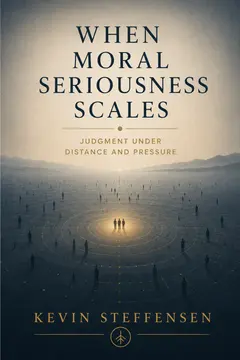
Book
When Moral Seriousness Scales
Judgment Under Distance and Pressure
An exploration of how moral responsibility changes under scale, speed, and institutional distance, and how to preserve humane judgment anyway.
View book
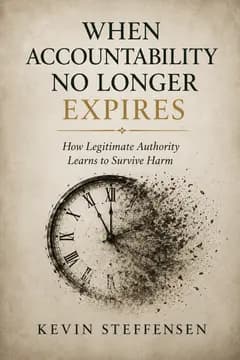
Book
When Accountability No Longer Expires
How Legitimate Authority Learns to Survive Harm
An institutional lens on why legitimate authority can persist after harm. Organizations learn to survive scandal without resolving it.
View book
Related songs
Song
Applause Is an Alibi
Dark cabaret art rock: halo and monster enter on cue while applause and booing pretend to be evidence, until the lighting itself is finally distrusted.
View Song →
Song
Applause Is an Alibi
Dark cabaret art rock: halo and monster enter on cue while applause and booing pretend to be evidence, until the lighting itself is finally distrusted.
Song
Don’t Let the Score Fool You
Warm nineteen-seventies soul: big bright numbers on a darkened wall tell a true ending while erasing the thousand hands that actually carried the game.
View Song →
Song
Don’t Let the Score Fool You
Warm nineteen-seventies soul: big bright numbers on a darkened wall tell a true ending while erasing the thousand hands that actually carried the game.
Outgoing dynamics1 relationship
distorts
Blame can substitute for bad news reaching power by producing a simpler but less useful explanation.