
Concept
Harm
Harm names where cost lands when influence is exercised—who absorbs it, who is kept in view, and what displacement is treated as acceptable. It marks the lived consequence of action, authority, design, or coordination.
Harm names where cost lands when influence is exercised—who absorbs it, who is kept in view, and what displacement is treated as acceptable. It marks the lived consequence of action, authority, design, or coordination. The visibility dimension matters—who is harmed in particular, not on average? Can they name it? Can they respond? Does the system register it or treat it as acceptable loss? Harm continues while interpretation expands, briefings make harm legible without smaller, people can still tell when something is doing harm. The question harm raises—is harm unchanged outside while we analyze inside? When does naming harm substitute for reducing it? The failure mode—harm persists while moral work feels complete, delays continue after excellent postmortems, harm becomes statistical at scale. The restoration path—return to particular harms and people, check effects outside the room after briefings, stop when outcomes for people are unchanged, pair analysis with named remedy attempts, accept harm as inevitable without abandoning response.
Recognition signals
- harm continues while interpretation expands
- briefings make harm legible without smaller
- people can still tell when something is doing harm
Questions to ask
- Is harm unchanged outside while we analyze inside?
- Who is harmed in particular—not on average?
- When does naming harm substitute for reducing it?
Counterbalances
- check effects outside the room after briefings
- stop when outcomes for people are unchanged
- pair analysis with named remedy attempts
Trajectory
Early signals
- harm triggers immediate explanation and sorting
Intensification
- harm is reorganized narratively
- harm becomes statistical at scale
Failure modes
- harm persists while moral work feels complete
Restoration paths
- return to particular harms and people
- accept harm as inevitable without abandoning response
Manifestations
organizations
- delays continue after excellent postmortems
Appears in chapters
- Chapter 3 — Releasing the Need for Heroes and Villains
- Chapter 6 — Speech That Does Less Harm
- Chapter 8 — Conflict, Confession, and Repair
- Chapter 9 — Suffering, Meaning, and Moral Imagination
- Chapter 10 — Cultural Sediment
- Chapter 11 — Archaeology Without Contempt
- Chapter 5 — The Moral Language of Playing Hurt
- Chapter 4 — Ashfen
in Velorum
And 20 more chapters with this association.
Related books4 books
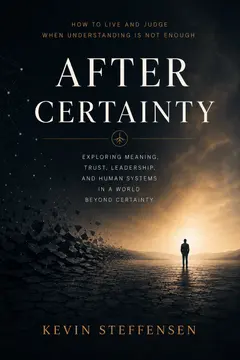
Book
After Certainty
How to Live and Judge When Understanding is not Enough
How to live and judge once explanation reaches its limits—judgment, responsibility, and participation without replacement frameworks.
View book

Book
Before Certainty Arrives
How Moral Order Forms, Hardens, and Outlives Its Reasons
How moral order forms, hardens, and outlives its reasons—before certainty feels like the only available posture.
View book

Book
When Others Look to You
Renewal and Erosion in Leadership
A leadership field guide to how influence forms, how trust is renewed, and how erosion begins when responsibility drifts from practice.
View book
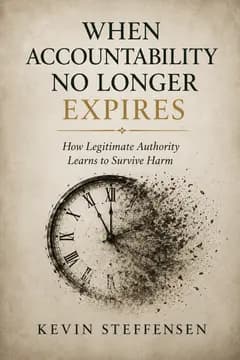
Book
When Accountability No Longer Expires
How Legitimate Authority Learns to Survive Harm
An institutional lens on why legitimate authority can persist after harm. Organizations learn to survive scandal without resolving it.
View book
Thinkers & sources5 thinkers
Person
James C Scott
Political scientist of state simplification, legibility, and how high-modernist schemes misfire on local knowledge.
View Thinker →
Person
James Reason
Safety scientist whose work on human error, organizational accidents, and resilient systems shaped modern safety thinking.
View Thinker →
Person
Nancy G Leveson
Engineer and safety scientist of systems thinking, STAMP, and building software and sociotechnical systems that fail safely.
View Thinker →
Person
Sidney Dekker
Safety scientist advocating just culture, human factors, and learning from failure without scapegoating.
View Thinker →
Person
Ulrich Beck
Sociologist of the risk society—how modern institutions distribute manufactured uncertainty and individualized responsibility.
View Thinker →