Person
James Reason
Safety scientist whose work on human error, organizational accidents, and resilient systems shaped modern safety thinking.
Why this matters
Reason reframes failure as systemic—essential for coupling, accountability, and learning without blame theater.
Works3 sources
book
Human Error
Reason, James. Human Error. Cambridge: Cambridge University Press, 1990.
View Source →
book
Managing the Risks of Organizational Accidents
Reason, James. Managing the Risks of Organizational Accidents. Aldershot, UK: Ashgate, 1997.
View Source →
book
The Human Contribution: Unsafe Acts, Accidents and Heroic Recoveries
Reason, James. The Human Contribution: Unsafe Acts, Accidents and Heroic Recoveries. Farnham, UK: Ashgate, 2008.
View Source →
Related concepts7 concepts
Concept
Accountability
Accountability names whether consequence still reaches the people who can respond. It becomes important when scale, narrative, or abstraction thins contact between action and effect. It helps preserve correction and proportionate answerability, but can fail when moral sorting replaces sustained contact with outcomes. It differs from responsibility because accountability emphasizes exposure to consequence; responsibility includes the ongoing obligation to account even when control is partial.
View Concept →
Concept
Correction
Correction names the lived work of narrowing the gap between what was assumed and what is actually happening. It becomes important whenever systems, beliefs, or coordination can drift while still feeling operational. It helps preserve shared reality and learning, but can fail when every correction spawns new framing instead of updated contact with conditions. It differs from repair because correction updates belief and behavior; repair addresses damaged standing and trust. It differs from revisability because correction is the act; revisability is the designed capacity to keep correcting.
View Concept →
Concept
Coupling
Coupling names the strength of the link between what was decided and what later arrives. It becomes important when scale, abstraction, or delay lengthen the chain between decision and lived harm. It helps preserve learning and legitimacy, but can fail when dashboards stay green while frontline frustration grows. It differs from cohesion because coupling tracks action-to-effect attachment; cohesion tracks whether responsibility is clearly held. It differs from consequence-architecture because coupling describes the attachment; consequence-architecture describes intentional design of boundaries, feedback, and escalation.
View Concept →
Concept
Drift
Drift names slow misalignment—meaning drifts as it travels, role compliance replaces discernment, systems continue without admitting conditions have shifted. It becomes important when continuity masks thinning fit and inherited tools coordinate long after they stop persuading. It helps recognize strain before rupture feels sudden, but can fail when drift is mistaken for stability because the machinery still turns. It differs from inheritance because drift emphasizes loss of fit over time; inheritance emphasizes what persists. It differs from normalization because drift is the movement; normalization is drift settling into expected background.
View Concept →
Concept
Feedback
Feedback names how systems stay in contact with their own effects. It becomes important whenever action and consequence are separated by time, scale, or abstraction. It helps preserve learning, correction, and trust in ongoing coordination, but can fail when dashboards stay green while lived harm accumulates off the ledger. It differs from trust because feedback is the returning signal itself; trust is the bridge that lets people act before every signal arrives. It differs from correction because feedback is what returns; correction is the work of updating in response.
View Concept →
Concept
Harm
Harm names where cost lands when influence is exercised—who absorbs it, who is kept in view, and what displacement is treated as acceptable. It marks the lived consequence of action, authority, design, or coordination. The visibility dimension matters—who is harmed in particular, not on average? Can they name it? Can they respond? Does the system register it or treat it as acceptable loss? Harm continues while interpretation expands, briefings make harm legible without smaller, people can still tell when something is doing harm. The question harm raises—is harm unchanged outside while we analyze inside? When does naming harm substitute for reducing it? The failure mode—harm persists while moral work feels complete, delays continue after excellent postmortems, harm becomes statistical at scale. The restoration path—return to particular harms and people, check effects outside the room after briefings, stop when outcomes for people are unchanged, pair analysis with named remedy attempts, accept harm as inevitable without abandoning response.
View Concept →
Concept
Responsibility
Responsibility names what continues after action—the obligation to remain responsive to what one's choices set in motion. It becomes important when systems scale beyond any one person's control but moral weight still accumulates. It helps preserve sustained answerability, but can fail when responsibility collapses into futility or when symbolic gestures replace contact with effects. It differs from accountability because responsibility names the enduring relation; accountability names whether consequence still reaches those who can respond.
View Concept →
Related books4 books

Book
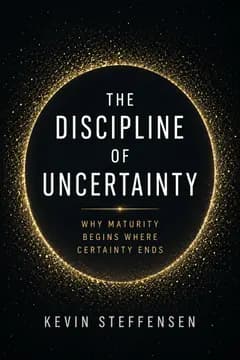
The Discipline of Uncertainty
Judgment, Restraint, and Decision Quality Under Incomplete Information
Field notes on judgment, restraint, and decision quality when information is incomplete.
View book

Book
Trust Beyond Similarity
How Trust Remains Possible Across Difference
How people learn to trust perspectives they do not share—and why trust becomes more valuable when perspectives differ.
View book

Book
When Others Look to You: Companion Edition
Forming, Renewing, Eroding, Repeating
How leadership influence forms, renews, erodes, and repeats across the full cycle of responsibility in practice.
View book
Book
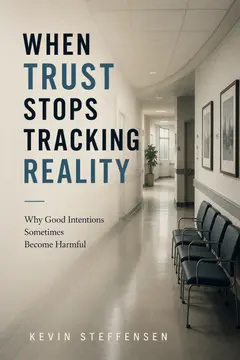
When Trust Stops Tracking Reality
Why Good Intentions Sometimes Become Harmful
How trust drifts from evidence when good intentions stop learning from feedback—through the fictional arc of Calder Family Health and real institutional patterns.
View book