Concept
Drift
Drift names slow misalignment—meaning drifts as it travels, role compliance replaces discernment, systems continue without admitting conditions have shifted.
Drift names slow misalignment—meaning drifts as it travels, role compliance replaces discernment, systems continue without admitting conditions have shifted. It becomes important when continuity masks thinning fit and inherited tools coordinate long after they stop persuading. It helps recognize strain before rupture feels sudden, but can fail when drift is mistaken for stability because the machinery still turns. It differs from inheritance because drift emphasizes loss of fit over time; inheritance emphasizes what persists. It differs from normalization because drift is the movement; normalization is drift settling into expected background.
Recognition signals
- meaning drifts as it travels across distance
- moral reasoning drifts toward role compliance
- machinery still runs while meaning quietly thins
- habit carries what explanation no longer fully reassures
Questions to ask
- What is drifting away from its original conditions?
- Where does continuity mask thinning fit?
- What still works well enough to be taken for granted?
Counterbalances
- distinguish drift from immediate failure
- notice strain before demanding rupture
- recognize inertia without calling it corruption
Trajectory
Early signals
- local enforcement varies as oral tradition travels
- tools remain effective at enforcing norms
Intensification
- institutions outlive the pressures that shaped them
- credibility erodes faster than authority itself
Failure modes
- fit thins while appointments still clear
- systems persist because nothing else yet does
Restoration paths
- name drift before prescribing replacement frameworks
- stop at recognition when instruction would repeat the pattern
Manifestations
politics
- postwar planning language outlasts the offices that first needed it
- inherited categories fail to contain returning ships
organizations
- ticket numbers still called while fluorescent lights hum at closing
family
- payroll continues while conviction is no longer required
Appears in chapters
- Part III — Inherited Certainty
- Chapter 8 — Renaissance, Exploration, and Fracture
- Chapter 10 — The Moment Before Failure
- Conclusion — Recognition Without Instruction
- Part IV — When Disciplines Fail
- Chapter 12 — When Methods Become Myths
- Chapter 14 — Success as the Most Dangerous Signal
- Prologue — September Is Not Seven
And 19 more chapters with this association.
Related books2 books
Book
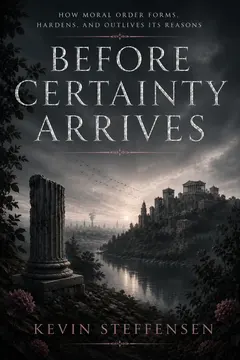
Before Certainty Arrives
How Moral Order Forms, Hardens, and Outlives Its Reasons
How moral order forms, hardens, and outlives its reasons—before certainty feels like the only available posture.
View book

Book
Living in Sediment
How Structures Outlive Their Reasons
We live inside inherited systems built for constraints that no longer exist. When structures survive after their reasons disappear, meaning drifts—and the danger is forgetting the sediment is sediment.
View book
Thinkers & sources3 thinkers
Person
Donella H Meadows
Systems thinker and writer on leverage points, feedback loops, and learning to intervene in complex systems without hubris.
View Thinker →
Person
James Reason
Safety scientist whose work on human error, organizational accidents, and resilient systems shaped modern safety thinking.
View Thinker →
Person
Sidney Dekker
Safety scientist advocating just culture, human factors, and learning from failure without scapegoating.
View Thinker →
Outgoing dynamics2 relationships
precedes
Drift can settle into normalization when decoupling becomes expected baseline.
contrasts
Drift emphasizes loss of fit over time; inheritance emphasizes what persists.
Incoming dynamics2 relationships
contrasts
Adaptation is active response; drift is loss of fit over time.
contrasts
Inheritance emphasizes persistence of form; drift emphasizes loss of fit.