Person
Donella H Meadows
Systems thinker and writer on leverage points, feedback loops, and learning to intervene in complex systems without hubris.
Why this matters
Meadows is a core reference for serious systems—where to push, what resists, and why small changes sometimes move everything.
Related concepts6 concepts
Concept
Correction
Correction names the lived work of narrowing the gap between what was assumed and what is actually happening. It becomes important whenever systems, beliefs, or coordination can drift while still feeling operational. It helps preserve shared reality and learning, but can fail when every correction spawns new framing instead of updated contact with conditions. It differs from repair because correction updates belief and behavior; repair addresses damaged standing and trust. It differs from revisability because correction is the act; revisability is the designed capacity to keep correcting.
View Concept →
Concept
Coupling
Coupling names the strength of the link between what was decided and what later arrives. It becomes important when scale, abstraction, or delay lengthen the chain between decision and lived harm. It helps preserve learning and legitimacy, but can fail when dashboards stay green while frontline frustration grows. It differs from cohesion because coupling tracks action-to-effect attachment; cohesion tracks whether responsibility is clearly held. It differs from consequence-architecture because coupling describes the attachment; consequence-architecture describes intentional design of boundaries, feedback, and escalation.
View Concept →
Concept
Drift
Drift names slow misalignment—meaning drifts as it travels, role compliance replaces discernment, systems continue without admitting conditions have shifted. It becomes important when continuity masks thinning fit and inherited tools coordinate long after they stop persuading. It helps recognize strain before rupture feels sudden, but can fail when drift is mistaken for stability because the machinery still turns. It differs from inheritance because drift emphasizes loss of fit over time; inheritance emphasizes what persists. It differs from normalization because drift is the movement; normalization is drift settling into expected background.
View Concept →
Concept
Feedback
Feedback names how systems stay in contact with their own effects. It becomes important whenever action and consequence are separated by time, scale, or abstraction. It helps preserve learning, correction, and trust in ongoing coordination, but can fail when dashboards stay green while lived harm accumulates off the ledger. It differs from trust because feedback is the returning signal itself; trust is the bridge that lets people act before every signal arrives. It differs from correction because feedback is what returns; correction is the work of updating in response.
View Concept →
Concept
Humility
Humility—naming tradeoffs, uncertainty, distributional conflict—is epistemically virtuous and politically costly at scale. Certainty orients anxious publics and protects institutions from looking paralyzed. The outperforming of humility is not proof audiences are childish; it is proof that orientation is scarce and fear is abundant. Under interpretive stress, humility also means acknowledging what summaries omit and who pays for resilience.
View Concept →
Concept
System
A system is an organized set of people, processes, rules, and structures that produces repeatable outcomes over time. The term applies across domains: software architectures, teams, firms, agencies, governance structures, and media institutions. The shared criterion is not technology; it is patterned behavior under constraints, incentives, and feedback.
View Concept →
Related books3 books

Book
Coupling
Cohesion, Consequence, and the Architecture of Responsibility
A practical framework for seeing where systems are tightly joined, where they drift apart, and how those coupling choices shape accountability over time.
View book
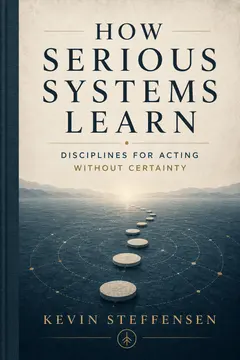
Book
How Serious Systems Learn
Disciplines for Acting Without Certainty
A handbook for teams and institutions that need to learn in motion, improve under pressure, and make better decisions without waiting for perfect information.
View book
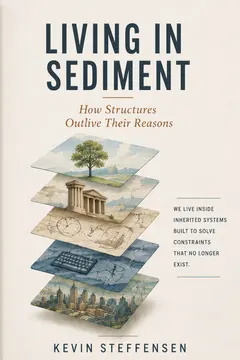
Book
Living in Sediment
How Structures Outlive Their Reasons
We live inside inherited systems built for constraints that no longer exist. When structures survive after their reasons disappear, meaning drifts—and the danger is forgetting the sediment is sediment.
View book