
Nonfiction

Trust Beyond Similarity
How Trust Remains Possible Across Difference
By Kevin Steffensen
How people learn to trust perspectives they do not share—and why trust becomes more valuable when perspectives differ.
How people learn to trust perspectives they do not share—and why trust becomes more valuable when perspectives differ.
Offered under open publishing terms (CC BY-SA). Download formats are free where available; purchase links support print editions.
- Type
- Nonfiction · monograph
- Author
- Kevin Steffensen
- Published
- May 2026
- Chapters
- 15 chapters
- Formats
- EPUB, PDF, DOCX
On these shelves
Also in Core After Certainty
View all 6 →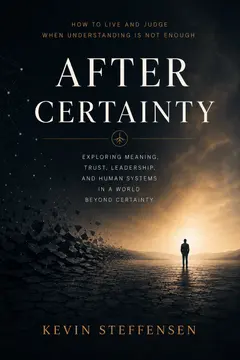
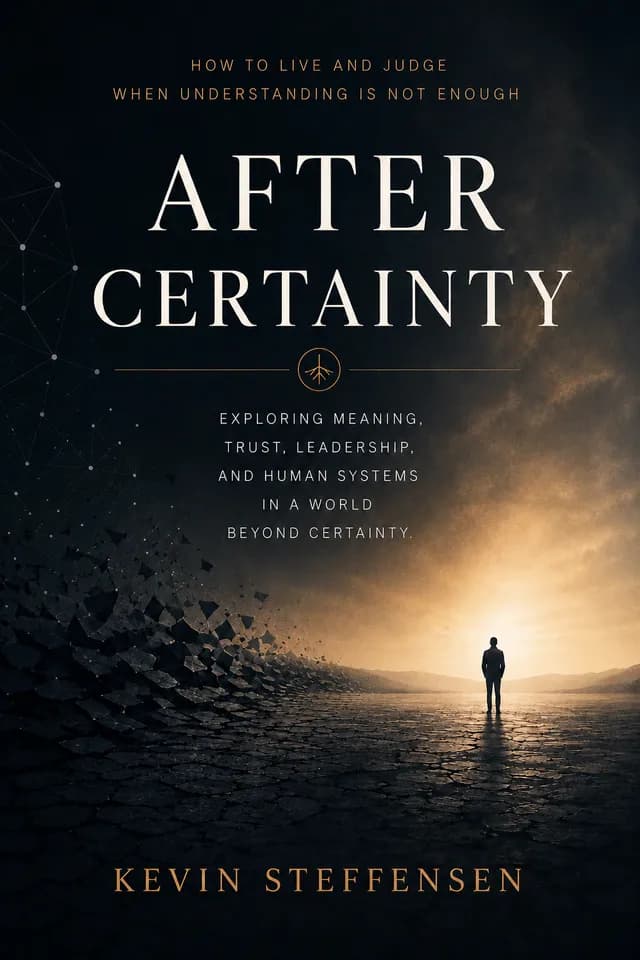
After Certainty
How to Live and Judge When Understanding is not Enough
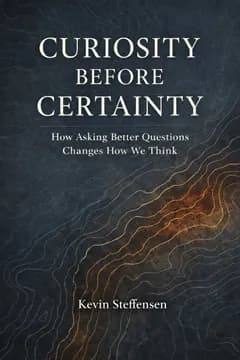
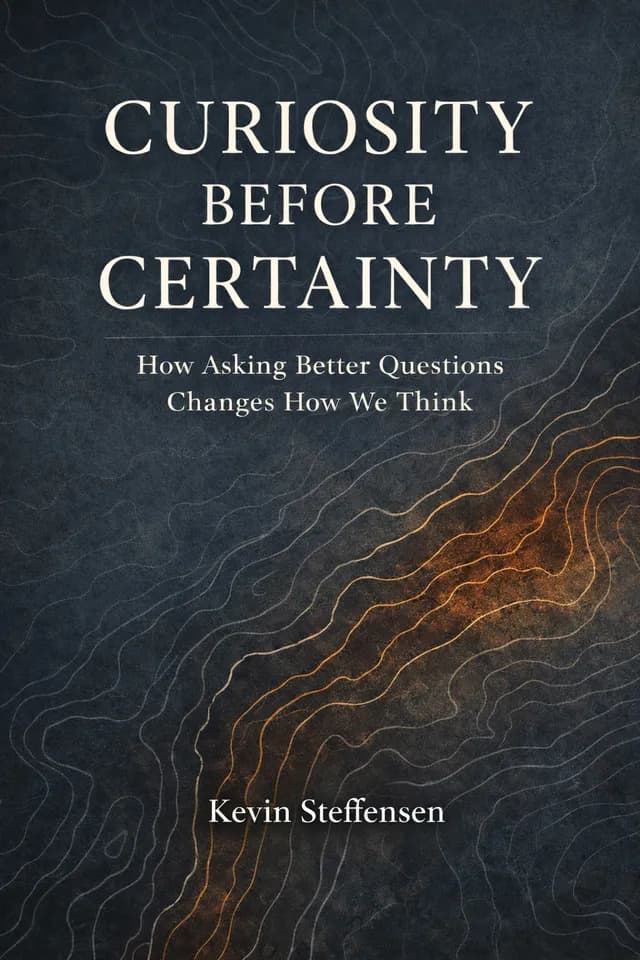
Curiosity Before Certainty
How Curiosity Helps Us Understand a Complex World

What We Cannot See
Bias, Judgment, and the Limits of Perspective
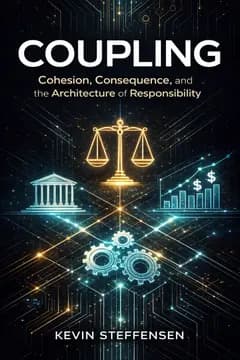
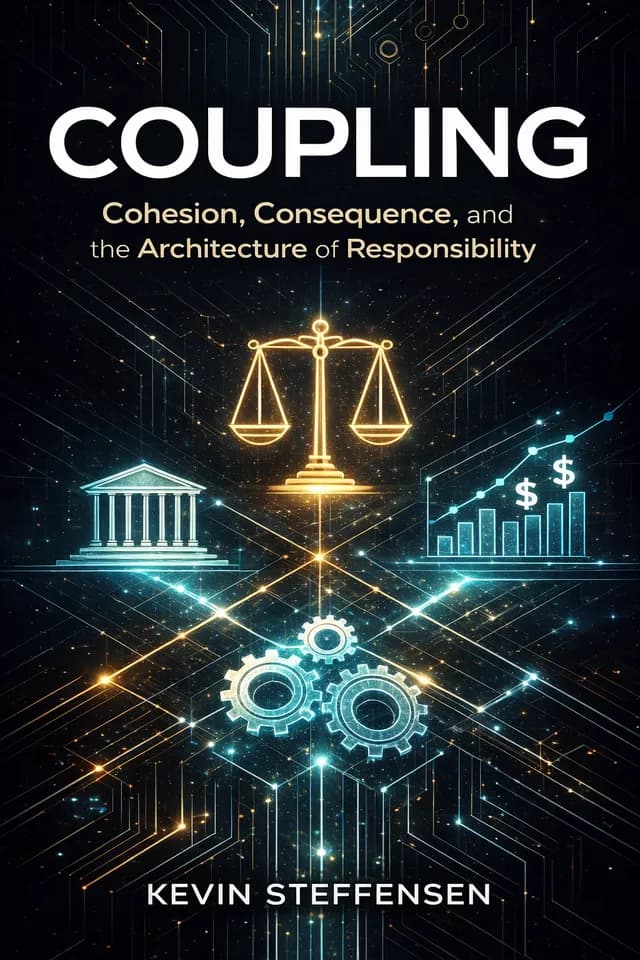
Coupling
Cohesion, Consequence, and the Architecture of Responsibility
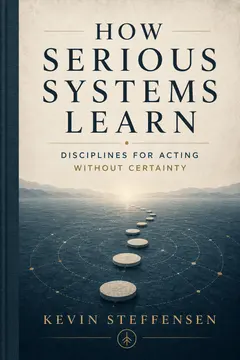
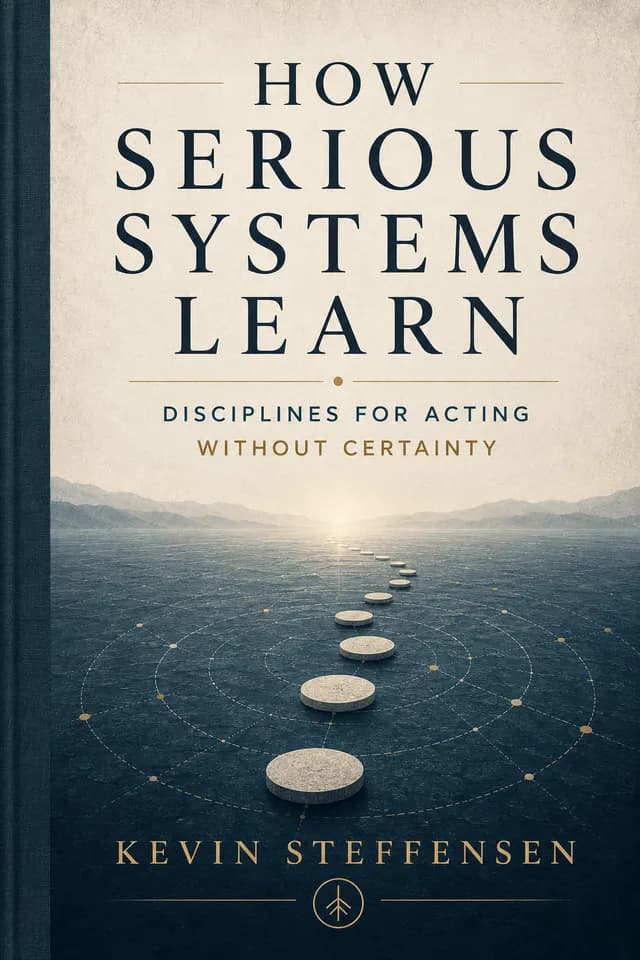
How Serious Systems Learn
Disciplines for Acting Without Certainty

The question this book explores
How can trust remain possible across difference and disagreement?
Why this book exists
Trust Beyond Similarity explores why trust becomes more valuable — not less — when perspectives diverge, and what makes cooperation across partial views durable.
Who it is for
Readers concerned with civic life, teams across disagreement, and relationships where sameness cannot be the price of trust.
What it is not
- It does not claim all disagreement is healthy or all difference should be preserved.
- It does not reduce trust to a single metric or reputation score.
Central ideas
A curated handful of concepts and patterns this book develops — not the full inventory.
Concept
Contestability
In this book: Makes trust across difference durable: claims and summaries can be challenged without requiring sameness as the price of belonging.
Explore the conceptConcept
Accountability
In this book: Keeps cooperation answerable when perspectives diverge—trust as exposure to consequence, not comfort of agreement.
Explore the conceptConcept
Coordination
In this book: Names the practical problem similarity seemed to solve: arranging joint action when stories and summaries no longer match.
Explore the conceptConcept
Correction
In this book: Central after the shock of the partial: updating from what another perspective sees that yours did not.
Explore the conceptConcept
Feedback
In this book: Paths by which partial views return as usable signal—epistemic interdependence without surrender of judgment.
Explore the conceptPattern
Contact Keeps the Read Open
In this book: Applies listening without surrender: more perspective sharpens understanding without forcing premature agreement.
Explore the patternPattern
Dissent is Welcomed
In this book: Deepens collaboration across difference—problems and partial views must arrive early or diversity stays ornamental.
Explore the patternPattern
Scrutiny Preserves Trust
In this book: Shows how trust across disagreement stays legitimate when challenge remains possible without casting partners as villains.
Explore the pattern
Inside this book
How the book is organized — parts, chapters, and what each section investigates.
About 168 min of reading across 15 sections in 4 parts.
Part I — The Illusion of Sufficiency
4 sections
Part I — The Illusion of Sufficiency
4 sectionsShow summaryHide summary
A community center design begins among familiar circles — architects, PTA parents, budget colleagues — while teenagers who know the lot remain deferred, showing how trust reaches first for people who already understand us.
Central questionWhy do we reach for people who already understand us when building trust?
Part II — The Shock of the Partial
4 sections
Part II — The Shock of the Partial
4 sectionsPart III — Epistemic Interdependence
4 sections
Part III — Epistemic Interdependence
4 sectionsOther sections
3 sections
Other sections
3 sectionsWhere it fits
Suggested reading order and nearby volumes — not a mandatory sequence.
Read before
Read next
Continue exploring
- Next book — What We Cannot See
- Start with a question — How can trust survive disagreement?
Updates
Reading trails featuring this book
Editorial paths that include this book as one stop in a longer sequence.
Full related inventoryShowHide
Complete concept, pattern, and thinker lists for readers who want the full semantic map.
Major concepts
Concept
Accountability
Accountability names whether consequence still reaches the people who can respond. It becomes important when scale, narrative, or abstraction thins contact between action and effect. It helps preserve correction and proportionate answerability, but can fail when moral sorting replaces sustained contact with outcomes. It differs from responsibility because accountability emphasizes exposure to consequence; responsibility includes the ongoing obligation to account even when control is partial.
View Concept →
Concept
Accountability
Accountability names whether consequence still reaches the people who can respond. It becomes important when scale, narrative, or abstraction thins contact between action and effect. It helps preserve correction and proportionate answerability, but can fail when moral sorting replaces sustained contact with outcomes. It differs from responsibility because accountability emphasizes exposure to consequence; responsibility includes the ongoing obligation to account even when control is partial.
Concept
Adaptation
Adaptation marks moral life responding to conditions that will not wait—scarcity, violence, scale, displacement. In Before Certainty Arrives, what begins as adaptation can outlive the pressures that first made it necessary. It helps preserve workable coordination under constraint, but can fail when adaptive tools are mistaken for permanent moral truth. It differs from inheritance because adaptation names responsive change; inheritance names what gets carried forward after conditions shift. It differs from drift because adaptation is active response; drift is gradual decoupling while machinery still runs.
View Concept →
Concept
Adaptation
Adaptation marks moral life responding to conditions that will not wait—scarcity, violence, scale, displacement. In Before Certainty Arrives, what begins as adaptation can outlive the pressures that first made it necessary. It helps preserve workable coordination under constraint, but can fail when adaptive tools are mistaken for permanent moral truth. It differs from inheritance because adaptation names responsive change; inheritance names what gets carried forward after conditions shift. It differs from drift because adaptation is active response; drift is gradual decoupling while machinery still runs.
Concept
Coherence Maintenance
The ongoing work required to keep a system governable: enough agreement about who decides, what happened, and what must change next for learning to remain possible. Coherence maintenance becomes expensive as independently evolving boundaries multiply. Systems sometimes pay for it through clear ownership and timely feedback; they sometimes pay through coordination substitutes that preserve throughput while thinning corrective capacity.
View Concept →
Concept
Coherence Maintenance
The ongoing work required to keep a system governable: enough agreement about who decides, what happened, and what must change next for learning to remain possible. Coherence maintenance becomes expensive as independently evolving boundaries multiply. Systems sometimes pay for it through clear ownership and timely feedback; they sometimes pay through coordination substitutes that preserve throughput while thinning corrective capacity.
Concept
Contestability
Contestability names the condition where dispute can reopen without threatening shared coherence—where challenge does not mean collapse. It becomes important when legitimacy depends on more than coercion, when correction and revision matter for trust and adaptation. It helps preserve the capacity to learn from reality and adjust to changed conditions, but it thins when authority relocates legitimacy beyond ordinary revision—when sacred framing, canon, or procedure makes questioning feel dangerous. Contestability depends on whether revision feels survivable or indistinguishable from rupture. When small groups operate under mutual visibility, authority can be argued for even after it is obeyed. But under pressure—breakdown, threat, or instability—dissent begins to read as moral failure rather than political disagreement, and the range of acceptable interpretation narrows. Contestability thins while inherited certainty still coordinates; systems can run on compliance long after persuasion fades. It marks the moment just before certainty becomes difficult to question at all.
View Concept →
Concept
Contestability
Contestability names the condition where dispute can reopen without threatening shared coherence—where challenge does not mean collapse. It becomes important when legitimacy depends on more than coercion, when correction and revision matter for trust and adaptation. It helps preserve the capacity to learn from reality and adjust to changed conditions, but it thins when authority relocates legitimacy beyond ordinary revision—when sacred framing, canon, or procedure makes questioning feel dangerous. Contestability depends on whether revision feels survivable or indistinguishable from rupture. When small groups operate under mutual visibility, authority can be argued for even after it is obeyed. But under pressure—breakdown, threat, or instability—dissent begins to read as moral failure rather than political disagreement, and the range of acceptable interpretation narrows. Contestability thins while inherited certainty still coordinates; systems can run on compliance long after persuasion fades. It marks the moment just before certainty becomes difficult to question at all.
Concept
Coordination
Coordination names the problem of acting together when lives are fragmented—when people must move collectively across distance, time, strangers, and difference without complete information or full agreement. It becomes important when individual judgment alone cannot sustain the group, when behavior must hold across contexts that no one person can see completely. Coordination helps preserve collective capacity by making expectations predictable, by enabling strangers to act together under shared rules, by allowing large-scale projects that no single person could accomplish. Roles, rituals, law, canon, procedure, and bureaucracy are all coordination technologies—tools for making tomorrow recognizable from yesterday so action can continue. But coordination can become brittle when it suppresses the feedback and variation it needs to stay responsive, when inherited patterns keep moving after fit has thinned, when dissent is treated as disruption rather than signal. Coordination purchased at the cost of revision can continue functioning long after it has stopped serving the purposes that gave it authority. The question coordination raises is: what coordination problem is this tool solving? What breaks if behavior stops being predictable? Coordination differs from alignment in that coordination is about collective movement, while alignment is about shared direction or values.
View Concept →
Concept
Coordination
Coordination names the problem of acting together when lives are fragmented—when people must move collectively across distance, time, strangers, and difference without complete information or full agreement. It becomes important when individual judgment alone cannot sustain the group, when behavior must hold across contexts that no one person can see completely. Coordination helps preserve collective capacity by making expectations predictable, by enabling strangers to act together under shared rules, by allowing large-scale projects that no single person could accomplish. Roles, rituals, law, canon, procedure, and bureaucracy are all coordination technologies—tools for making tomorrow recognizable from yesterday so action can continue. But coordination can become brittle when it suppresses the feedback and variation it needs to stay responsive, when inherited patterns keep moving after fit has thinned, when dissent is treated as disruption rather than signal. Coordination purchased at the cost of revision can continue functioning long after it has stopped serving the purposes that gave it authority. The question coordination raises is: what coordination problem is this tool solving? What breaks if behavior stops being predictable? Coordination differs from alignment in that coordination is about collective movement, while alignment is about shared direction or values.
Concept
Correction
Correction names the lived work of narrowing the gap between what was assumed and what is actually happening. It becomes important whenever systems, beliefs, or coordination can drift while still feeling operational. It helps preserve shared reality and learning, but can fail when every correction spawns new framing instead of updated contact with conditions. It differs from repair because correction updates belief and behavior; repair addresses damaged standing and trust. It differs from revisability because correction is the act; revisability is the designed capacity to keep correcting.
View Concept →
Concept
Correction
Correction names the lived work of narrowing the gap between what was assumed and what is actually happening. It becomes important whenever systems, beliefs, or coordination can drift while still feeling operational. It helps preserve shared reality and learning, but can fail when every correction spawns new framing instead of updated contact with conditions. It differs from repair because correction updates belief and behavior; repair addresses damaged standing and trust. It differs from revisability because correction is the act; revisability is the designed capacity to keep correcting.
Concept
Feedback
Feedback names how systems stay in contact with their own effects. It becomes important whenever action and consequence are separated by time, scale, or abstraction. It helps preserve learning, correction, and trust in ongoing coordination, but can fail when dashboards stay green while lived harm accumulates off the ledger. It differs from trust because feedback is the returning signal itself; trust is the bridge that lets people act before every signal arrives. It differs from correction because feedback is what returns; correction is the work of updating in response.
View Concept →
Concept
Feedback
Feedback names how systems stay in contact with their own effects. It becomes important whenever action and consequence are separated by time, scale, or abstraction. It helps preserve learning, correction, and trust in ongoing coordination, but can fail when dashboards stay green while lived harm accumulates off the ledger. It differs from trust because feedback is the returning signal itself; trust is the bridge that lets people act before every signal arrives. It differs from correction because feedback is what returns; correction is the work of updating in response.
Concept
Governance Coupling
The degree to which formal oversight structures preserve real consequence return to decision-capable authority. Governance coupling weakens when signal is filtered, delayed, or politically insulated, even if nominal accountability mechanisms still exist.
View Concept →
Concept
Governance Coupling
The degree to which formal oversight structures preserve real consequence return to decision-capable authority. Governance coupling weakens when signal is filtered, delayed, or politically insulated, even if nominal accountability mechanisms still exist.
Concept
Harm
Harm names where cost lands when influence is exercised—who absorbs it, who is kept in view, and what displacement is treated as acceptable. It marks the lived consequence of action, authority, design, or coordination. The visibility dimension matters—who is harmed in particular, not on average? Can they name it? Can they respond? Does the system register it or treat it as acceptable loss? Harm continues while interpretation expands, briefings make harm legible without smaller, people can still tell when something is doing harm. The question harm raises—is harm unchanged outside while we analyze inside? When does naming harm substitute for reducing it? The failure mode—harm persists while moral work feels complete, delays continue after excellent postmortems, harm becomes statistical at scale. The restoration path—return to particular harms and people, check effects outside the room after briefings, stop when outcomes for people are unchanged, pair analysis with named remedy attempts, accept harm as inevitable without abandoning response.
View Concept →
Concept
Harm
Harm names where cost lands when influence is exercised—who absorbs it, who is kept in view, and what displacement is treated as acceptable. It marks the lived consequence of action, authority, design, or coordination. The visibility dimension matters—who is harmed in particular, not on average? Can they name it? Can they respond? Does the system register it or treat it as acceptable loss? Harm continues while interpretation expands, briefings make harm legible without smaller, people can still tell when something is doing harm. The question harm raises—is harm unchanged outside while we analyze inside? When does naming harm substitute for reducing it? The failure mode—harm persists while moral work feels complete, delays continue after excellent postmortems, harm becomes statistical at scale. The restoration path—return to particular harms and people, check effects outside the room after briefings, stop when outcomes for people are unchanged, pair analysis with named remedy attempts, accept harm as inevitable without abandoning response.
Concept
Interpretation
Interpretation names the ongoing work of deciding what something means enough to coordinate on. It becomes important whenever shared action depends on more than immediate perception—across time, distance, conflict, or institutional scale. It helps preserve continuity between experience and obligation, but can fail when interpretation hardens into category and stops tracking changing conditions. In the authority arc, sacred authority compresses interpretation while writing and law later externalize it so disputes can be settled without shared presence. It differs from private understanding because interpretation must be able to coordinate judgment or contest authority in shared space; it differs from meaning because interpretation is the active reconstruction, not only what gets stabilized.
View Concept →
Concept
Interpretation
Interpretation names the ongoing work of deciding what something means enough to coordinate on. It becomes important whenever shared action depends on more than immediate perception—across time, distance, conflict, or institutional scale. It helps preserve continuity between experience and obligation, but can fail when interpretation hardens into category and stops tracking changing conditions. In the authority arc, sacred authority compresses interpretation while writing and law later externalize it so disputes can be settled without shared presence. It differs from private understanding because interpretation must be able to coordinate judgment or contest authority in shared space; it differs from meaning because interpretation is the active reconstruction, not only what gets stabilized.
Concept
Legitimacy
Legitimacy names the standing that lets authority coordinate without constant coercion. It becomes important when scale, abstraction, or time separate decision-makers from lived consequence. It helps preserve trust and willing participation, but can fail when smooth operation is mistaken for moral standing or when scrutiny is treated as disloyalty. It differs from alignment because legitimacy still invites proportionate inquiry; alignment can bind through belonging signals alone.
View Concept →
Concept
Legitimacy
Legitimacy names the standing that lets authority coordinate without constant coercion. It becomes important when scale, abstraction, or time separate decision-makers from lived consequence. It helps preserve trust and willing participation, but can fail when smooth operation is mistaken for moral standing or when scrutiny is treated as disloyalty. It differs from alignment because legitimacy still invites proportionate inquiry; alignment can bind through belonging signals alone.
Concept
Meaning
Meaning names what must remain recognizable for life together to continue. It becomes important whenever coordination outruns immediate shared presence. It helps preserve continuity across time, distance, and conflict, but can fail when inherited meaning outlives the conditions that once made it workable. In Before Certainty Arrives, meaning is what moral systems stabilize once coordination survives constraint; writing preserves meaning when oral tradition fractures at scale. In How Meaning Moves, meaning is also what people reconstruct through contact, completion, and the movement of language under pressure. It differs from interpretation because meaning is what gets held steady; interpretation is the active work of reconstruction.
View Concept →
Concept
Meaning
Meaning names what must remain recognizable for life together to continue. It becomes important whenever coordination outruns immediate shared presence. It helps preserve continuity across time, distance, and conflict, but can fail when inherited meaning outlives the conditions that once made it workable. In Before Certainty Arrives, meaning is what moral systems stabilize once coordination survives constraint; writing preserves meaning when oral tradition fractures at scale. In How Meaning Moves, meaning is also what people reconstruct through contact, completion, and the movement of language under pressure. It differs from interpretation because meaning is what gets held steady; interpretation is the active work of reconstruction.
Concept
Reciprocity
Reciprocity names mutual exposure, obligation, and constraint made visible—the condition where both sides remain reachable by consequence and answerable to shared expectations. It becomes important when trust depends not only on rules but on mutual vulnerability, when accountability works through shared exposure rather than only through enforcement. Reciprocity helps preserve relationality and answerability in coordination; it makes obligation concrete and visible rather than abstract. When obligations are reciprocal, personal, and explicit, deviation threatens the relationship itself, not merely a principle. Trust is stronger when both parties can see and feel what happens if expectations break. But reciprocity thins as scale grows and abstraction replaces relationships—as categories replace persons, as responsibility shifts from mutual constraint to role compliance, as power travels beyond the reach of mutual consequence. Asymmetry grows when obligation flows only one way, when those who decide are insulated from the effects of their decisions. The question reciprocity raises is: who still shares exposure if this arrangement fails? Where has reciprocity thinned into one-way compliance? Reciprocity differs from accountability in that reciprocity is mutual, while accountability can be unidirectional.
View Concept →
Concept
Reciprocity
Reciprocity names mutual exposure, obligation, and constraint made visible—the condition where both sides remain reachable by consequence and answerable to shared expectations. It becomes important when trust depends not only on rules but on mutual vulnerability, when accountability works through shared exposure rather than only through enforcement. Reciprocity helps preserve relationality and answerability in coordination; it makes obligation concrete and visible rather than abstract. When obligations are reciprocal, personal, and explicit, deviation threatens the relationship itself, not merely a principle. Trust is stronger when both parties can see and feel what happens if expectations break. But reciprocity thins as scale grows and abstraction replaces relationships—as categories replace persons, as responsibility shifts from mutual constraint to role compliance, as power travels beyond the reach of mutual consequence. Asymmetry grows when obligation flows only one way, when those who decide are insulated from the effects of their decisions. The question reciprocity raises is: who still shares exposure if this arrangement fails? Where has reciprocity thinned into one-way compliance? Reciprocity differs from accountability in that reciprocity is mutual, while accountability can be unidirectional.
Concept
Thinking
Thinking names reflective interpretation, explanation, and deliberation made possible by enough stability, time, and distance from immediate constraint. It becomes important when coordination is secure enough that action can be accompanied by—or followed by—reflection on why, not only what. Thinking is not detached from action; it is a way of slowing response enough for judgment to form, for alternatives to be considered, for consequences to be imagined before they arrive. It helps preserve discernment, learning, and moral reasoning, but it requires conditions: distance from urgent threat, cognitive and social surplus, shared language for deliberation, and enough stability that questioning does not destabilize survival itself. Under severe pressure, coordinated action may precede explanation—people act together before they renegotiate why, and meaning accumulates later, if at all. Roles can precede reasons when constraint is visible; practices can work before they are explained; certainty can coordinate when explanation is too slow for the problem at hand. Thinking thins when scale or urgency removes the conditions it requires—when no one can trace harm, when managed doubt persists far from those who wait, when compliance replaces judgment because discernment has become too costly. The question thinking raises is: what must hold before there is time to think? Where is thinking a capacity scale has not yet removed? The counterbalance is to notice coordination before explanation without calling early arrangements irrational, to recognize thinking as conditioned by structure rather than absent by nature, and to ask what held long enough to live before asking what is true.
View Concept →
Concept
Thinking
Thinking names reflective interpretation, explanation, and deliberation made possible by enough stability, time, and distance from immediate constraint. It becomes important when coordination is secure enough that action can be accompanied by—or followed by—reflection on why, not only what. Thinking is not detached from action; it is a way of slowing response enough for judgment to form, for alternatives to be considered, for consequences to be imagined before they arrive. It helps preserve discernment, learning, and moral reasoning, but it requires conditions: distance from urgent threat, cognitive and social surplus, shared language for deliberation, and enough stability that questioning does not destabilize survival itself. Under severe pressure, coordinated action may precede explanation—people act together before they renegotiate why, and meaning accumulates later, if at all. Roles can precede reasons when constraint is visible; practices can work before they are explained; certainty can coordinate when explanation is too slow for the problem at hand. Thinking thins when scale or urgency removes the conditions it requires—when no one can trace harm, when managed doubt persists far from those who wait, when compliance replaces judgment because discernment has become too costly. The question thinking raises is: what must hold before there is time to think? Where is thinking a capacity scale has not yet removed? The counterbalance is to notice coordination before explanation without calling early arrangements irrational, to recognize thinking as conditioned by structure rather than absent by nature, and to ask what held long enough to live before asking what is true.
Concept
Trust
Trust names the bridge that lets people act together when no one holds the whole scene. It becomes important when verification must extend beyond firsthand sight—through specialists, records, institutions, or repeated experience. It helps preserve participation across partial perspectives, but can fail when trust stops tracking reality and closure feels safer than checking. It differs from certainty because trust accepts incomplete verification; it differs from blind belief because it still depends on signals that can be tested, strained, or withdrawn.
View Concept →
Concept
Trust
Trust names the bridge that lets people act together when no one holds the whole scene. It becomes important when verification must extend beyond firsthand sight—through specialists, records, institutions, or repeated experience. It helps preserve participation across partial perspectives, but can fail when trust stops tracking reality and closure feels safer than checking. It differs from certainty because trust accepts incomplete verification; it differs from blind belief because it still depends on signals that can be tested, strained, or withdrawn.
Concept
Uncertainty
Uncertainty names the condition moral and social systems are built to navigate—the space where coordination must happen before truth is settled, where lives are fragmented and behavior must hold together under incomplete information. It becomes important because human action cannot wait for perfect knowledge; groups must decide, move, and coordinate even when the future is unclear, when disagreement is costly, when explanation cannot travel fast enough to settle disputes before consequences arrive. Uncertainty is not a problem to eliminate but a condition to navigate—the ground on which moral life operates. Certainty emerges as an adaptive response to uncertainty, compressing ambiguity into stable expectations so action can proceed. But uncertainty itself is neither failure nor freedom; it is the default state that requires coordination tools. The After Certainty project explores how to practice judgment, accountability, and responsiveness inside uncertainty rather than demanding that uncertainty be resolved before moral life can begin. The question uncertainty raises is: what uncertainty is this system trying to reduce? Is ambiguity dangerous because the stakes are genuinely high, or because failure now scales? Uncertainty differs from ignorance in that uncertainty is about incomplete information in contexts requiring action, while ignorance is simply lack of knowledge.
View Concept →
Concept
Uncertainty
Uncertainty names the condition moral and social systems are built to navigate—the space where coordination must happen before truth is settled, where lives are fragmented and behavior must hold together under incomplete information. It becomes important because human action cannot wait for perfect knowledge; groups must decide, move, and coordinate even when the future is unclear, when disagreement is costly, when explanation cannot travel fast enough to settle disputes before consequences arrive. Uncertainty is not a problem to eliminate but a condition to navigate—the ground on which moral life operates. Certainty emerges as an adaptive response to uncertainty, compressing ambiguity into stable expectations so action can proceed. But uncertainty itself is neither failure nor freedom; it is the default state that requires coordination tools. The After Certainty project explores how to practice judgment, accountability, and responsiveness inside uncertainty rather than demanding that uncertainty be resolved before moral life can begin. The question uncertainty raises is: what uncertainty is this system trying to reduce? Is ambiguity dangerous because the stakes are genuinely high, or because failure now scales? Uncertainty differs from ignorance in that uncertainty is about incomplete information in contexts requiring action, while ignorance is simply lack of knowledge.
Major patterns
Supporting · Corrective
Participation Creates Legitimacy
Centralized direction may be faster, but systems imposed without meaningful participation often lose legitimacy and local knowledge. - Speed favors centralized direction - Legitimacy requires consequential voice People are more likely to trust, sustain, and recognize a shared order when they have a consequential role in shaping, contesting, or repairing it.
View Pattern →
Supporting · Corrective
Participation Creates Legitimacy
Centralized direction may be faster, but systems imposed without meaningful participation often lose legitimacy and local knowledge. - Speed favors centralized direction - Legitimacy requires consequential voice People are more likely to trust, sustain, and recognize a shared order when they have a consequential role in shaping, contesting, or repairing it.
Supporting · Corrective
Understanding Circulates
No one sees the whole situation, yet organizations often treat understanding as something possessed by individuals or authorities. - No single vantage sees the whole - Authority may hoard interpretation Understanding emerges and corrects itself when partial perspectives move among people rather than remaining isolated.
View Pattern →
Supporting · Corrective
Understanding Circulates
No one sees the whole situation, yet organizations often treat understanding as something possessed by individuals or authorities. - No single vantage sees the whole - Authority may hoard interpretation Understanding emerges and corrects itself when partial perspectives move among people rather than remaining isolated.
Related songs
Song
Check Your Angle
East Coast alt hip-hop cypher: three rappers and a robot argue that the same picture changes with the frame—check your angle.
View Song →
Song
Check Your Angle
East Coast alt hip-hop cypher: three rappers and a robot argue that the same picture changes with the frame—check your angle.
Song
Different Evidence
Moody British alt-hop spoken word: comfort among similar voices dresses up as truth, then awkward difference arrives as free additional data worth leaving room for.
View Song →
Song
Different Evidence
Moody British alt-hop spoken word: comfort among similar voices dresses up as truth, then awkward difference arrives as free additional data worth leaving room for.
Song
I Believe You Tonight
Dark eighties and nineties synth-pop: a restrained baritone grants provisional trust—I believe you tonight—without forever, contract, proof, or the power-fantasy of certainty.
View Song →
Song
I Believe You Tonight
Dark eighties and nineties synth-pop: a restrained baritone grants provisional trust—I believe you tonight—without forever, contract, proof, or the power-fantasy of certainty.
Song
Same Street, Different City
Lo-fi bossa nova duet in Portuguese and English: one shared street becomes two weathers of meaning, with a soft plea to stay long enough to look again.
View Song →
Song
Same Street, Different City
Lo-fi bossa nova duet in Portuguese and English: one shared street becomes two weathers of meaning, with a soft plea to stay long enough to look again.
Song
The Third Thing
Arabic maqam vocals and trip-hop rap argue over one moon on broken water, then open a house chorus where honest disagreement itself becomes a third, shared thing between them.
View Song →
Song
The Third Thing
Arabic maqam vocals and trip-hop rap argue over one moon on broken water, then open a house chorus where honest disagreement itself becomes a third, shared thing between them.
Major thinkers
Person
Alex Rosenblat
Researcher of platform labor, algorithmic management, and how gig work reshapes employer-employee trust.
View Thinker →
Person
Alex Rosenblat
Researcher of platform labor, algorithmic management, and how gig work reshapes employer-employee trust.
Person
Alexander Weisler
Urban researcher on platform-mediated housing and gentrification through the sharing economy.
View Thinker →
Person
Alexander Weisler
Urban researcher on platform-mediated housing and gentrification through the sharing economy.
Person
Amy C Edmondson
Organizational scholar known for psychological safety, teaming, and learning under uncertainty in high-stakes work.
View Thinker →
Person
Amy C Edmondson
Organizational scholar known for psychological safety, teaming, and learning under uncertainty in high-stakes work.
Person
Benedict Anderson
Political scientist of imagined communities—how nations cohere through shared narrative and print culture.
View Thinker →
Person
Benedict Anderson
Political scientist of imagined communities—how nations cohere through shared narrative and print culture.
Person
Bruce Patton
Negotiation theorists of principled bargaining, interests versus positions, and Getting to Yes.
View Thinker →
Person
Bruce Patton
Negotiation theorists of principled bargaining, interests versus positions, and Getting to Yes.
Person
C. Thi Nguyen
Philosopher of games, value capture, and how designed environments reshape what people want and notice.
View Thinker →
Person
C. Thi Nguyen
Philosopher of games, value capture, and how designed environments reshape what people want and notice.
Person
Cass R Sunstein
Legal scholar of behavioral economics, group polarization, and how information environments shape belief.
View Thinker →
Person
Cass R Sunstein
Legal scholar of behavioral economics, group polarization, and how information environments shape belief.
Person
Christian Albrekt Larsen
Political scientist of trust in welfare states and Nordic institutional legitimacy.
View Thinker →
Person
Christian Albrekt Larsen
Political scientist of trust in welfare states and Nordic institutional legitimacy.
Person
Daniel Kahneman
Psychologist of judgment and decision-making—biases, heuristics, and noise in expert choice.
View Thinker →
Person
Daniel Kahneman
Psychologist of judgment and decision-making—biases, heuristics, and noise in expert choice.
Person
David J Flook
Scholar contributing to Latter-day Saint historical and community studies.
View Thinker →
Person
David J Flook
Scholar contributing to Latter-day Saint historical and community studies.
Person
David Wachsmuth
Urban geographer studying Airbnb, short-term rentals, and how platform economies reshape housing markets and neighborhood rent structures.
View Thinker →
Person
David Wachsmuth
Urban geographer studying Airbnb, short-term rentals, and how platform economies reshape housing markets and neighborhood rent structures.
Person
Elinor Ostrom
Nobel laureate in economics; commons governance, institutional design beyond markets and states.
View Thinker →
Person
Elinor Ostrom
Nobel laureate in economics; commons governance, institutional design beyond markets and states.
Person
Eric S Raymond
Software essayist on open-source culture, hacker ethics, and distributed collaboration in code communities.
View Thinker →
Person
Eric S Raymond
Software essayist on open-source culture, hacker ethics, and distributed collaboration in code communities.
Person
Francis Fukuyama
Political scientist of state capacity, trust, social capital, and how institutions gain or lose governing legitimacy.
View Thinker →
Person
Francis Fukuyama
Political scientist of state capacity, trust, social capital, and how institutions gain or lose governing legitimacy.
Person
Gert Tinggaard Svendsen
Political economist of social capital, trust, and civic participation in democracies.
View Thinker →
Person
Gert Tinggaard Svendsen
Political economist of social capital, trust, and civic participation in democracies.
Person
Iris Murdoch
Novelist-philosopher of moral attention, unselfing, and critique of fantasy in ethical life.
View Thinker →
Person
Iris Murdoch
Novelist-philosopher of moral attention, unselfing, and critique of fantasy in ethical life.
Person
Irving L Janis
Psychologist of groupthink—how cohesive groups suppress dissent and convince themselves their consensus is rational.
View Thinker →
Person
Irving L Janis
Psychologist of groupthink—how cohesive groups suppress dissent and convince themselves their consensus is rational.
Person
James M. Cook
Sociologists of social networks, homophily, and how tie structure shapes information and trust.
View Thinker →
Person
James M. Cook
Sociologists of social networks, homophily, and how tie structure shapes information and trust.
Person
James R. Griesemer
Science studies scholars of boundary objects—artifacts that coordinate work across communities with different stakes.
View Thinker →
Person
James R. Griesemer
Science studies scholars of boundary objects—artifacts that coordinate work across communities with different stakes.
Person
James Reason
Safety scientist whose work on human error, organizational accidents, and resilient systems shaped modern safety thinking.
View Thinker →
Person
James Reason
Safety scientist whose work on human error, organizational accidents, and resilient systems shaped modern safety thinking.
Person
Jerry B Harvey
Management scholar who named the Abilene paradox—groups undertaking unwanted actions to avoid conflict.
View Thinker →
Person
Jerry B Harvey
Management scholar who named the Abilene paradox—groups undertaking unwanted actions to avoid conflict.
Person
Jonathan Haidt
Social psychologist of moral foundations, righteous mind, and intuitive ethics in political conflict.
View Thinker →
Person
Jonathan Haidt
Social psychologist of moral foundations, righteous mind, and intuitive ethics in political conflict.
Person
K. E Løgstrup
Danish philosopher and theologian of sovereign expressions of life, trust, and indirect communication.
View Thinker →
Person
K. E Løgstrup
Danish philosopher and theologian of sovereign expressions of life, trust, and indirect communication.
Person
Karl E Weick
Organizational theorist of sensemaking—how people enact and retrospectively rationalize meaning under ambiguity.
View Thinker →
Person
Karl E Weick
Organizational theorist of sensemaking—how people enact and retrospectively rationalize meaning under ambiguity.
Person
Kevin Steffensen
Author and editor of After Certainty works on meaning, authority, and how interpretation moves through institutions.
View Thinker →
Person
Kevin Steffensen
Author and editor of After Certainty works on meaning, authority, and how interpretation moves through institutions.
Person
Lynn Smith-Lovin
Sociologists of social networks, homophily, and how tie structure shapes information and trust.
View Thinker →
Person
Lynn Smith-Lovin
Sociologists of social networks, homophily, and how tie structure shapes information and trust.
Person
Michael E Porter
Strategist of competitive advantage, value chains, and how firms position capability within industry structure.
View Thinker →
Person
Michael E Porter
Strategist of competitive advantage, value chains, and how firms position capability within industry structure.
Person
Miller McPherson
Sociologists of social networks, homophily, and how tie structure shapes information and trust.
View Thinker →
Person
Miller McPherson
Sociologists of social networks, homophily, and how tie structure shapes information and trust.
Person
Nina Munk
Journalist chronicling development interventions, Jeffrey Sachs in Africa, and limits of expert planning.
View Thinker →
Person
Nina Munk
Journalist chronicling development interventions, Jeffrey Sachs in Africa, and limits of expert planning.
Person
Peter L. Berger
Sociologists of the social construction of reality—how institutions sediment everyday knowledge into taken-for-granted worlds.
View Thinker →
Person
Peter L. Berger
Sociologists of the social construction of reality—how institutions sediment everyday knowledge into taken-for-granted worlds.
Person
Peter Suedfeld
Researchers on integrative complexity and how leaders structure thinking under conflict and uncertainty.
View Thinker →
Person
Peter Suedfeld
Researchers on integrative complexity and how leaders structure thinking under conflict and uncertainty.
Person
Philip E Tetlock
Researchers on integrative complexity and how leaders structure thinking under conflict and uncertainty.
View Thinker →
Person
Philip E Tetlock
Researchers on integrative complexity and how leaders structure thinking under conflict and uncertainty.
Person
R. Edward Freeman
Philosopher of stakeholder theory—how firms and institutions owe accountability beyond shareholders alone.
View Thinker →
Person
R. Edward Freeman
Philosopher of stakeholder theory—how firms and institutions owe accountability beyond shareholders alone.
Person
Robert A Dahl
Political theorist of democracy, polyarchy, and power distributions in modern states.
View Thinker →
Person
Robert A Dahl
Political theorist of democracy, polyarchy, and power distributions in modern states.
Person
Roger Fisher
Negotiation theorists of principled bargaining, interests versus positions, and Getting to Yes.
View Thinker →
Person
Roger Fisher
Negotiation theorists of principled bargaining, interests versus positions, and Getting to Yes.
Person
Sally Streufert
Researchers on integrative complexity and how leaders structure thinking under conflict and uncertainty.
View Thinker →
Person
Sally Streufert
Researchers on integrative complexity and how leaders structure thinking under conflict and uncertainty.
Person
Scott E Page
Social scientist of diversity, collective prediction, and how heterogeneous groups can outperform homogeneous experts.
View Thinker →
Person
Scott E Page
Social scientist of diversity, collective prediction, and how heterogeneous groups can outperform homogeneous experts.
Person
Susan Leigh Star
Science studies scholars of boundary objects—artifacts that coordinate work across communities with different stakes.
View Thinker →
Person
Susan Leigh Star
Science studies scholars of boundary objects—artifacts that coordinate work across communities with different stakes.
Person
Suzanne Staggenborg
Sociologist of social movements, coalition dynamics, and how collective action sustains or fragments over time.
View Thinker →
Person
Suzanne Staggenborg
Sociologist of social movements, coalition dynamics, and how collective action sustains or fragments over time.
Person
Svend Brinkmann
Psychologist and critic of therapeutic culture, acceleration, and the demand to constantly optimize the self.
View Thinker →
Person
Svend Brinkmann
Psychologist and critic of therapeutic culture, acceleration, and the demand to constantly optimize the self.
Person
Thomas C Schelling
Economist and strategist of micromotives, coordination games, and how expectations shape collective outcomes.
View Thinker →
Person
Thomas C Schelling
Economist and strategist of micromotives, coordination games, and how expectations shape collective outcomes.
Person
Thomas Luckmann
Sociologists of the social construction of reality—how institutions sediment everyday knowledge into taken-for-granted worlds.
View Thinker →
Person
Thomas Luckmann
Sociologists of the social construction of reality—how institutions sediment everyday knowledge into taken-for-granted worlds.
Person
Thomas S Kuhn
Historian and philosopher of scientific paradigms, normal science, and revolutionary shifts in what counts as evidence.
View Thinker →
Person
Thomas S Kuhn
Historian and philosopher of scientific paradigms, normal science, and revolutionary shifts in what counts as evidence.
Person
William Ury
Negotiation theorists of principled bargaining, interests versus positions, and Getting to Yes.
View Thinker →
Person
William Ury
Negotiation theorists of principled bargaining, interests versus positions, and Getting to Yes.
Research sources
book
Imagined Communities: Reflections on the Origin and Spread of Nationalism
Anderson, Benedict. Imagined Communities: Reflections on the Origin and Spread of Nationalism. Revised ed. London: Verso, 2006.
View Source →
book
Imagined Communities: Reflections on the Origin and Spread of Nationalism
Anderson, Benedict. Imagined Communities: Reflections on the Origin and Spread of Nationalism. Revised ed. London: Verso, 2006.
book
The Social Construction of Reality: A Treatise in the Sociology of Knowledge
Berger, Peter L., and Thomas Luckmann. The Social Construction of Reality: A Treatise in the Sociology of Knowledge. Garden City, NY: Doubleday, 1966.
View Source →
book
The Social Construction of Reality: A Treatise in the Sociology of Knowledge
Berger, Peter L., and Thomas Luckmann. The Social Construction of Reality: A Treatise in the Sociology of Knowledge. Garden City, NY: Doubleday, 1966.
book
Standpoints: Ten Old Ideas for a New World
Brinkmann, Svend. Standpoints: Ten Old Ideas for a New World. Cambridge: Polity Press, 2020.
View Source →
book
Standpoints: Ten Old Ideas for a New World
Brinkmann, Svend. Standpoints: Ten Old Ideas for a New World. Cambridge: Polity Press, 2020.
book
On Democracy
Dahl, Robert A. On Democracy. New Haven, CT: Yale University Press, 1998.
View Source →
book
On Democracy
Dahl, Robert A. On Democracy. New Haven, CT: Yale University Press, 1998.
book
Teaming: How Organizations Learn, Innovate, and Compete in the Knowledge Economy
Edmondson, Amy C. Teaming: How Organizations Learn, Innovate, and Compete in the Knowledge Economy. San Francisco: Jossey-Bass, 2012.
View Source →
book
Teaming: How Organizations Learn, Innovate, and Compete in the Knowledge Economy
Edmondson, Amy C. Teaming: How Organizations Learn, Innovate, and Compete in the Knowledge Economy. San Francisco: Jossey-Bass, 2012.
book
The Fearless Organization: Creating Psychological Safety in the Workplace for Learning, Innovation, and Growth
Edmondson, Amy C. The Fearless Organization: Creating Psychological Safety in the Workplace for Learning, Innovation, and Growth. Hoboken, NJ: Wiley, 2018.
View Source →
book
The Fearless Organization: Creating Psychological Safety in the Workplace for Learning, Innovation, and Growth
Edmondson, Amy C. The Fearless Organization: Creating Psychological Safety in the Workplace for Learning, Innovation, and Growth. Hoboken, NJ: Wiley, 2018.
book
Getting to Yes: Negotiating Agreement Without Giving In
Fisher, Roger, William Ury, and Bruce Patton. Getting to Yes: Negotiating Agreement Without Giving In. 3rd ed. New York: Penguin Books, 2011.
View Source →
book
Getting to Yes: Negotiating Agreement Without Giving In
Fisher, Roger, William Ury, and Bruce Patton. Getting to Yes: Negotiating Agreement Without Giving In. 3rd ed. New York: Penguin Books, 2011.
book
Commercial Diving Manual
Flook, David J. Commercial Diving Manual. 5th ed. Alverstoke, UK: Submex Ltd., 2015.
View Source →
book
Commercial Diving Manual
Flook, David J. Commercial Diving Manual. 5th ed. Alverstoke, UK: Submex Ltd., 2015.
book
Strategic Management: A Stakeholder Approach
Freeman, R. Edward. Strategic Management: A Stakeholder Approach. Boston: Pitman, 1984.
View Source →
book
Strategic Management: A Stakeholder Approach
Freeman, R. Edward. Strategic Management: A Stakeholder Approach. Boston: Pitman, 1984.
book
Trust: The Social Virtues and the Creation of Prosperity
Fukuyama, Francis. Trust: The Social Virtues and the Creation of Prosperity. New York: Free Press, 1995.
View Source →
book
Trust: The Social Virtues and the Creation of Prosperity
Fukuyama, Francis. Trust: The Social Virtues and the Creation of Prosperity. New York: Free Press, 1995.
book
The Righteous Mind: Why Good People Are Divided by Politics and Religion
Haidt, Jonathan. The Righteous Mind: Why Good People Are Divided by Politics and Religion. New York: Pantheon Books, 2012.
View Source →
book
The Righteous Mind: Why Good People Are Divided by Politics and Religion
Haidt, Jonathan. The Righteous Mind: Why Good People Are Divided by Politics and Religion. New York: Pantheon Books, 2012.
article
The Abilene Paradox: The Management of Agreement.
Harvey, Jerry B. "The Abilene Paradox: The Management of Agreement." Organizational Dynamics 3, no. 1 (1974): 63–80.
View Source →
article
The Abilene Paradox: The Management of Agreement.
Harvey, Jerry B. "The Abilene Paradox: The Management of Agreement." Organizational Dynamics 3, no. 1 (1974): 63–80.
institutional document
Managing Acquisitions: Creating Value from Corporate and Technology Acquisitions
Haspeslagh, Philippe C., and David B. Jemison. Managing Acquisitions: Creating Value from Corporate and Technology Acquisitions. New York: Free Press, 1991.
View Source →
institutional document
Managing Acquisitions: Creating Value from Corporate and Technology Acquisitions
Haspeslagh, Philippe C., and David B. Jemison. Managing Acquisitions: Creating Value from Corporate and Technology Acquisitions. New York: Free Press, 1991.
book
Groupthink: Psychological Studies of Policy Decisions and Fiascoes
Janis, Irving L. Groupthink: Psychological Studies of Policy Decisions and Fiascoes. 2nd ed. Boston: Houghton Mifflin, 1982.
View Source →
book
Groupthink: Psychological Studies of Policy Decisions and Fiascoes
Janis, Irving L. Groupthink: Psychological Studies of Policy Decisions and Fiascoes. 2nd ed. Boston: Houghton Mifflin, 1982.
book
Thinking, Fast and Slow
Kahneman, Daniel. Thinking, Fast and Slow. New York: Farrar, Straus and Giroux, 2011.
View Source →
book
Thinking, Fast and Slow
Kahneman, Daniel. Thinking, Fast and Slow. New York: Farrar, Straus and Giroux, 2011.
book
The Structure of Scientific Revolutions
Kuhn, Thomas S. The Structure of Scientific Revolutions. 4th ed. Chicago: University of Chicago Press, 2012.
View Source →
book
The Structure of Scientific Revolutions
Kuhn, Thomas S. The Structure of Scientific Revolutions. 4th ed. Chicago: University of Chicago Press, 2012.
book
The Ethical Demand
Løgstrup, K. E. The Ethical Demand. Translated by Hans Fink and Alastair Hannay. Notre Dame, IN: University of Notre Dame Press, 1997. First published 1956.
View Source →
book
The Ethical Demand
Løgstrup, K. E. The Ethical Demand. Translated by Hans Fink and Alastair Hannay. Notre Dame, IN: University of Notre Dame Press, 1997. First published 1956.
book
The Rise and Fall of Social Cohesion: The Construction and De-construction of Social Trust in the US, UK, Sweden and Denmark
Larsen, Christian Albrekt. The Rise and Fall of Social Cohesion: The Construction and De-construction of Social Trust in the US, UK, Sweden and Denmark. Oxford: Oxford University Press, 2013.
View Source →
book
The Rise and Fall of Social Cohesion: The Construction and De-construction of Social Trust in the US, UK, Sweden and Denmark
Larsen, Christian Albrekt. The Rise and Fall of Social Cohesion: The Construction and De-construction of Social Trust in the US, UK, Sweden and Denmark. Oxford: Oxford University Press, 2013.
article
Birds of a Feather: Homophily in Social Networks.
McPherson, Miller, Lynn Smith-Lovin, and James M. Cook. "Birds of a Feather: Homophily in Social Networks." Annual Review of Sociology 27 (2001): 415–444.
View Source →
article
Birds of a Feather: Homophily in Social Networks.
McPherson, Miller, Lynn Smith-Lovin, and James M. Cook. "Birds of a Feather: Homophily in Social Networks." Annual Review of Sociology 27 (2001): 415–444.
book
Fools Rush In: Steve Case, Jerry Levin, and the Unmaking of AOL Time Warner
Munk, Nina. Fools Rush In: Steve Case, Jerry Levin, and the Unmaking of AOL Time Warner. New York: HarperBusiness, 2004.
View Source →
book
Fools Rush In: Steve Case, Jerry Levin, and the Unmaking of AOL Time Warner
Munk, Nina. Fools Rush In: Steve Case, Jerry Levin, and the Unmaking of AOL Time Warner. New York: HarperBusiness, 2004.
book
The Sovereignty of Good
Murdoch, Iris. The Sovereignty of Good. London: Routledge, 1970.
View Source →
book
The Sovereignty of Good
Murdoch, Iris. The Sovereignty of Good. London: Routledge, 1970.
article
Echo Chambers and Epistemic Bubbles.
Nguyen, C. Thi. "Echo Chambers and Epistemic Bubbles." Episteme 17, no. 2 (2020): 141–161.
View Source →
article
Echo Chambers and Epistemic Bubbles.
Nguyen, C. Thi. "Echo Chambers and Epistemic Bubbles." Episteme 17, no. 2 (2020): 141–161.
book
Games: Agency as Art
Nguyen, C. Thi. Games: Agency as Art. New York: Oxford University Press, 2020.
View Source →
book
Games: Agency as Art
Nguyen, C. Thi. Games: Agency as Art. New York: Oxford University Press, 2020.
book
Governing the Commons: The Evolution of Institutions for Collective Action
Ostrom, Elinor. Governing the Commons: The Evolution of Institutions for Collective Action. Cambridge: Cambridge University Press, 1990.
View Source →
book
Governing the Commons: The Evolution of Institutions for Collective Action
Ostrom, Elinor. Governing the Commons: The Evolution of Institutions for Collective Action. Cambridge: Cambridge University Press, 1990.
book
The Difference: How the Power of Diversity Creates Better Groups, Firms, Schools, and Societies
Page, Scott E. The Difference: How the Power of Diversity Creates Better Groups, Firms, Schools, and Societies. Princeton, NJ: Princeton University Press, 2007.
View Source →
book
The Difference: How the Power of Diversity Creates Better Groups, Firms, Schools, and Societies
Page, Scott E. The Difference: How the Power of Diversity Creates Better Groups, Firms, Schools, and Societies. Princeton, NJ: Princeton University Press, 2007.
book
The Diversity Bonus: How Great Teams Pay Off in the Knowledge Economy
Page, Scott E. The Diversity Bonus: How Great Teams Pay Off in the Knowledge Economy. Princeton, NJ: Princeton University Press, 2017.
View Source →
book
The Diversity Bonus: How Great Teams Pay Off in the Knowledge Economy
Page, Scott E. The Diversity Bonus: How Great Teams Pay Off in the Knowledge Economy. Princeton, NJ: Princeton University Press, 2017.
book
Competitive Advantage: Creating and Sustaining Superior Performance
Porter, Michael E. Competitive Advantage: Creating and Sustaining Superior Performance. New York: Free Press, 1985.
View Source →
book
Competitive Advantage: Creating and Sustaining Superior Performance
Porter, Michael E. Competitive Advantage: Creating and Sustaining Superior Performance. New York: Free Press, 1985.
book
The Cathedral and the Bazaar: Musings on Linux and Open Source by an Accidental Revolutionary
Raymond, Eric S. The Cathedral and the Bazaar: Musings on Linux and Open Source by an Accidental Revolutionary. Rev. ed. Sebastopol, CA: O'Reilly Media, 2001.
View Source →
book
The Cathedral and the Bazaar: Musings on Linux and Open Source by an Accidental Revolutionary
Raymond, Eric S. The Cathedral and the Bazaar: Musings on Linux and Open Source by an Accidental Revolutionary. Rev. ed. Sebastopol, CA: O'Reilly Media, 2001.
book
Human Error
Reason, James. Human Error. Cambridge: Cambridge University Press, 1990.
View Source →
book
Human Error
Reason, James. Human Error. Cambridge: Cambridge University Press, 1990.
book
Uberland: How Algorithms Are Rewriting the Rules of Work
Rosenblat, Alex. Uberland: How Algorithms Are Rewriting the Rules of Work. Berkeley: University of California Press, 2018.
View Source →
book
Uberland: How Algorithms Are Rewriting the Rules of Work
Rosenblat, Alex. Uberland: How Algorithms Are Rewriting the Rules of Work. Berkeley: University of California Press, 2018.
book
The Strategy of Conflict
Schelling, Thomas C. The Strategy of Conflict. Cambridge, MA: Harvard University Press, 1960.
View Source →
book
The Strategy of Conflict
Schelling, Thomas C. The Strategy of Conflict. Cambridge, MA: Harvard University Press, 1960.
book
Social Movements
Staggenborg, Suzanne. Social Movements. 2nd ed. Oxford: Oxford University Press, 2015.
View Source →
book
Social Movements
Staggenborg, Suzanne. Social Movements. 2nd ed. Oxford: Oxford University Press, 2015.
article
Institutional Ecology, 'Translations' and Boundary Objects.
Star, Susan Leigh, and James R. Griesemer. "Institutional Ecology, 'Translations' and Boundary Objects." Social Studies of Science 25, no. 3 (1985): 393–438.
View Source →
article
Institutional Ecology, 'Translations' and Boundary Objects.
Star, Susan Leigh, and James R. Griesemer. "Institutional Ecology, 'Translations' and Boundary Objects." Social Studies of Science 25, no. 3 (1985): 393–438.
book
How Meaning Moves
Steffensen, Kevin. How Meaning Moves. after-certainty.com, 2026.
View Source →
book
How Meaning Moves
Steffensen, Kevin. How Meaning Moves. after-certainty.com, 2026.
article
Conceptual/Integrative Complexity.
Suedfeld, Peter, Philip E. Tetlock, and Sally Streufert. "Conceptual/Integrative Complexity." In Motivation and Personality: Handbook of Thematic Content Analysis, edited by Charles P. Smith et al., 393–400. Cambridge: Cambridge University Press, 1992.
View Source →
article
Conceptual/Integrative Complexity.
Suedfeld, Peter, Philip E. Tetlock, and Sally Streufert. "Conceptual/Integrative Complexity." In Motivation and Personality: Handbook of Thematic Content Analysis, edited by Charles P. Smith et al., 393–400. Cambridge: Cambridge University Press, 1992.
book
#Republic: Divided Democracy in the Age of Social Media
Sunstein, Cass R. #Republic: Divided Democracy in the Age of Social Media. Princeton, NJ: Princeton University Press, 2017.
View Source →
book
#Republic: Divided Democracy in the Age of Social Media
Sunstein, Cass R. #Republic: Divided Democracy in the Age of Social Media. Princeton, NJ: Princeton University Press, 2017.
book
Trust
Svendsen, Gert Tinggaard. Trust. Reflections series. Aarhus: Aarhus University Press, 2014.
View Source →
book
Trust
Svendsen, Gert Tinggaard. Trust. Reflections series. Aarhus: Aarhus University Press, 2014.
book
Superforecasting: The Art and Science of Prediction
Tetlock, Philip E., and Dan Gardner. Superforecasting: The Art and Science of Prediction. New York: Crown, 2015.
View Source →
book
Superforecasting: The Art and Science of Prediction
Tetlock, Philip E., and Dan Gardner. Superforecasting: The Art and Science of Prediction. New York: Crown, 2015.
book
Expert Political Judgment: How Good Is It? How Can We Know?
Tetlock, Philip E. Expert Political Judgment: How Good Is It? How Can We Know?. Princeton, NJ: Princeton University Press, 2005.
View Source →
book
Expert Political Judgment: How Good Is It? How Can We Know?
Tetlock, Philip E. Expert Political Judgment: How Good Is It? How Can We Know?. Princeton, NJ: Princeton University Press, 2005.
article
Airbnb and the Rent Gap: Gentrification Through the Sharing Economy.
Wachsmuth, David, and Alexander Weisler. "Airbnb and the Rent Gap: Gentrification Through the Sharing Economy." Environment and Planning A 50, no. 6 (2018): 1147–1170.
View Source →
article
Airbnb and the Rent Gap: Gentrification Through the Sharing Economy.
Wachsmuth, David, and Alexander Weisler. "Airbnb and the Rent Gap: Gentrification Through the Sharing Economy." Environment and Planning A 50, no. 6 (2018): 1147–1170.
book
Managing the Unexpected: Resilient Performance in an Age of Uncertainty
Weick, Karl E., and Kathleen M. Sutcliffe. Managing the Unexpected: Resilient Performance in an Age of Uncertainty. 3rd ed. San Francisco: Jossey-Bass, 2015.
View Source →
book
Managing the Unexpected: Resilient Performance in an Age of Uncertainty
Weick, Karl E., and Kathleen M. Sutcliffe. Managing the Unexpected: Resilient Performance in an Age of Uncertainty. 3rd ed. San Francisco: Jossey-Bass, 2015.
book
Sensemaking in Organizations
Weick, Karl E. Sensemaking in Organizations. Foundations for Organizational Science. Thousand Oaks, CA: Sage, 1995.
View Source →
book
Sensemaking in Organizations
Weick, Karl E. Sensemaking in Organizations. Foundations for Organizational Science. Thousand Oaks, CA: Sage, 1995.