Person
Karl E Weick
Organizational theorist of sensemaking—how people enact and retrospectively rationalize meaning under ambiguity.
Why this matters
Weick is central to how meaning moves, organizes, and rewrites itself under pressure.
Works4 sources
book
Managing the Unexpected: Resilient Performance in an Age of Uncertainty
Weick, Karl E., and Kathleen M. Sutcliffe. Managing the Unexpected: Resilient Performance in an Age of Uncertainty. 3rd ed. San Francisco: Jossey-Bass, 2015.
View Source →
article
Organizing
Weick, Karl E., Kathleen M. Sutcliffe, and David Obstfeld. "Organizing and the Process of Sensemaking." Organization Science 16, no. 4 (2005): 409–421.
View Source →
book
Sensemaking in Organizations
Weick, Karl E. Sensemaking in Organizations. Foundations for Organizational Science. Thousand Oaks, CA: Sage, 1995.
View Source →
book
The Social Psychology of Organizing
Weick, Karl E. The Social Psychology of Organizing. 2nd ed. Reading, MA: Addison-Wesley, 1979.
View Source →
Related concepts5 concepts
Concept
Coherence Maintenance
The ongoing work required to keep a system governable: enough agreement about who decides, what happened, and what must change next for learning to remain possible. Coherence maintenance becomes expensive as independently evolving boundaries multiply. Systems sometimes pay for it through clear ownership and timely feedback; they sometimes pay through coordination substitutes that preserve throughput while thinning corrective capacity.
View Concept →
Concept
Coordination
Coordination names the problem of acting together when lives are fragmented—when people must move collectively across distance, time, strangers, and difference without complete information or full agreement. It becomes important when individual judgment alone cannot sustain the group, when behavior must hold across contexts that no one person can see completely. Coordination helps preserve collective capacity by making expectations predictable, by enabling strangers to act together under shared rules, by allowing large-scale projects that no single person could accomplish. Roles, rituals, law, canon, procedure, and bureaucracy are all coordination technologies—tools for making tomorrow recognizable from yesterday so action can continue. But coordination can become brittle when it suppresses the feedback and variation it needs to stay responsive, when inherited patterns keep moving after fit has thinned, when dissent is treated as disruption rather than signal. Coordination purchased at the cost of revision can continue functioning long after it has stopped serving the purposes that gave it authority. The question coordination raises is: what coordination problem is this tool solving? What breaks if behavior stops being predictable? Coordination differs from alignment in that coordination is about collective movement, while alignment is about shared direction or values.
View Concept →
Concept
Interpretation
Interpretation names the ongoing work of deciding what something means enough to coordinate on. It becomes important whenever shared action depends on more than immediate perception—across time, distance, conflict, or institutional scale. It helps preserve continuity between experience and obligation, but can fail when interpretation hardens into category and stops tracking changing conditions. In the authority arc, sacred authority compresses interpretation while writing and law later externalize it so disputes can be settled without shared presence. It differs from private understanding because interpretation must be able to coordinate judgment or contest authority in shared space; it differs from meaning because interpretation is the active reconstruction, not only what gets stabilized.
View Concept →
Concept
Meaning
Meaning names what must remain recognizable for life together to continue. It becomes important whenever coordination outruns immediate shared presence. It helps preserve continuity across time, distance, and conflict, but can fail when inherited meaning outlives the conditions that once made it workable. In Before Certainty Arrives, meaning is what moral systems stabilize once coordination survives constraint; writing preserves meaning when oral tradition fractures at scale. In How Meaning Moves, meaning is also what people reconstruct through contact, completion, and the movement of language under pressure. It differs from interpretation because meaning is what gets held steady; interpretation is the active work of reconstruction.
View Concept →
Concept
Uncertainty
Uncertainty names the condition moral and social systems are built to navigate—the space where coordination must happen before truth is settled, where lives are fragmented and behavior must hold together under incomplete information. It becomes important because human action cannot wait for perfect knowledge; groups must decide, move, and coordinate even when the future is unclear, when disagreement is costly, when explanation cannot travel fast enough to settle disputes before consequences arrive. Uncertainty is not a problem to eliminate but a condition to navigate—the ground on which moral life operates. Certainty emerges as an adaptive response to uncertainty, compressing ambiguity into stable expectations so action can proceed. But uncertainty itself is neither failure nor freedom; it is the default state that requires coordination tools. The After Certainty project explores how to practice judgment, accountability, and responsiveness inside uncertainty rather than demanding that uncertainty be resolved before moral life can begin. The question uncertainty raises is: what uncertainty is this system trying to reduce? Is ambiguity dangerous because the stakes are genuinely high, or because failure now scales? Uncertainty differs from ignorance in that uncertainty is about incomplete information in contexts requiring action, while ignorance is simply lack of knowledge.
View Concept →
Related books9 books

Book
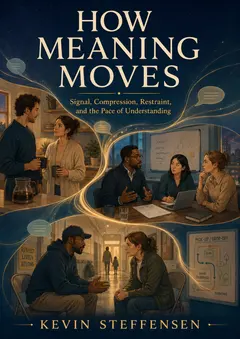
How Meaning Moves
Signal, Compression, Restraint, and the Pace of Understanding
Before people disagree, they interpret. How meaning forms through signal, compression, and restraint—long before anyone is obviously wrong, and often while the sentence is still forming.
View book
Book
How Serious Systems Learn
Disciplines for Acting Without Certainty
A handbook for teams and institutions that need to learn in motion, improve under pressure, and make better decisions without waiting for perfect information.
View book
Book
The Discipline of Uncertainty
Judgment, Restraint, and Decision Quality Under Incomplete Information
Field notes on judgment, restraint, and decision quality when information is incomplete.
View book

Book
Trust Beyond Similarity
How Trust Remains Possible Across Difference
How people learn to trust perspectives they do not share—and why trust becomes more valuable when perspectives differ.
View book
Book
When Accountability No Longer Expires
How Legitimate Authority Learns to Survive Harm
An institutional lens on why legitimate authority can persist after harm. Organizations learn to survive scandal without resolving it.
View book

Book
When Others Look to You
Renewal and Erosion in Leadership
A leadership field guide to how influence forms, how trust is renewed, and how erosion begins when responsibility drifts from practice.
View book

Book
When Others Look to You: Companion Edition
Forming, Renewing, Eroding, Repeating
How leadership influence forms, renews, erodes, and repeats across the full cycle of responsibility in practice.
View book
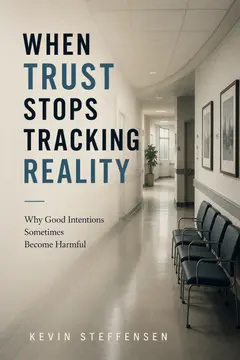
Book
When Trust Stops Tracking Reality
Why Good Intentions Sometimes Become Harmful
How trust drifts from evidence when good intentions stop learning from feedback—through the fictional arc of Calder Family Health and real institutional patterns.
View book
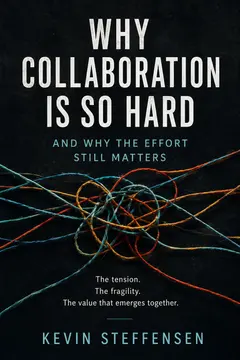
Book
Why Collaboration Is So Hard
And Why the Effort Still Matters
Why joint work fails when incentives, trust, and shared understanding do not line up—and why the effort to collaborate still matters.
View book