
Nonfiction
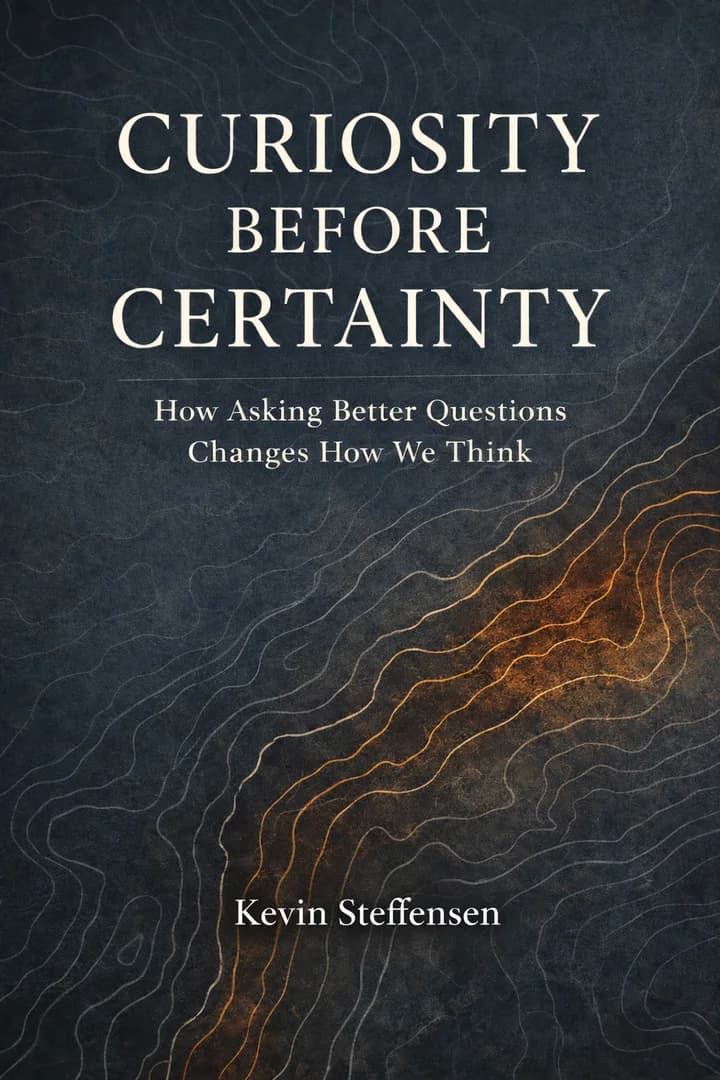
Curiosity Before Certainty
How Curiosity Helps Us Understand a Complex World
By Kevin Steffensen
An argument for disciplined curiosity as a leadership and learning posture when easy certainty hides complexity and weakens judgment.
An argument for disciplined curiosity as a leadership and learning posture when easy certainty hides complexity and weakens judgment.
Offered under open publishing terms (CC BY-SA). Download formats are free where available; purchase links support print editions.
- Type
- Nonfiction · monograph
- Author
- Kevin Steffensen
- Published
- February 2026
- Chapters
- 14 chapters
- Formats
- EPUB, PDF, DOCX
On these shelves
Also in Core After Certainty
View all 6 →
After Certainty
How to Live and Judge When Understanding is not Enough
Trust Beyond Similarity
How Trust Remains Possible Across Difference
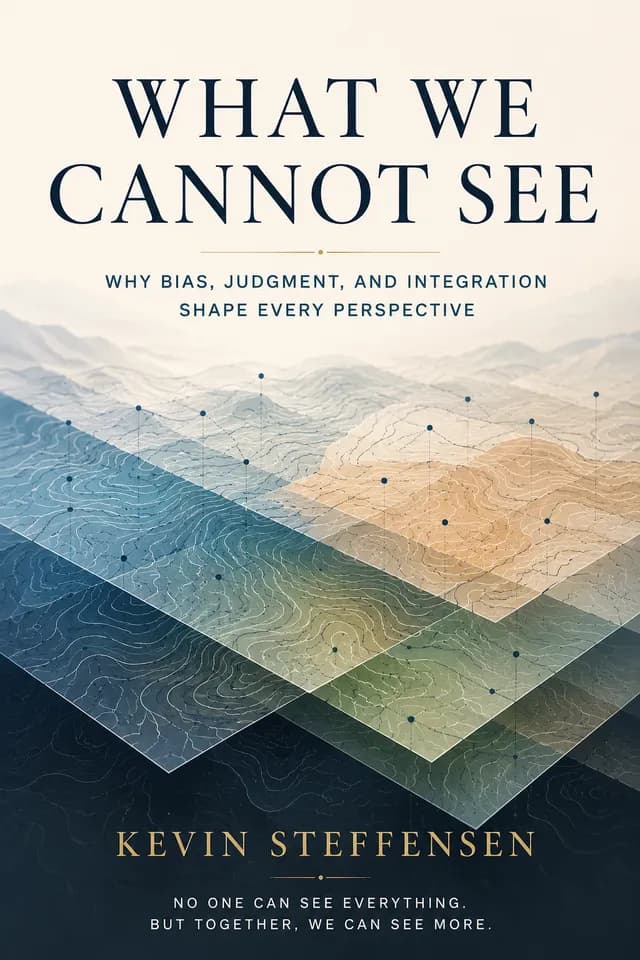
What We Cannot See
Bias, Judgment, and the Limits of Perspective
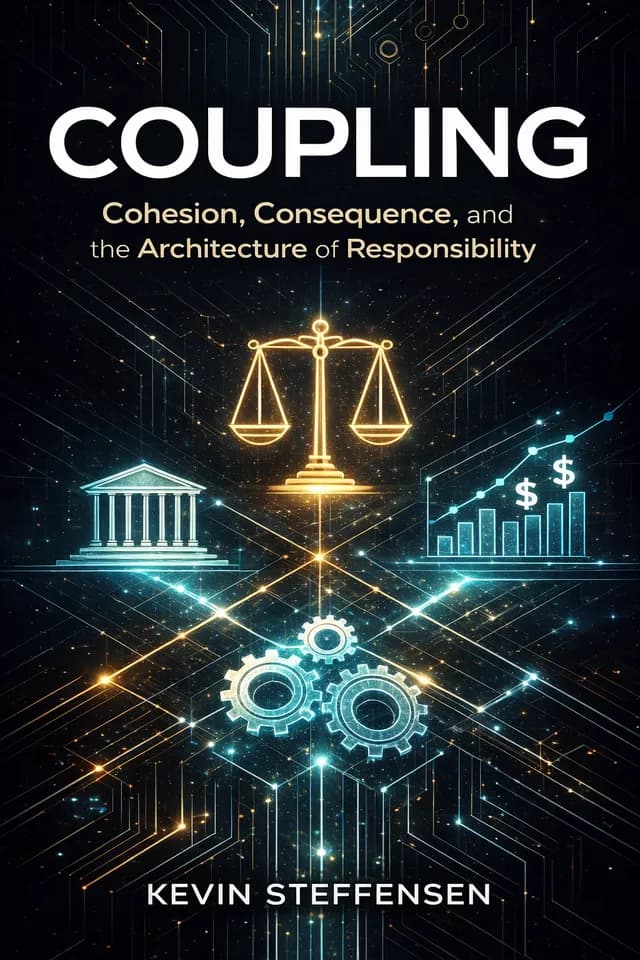
Coupling
Cohesion, Consequence, and the Architecture of Responsibility
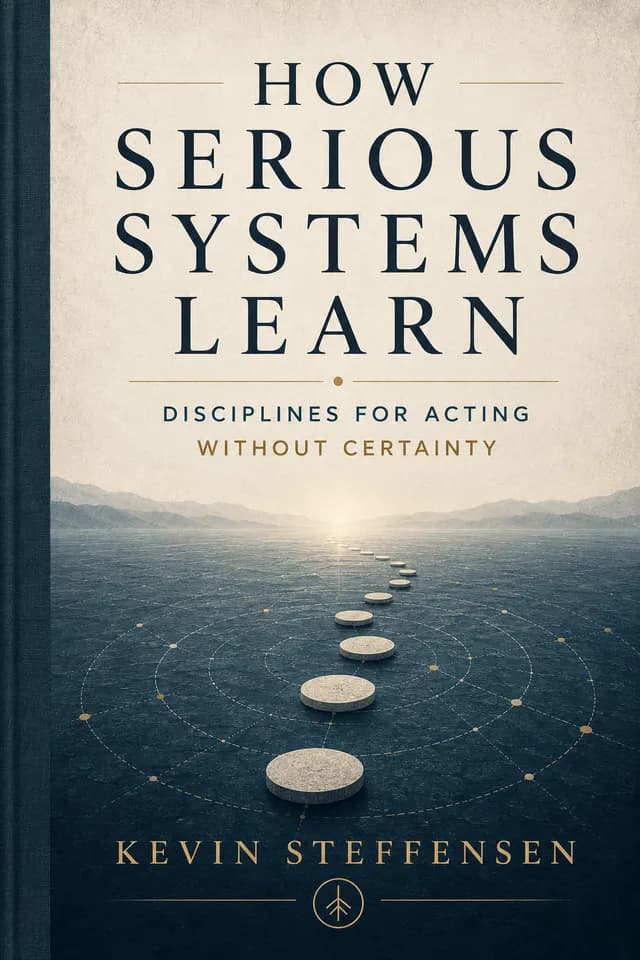
How Serious Systems Learn
Disciplines for Acting Without Certainty
The question this book explores
How do we stay curious when easy certainty would feel safer?
Why this book exists
Curiosity Before Certainty is a friendly doorway into the project. It argues for disciplined curiosity as a learning and leadership posture when premature certainty hides complexity and weakens judgment.
Who it is for
Readers who want an approachable entry before denser systems or leadership volumes — including newcomers to After Certainty.
What it is not
- It does not offer a complete epistemology or a replacement ideology.
- It does not treat curiosity as endless delay of decision.
Central ideas
A curated handful of concepts and patterns this book develops — not the full inventory.
Concept
Uncertainty
In this book: The condition curiosity practices inside—incomplete information that still requires noticing and next moves.
Explore the conceptConcept
Certainty
In this book: The premature closure curiosity resists; easy certainty that hides complexity rather than earning judgment.
Explore the conceptConcept
Humility
In this book: Epistemic posture of "I might be wrong"—courage to stay open without abandoning action.
Explore the conceptConcept
Revisability
In this book: Designed openness to update after small experiments; curiosity as practice, not endless deferral.
Explore the conceptConcept
Provisional commitment
In this book: Acting on the best partial case while remaining structurally willing to revise.
Explore the conceptPattern
Meaning Forms Early
In this book: Shows how a working story settles before checking—curiosity interrupts premature closure.
Explore the patternPattern
Gaps Invite Completion
In this book: Names the urge to fill ambiguity fast; curiosity keeps the gap open long enough to notice.
Explore the patternPattern
Feedback Drives Change
In this book: Small experiments and debugging as curiosity in motion—new facts still allowed to change direction.
Explore the pattern
Inside this book
How the book is organized — parts, chapters, and what each section investigates.
About 30 min of reading across 14 sections in 6 parts.
Part I — Learning to Notice
3 sections
Part I — Learning to Notice
3 sectionsPart II — Exploring Systems
3 sections
Part II — Exploring Systems
3 sectionsPart III — Human Systems
3 sections
Part III — Human Systems
3 sectionsPart IV — The Hidden Structures of Human Systems
2 sections
Part IV — The Hidden Structures of Human Systems
2 sectionsPart V — Living With Curiosity
1 section
Part V — Living With Curiosity
1 sectionOther sections
2 sections
Other sections
2 sections- Closing Reflection1 min
Where it fits
Suggested reading order and nearby volumes — not a mandatory sequence.
Read next
Continue exploring
- Next book — What We Cannot See
- Start with a question — Why can sincere people still be wrong?
Updates
Reading trails featuring this book
Editorial paths that include this book as one stop in a longer sequence.
Judgment
Judgment Before Certainty
How to keep thinking, revising, and acting when the full picture has not arrived—and why false certainty is often the greater risk.
7 stops · ~138 min
Follow this trail →Attention and knowing
Practices of Seeing
From comparative practices that form better knowers, through poetry of decisive attention, into finite perspective and disciplined curiosity.
5 stops · ~125 min
Follow this trail →Full related inventoryShowHide
Complete concept, pattern, and thinker lists for readers who want the full semantic map.
Major patterns
Supporting · Corrective
Commitment Leaves Room
Systems must act before certainty arrives, but commitments become dangerous when correction threatens identity, legitimacy, sunk cost, or authority. - Action cannot wait for certainty - Closed commitment resists correction Commitment enables coordinated action while preserving room for revision when evidence, conditions, or consequences change.
View Pattern →
Supporting · Corrective
Commitment Leaves Room
Systems must act before certainty arrives, but commitments become dangerous when correction threatens identity, legitimacy, sunk cost, or authority. - Action cannot wait for certainty - Closed commitment resists correction Commitment enables coordinated action while preserving room for revision when evidence, conditions, or consequences change.
Master pattern
Reality Answers Back
Human systems must simplify reality in order to perceive, decide, coordinate, and act. Those simplifications necessarily leave out people, consequences, perspectives, history, and changed conditions. - Simplification is required for coordinated action - What is left out eventually returns - Systems need paths for revision before collapse Every abstraction, institution, decision, and model eventually encounters the reality it only partially captured. Reality answers through failures, exceptions, dissent, unintended behavior, lived experience, or consequences the model did not contain.
View Pattern →
Master pattern
Reality Answers Back
Human systems must simplify reality in order to perceive, decide, coordinate, and act. Those simplifications necessarily leave out people, consequences, perspectives, history, and changed conditions. - Simplification is required for coordinated action - What is left out eventually returns - Systems need paths for revision before collapse Every abstraction, institution, decision, and model eventually encounters the reality it only partially captured. Reality answers through failures, exceptions, dissent, unintended behavior, lived experience, or consequences the model did not contain.
Related songs
Song
A Perfectly Reasonable Disaster
Psychedelic art-pop parable: Gerald moves a road sign six feet, everyone follows reasonably, and the world forgets its name.
View Song →
Song
A Perfectly Reasonable Disaster
Psychedelic art-pop parable: Gerald moves a road sign six feet, everyone follows reasonably, and the world forgets its name.
Song
Again, Differently
French-house vocoder anthem: returning to the same question and the same person, but nothing identical—again, differently.
View Song →
Song
Again, Differently
French-house vocoder anthem: returning to the same question and the same person, but nothing identical—again, differently.
Song
Just Don’t Grab the Wheel
Rootsy country-folk porch wisdom: welcome the backseat lecture from here to Chapel Hill, but keep your hands on your own wheel and leave room for what you have not learned.
View Song →
Song
Just Don’t Grab the Wheel
Rootsy country-folk porch wisdom: welcome the backseat lecture from here to Chapel Hill, but keep your hands on your own wheel and leave room for what you have not learned.
Song
L’Arrêt en Fait Partie
Experimental French math rock: clipped mantras, shifting meters, and sudden silences insist the stop is part of the groove, and that the small error knows something.
View Song →
Song
L’Arrêt en Fait Partie
Experimental French math rock: clipped mantras, shifting meters, and sudden silences insist the stop is part of the groove, and that the small error knows something.
Song
Miss Maybe & Mister Sure
Speakeasy swing duet: sly Miss Maybe and pompous Mister Sure trade brass-stab jokes about overreading winks, silence, and “fine,” until comic certainty briefly cracks into not-sure.
View Song →
Song
Miss Maybe & Mister Sure
Speakeasy swing duet: sly Miss Maybe and pompous Mister Sure trade brass-stab jokes about overreading winks, silence, and “fine,” until comic certainty briefly cracks into not-sure.
Song
Mr. Bell Keeps the Weather
Noir theatrical piano blues: an ex-weatherman hoards broken barometers and storms that never came, warning not to confuse odds with what happens after all.
View Song →
Song
Mr. Bell Keeps the Weather
Noir theatrical piano blues: an ex-weatherman hoards broken barometers and storms that never came, warning not to confuse odds with what happens after all.
Song
Nóg
Glacial Icelandic post-rock: a fragile voice chants Nóg—enough—to see, answer, and keep hands open without demanding peace, proof, or a final complete picture.
View Song →
Song
Nóg
Glacial Icelandic post-rock: a fragile voice chants Nóg—enough—to see, answer, and keep hands open without demanding peace, proof, or a final complete picture.
Song
NOT YET!
Neon techno J-pop at club tempo: three voices chant NOT YET while Japanese verses catch the mind writing a finished story from one glance, and English hooks keep every answer playfully provisional.
View Song →
Song
NOT YET!
Neon techno J-pop at club tempo: three voices chant NOT YET while Japanese verses catch the mind writing a finished story from one glance, and English hooks keep every answer playfully provisional.
Song
Obviously, Baby
Decadent art-funk satire: smug falsetto certainty that already knows what every pause and silence means—obviously.
View Song →
Song
Obviously, Baby
Decadent art-funk satire: smug falsetto certainty that already knows what every pause and silence means—obviously.
Song
Right Until Further Notice
UK garage–zydeco story-song: everyone saw something different, and the tale stays right—until further notice.
View Song →
Song
Right Until Further Notice
UK garage–zydeco story-song: everyone saw something different, and the tale stays right—until further notice.
Song
Still We Go
Sunlit Swahili choral anthem: we do not know everything and do not see everything—INATOSHA—and still we go together with open hands and open eyes.
View Song →
Song
Still We Go
Sunlit Swahili choral anthem: we do not know everything and do not see everything—INATOSHA—and still we go together with open hands and open eyes.
Song
The Moon Is Probably Fine
Woozy Mellotron psychedelia: a three a.m. moon scare softens into probably fine—enough uncertain reassurance to leave the curtains open and let the night continue.
View Song →
Song
The Moon Is Probably Fine
Woozy Mellotron psychedelia: a three a.m. moon scare softens into probably fine—enough uncertain reassurance to leave the curtains open and let the night continue.
Song
The Truth Got a Side Door
Early-seventies psychedelic soul-funk: truth slips in barefoot through the side door while your polished speech and shining shoes wait on the front steps.
View Song →
Song
The Truth Got a Side Door
Early-seventies psychedelic soul-funk: truth slips in barefoot through the side door while your polished speech and shining shoes wait on the front steps.
Song
Wait, What?
Theatrical space-rap battle: Certainty vs Question, with mission-control swagger interrupted every time confidence outruns the evidence.
View Song →
Song
Wait, What?
Theatrical space-rap battle: Certainty vs Question, with mission-control swagger interrupted every time confidence outruns the evidence.