Song
Working Theory
Kevin Steffensen
Instrumental-forward alt hip-hop: a relaxed MC treats beliefs as tools with expiry dates—working theory, good enough for now, update when it breaks.
Chopped guitar hooks and dry breakbeats carry a comic refusal of laminated final answers. The verses catalog motives and boxes until one fact won't normalize, then change the theory instead of the facts.
Chopped guitar hooks and dry breakbeats carry a comic refusal of laminated final answers. The verses catalog motives and boxes until one fact won't normalize, then change the theory instead of the facts. The Discipline of Uncertainty and Curiosity Before Certainty fit holding models lightly; After Certainty hears provisional commitment that still means what it believes. Patterns revisability-preserves-judgment and reality-answers-back match testing edges and letting tomorrow revise Tuesday's draft. Intellectual hygiene, not indecision.
- Languages
- en
Recordings
- Working TheoryPrimary
4:12 · chirp-hawk v6
Related patterns3 patterns
Pattern
Revisability Preserves Judgment
Judgment remains necessary when certainty weakens; people still must weigh tradeoffs and consequences without a final frame to hide inside. Finality no longer stabilizes judgment, yet paralysis and dogma are both available failures. - New information threatens prior commitments - Groups confuse openness with weakness - Revision must be practiced without infinite deferral - Coherence pressures compete with contact with reality Revisability is what prevents judgment from hardening into dogma. A leader publishes what would change their mind—and acts on the answer when it arrives.
View Pattern →
Pattern
Finality Compensates for Uncertainty
When uncertainty feels intolerable, people reach for closure—harsh judgment, confident speech, or premature alignment. Severity and certainty provide emotional relief where epistemic stability no longer exists. - Ambiguity feels morally unstable - Confidence signals competence - Revision is delayed to preserve calm - Groups reward decisive tone over accurate scope Finality provides relief where certainty no longer exists; insecurity often sits underneath severity. A leader announces an irreversible policy so the room can stop inhabiting doubt together.
View Pattern →
Master pattern
Reality Answers Back
Human systems must simplify reality in order to perceive, decide, coordinate, and act. Those simplifications necessarily leave out people, consequences, perspectives, history, and changed conditions. - Simplification is required for coordinated action - What is left out eventually returns - Systems need paths for revision before collapse Every abstraction, institution, decision, and model eventually encounters the reality it only partially captured. Reality answers through failures, exceptions, dissent, unintended behavior, lived experience, or consequences the model did not contain.
View Pattern →
Related concepts5 concepts
Concept
Revisability
Revisability names the capacity to change course without pretending the first pass was final. It becomes important whenever uncertainty remains after action starts and harm can accumulate while people wait for closure. It helps preserve contact with changing conditions and proportionate response, but can fail when updating is labeled flip-flopping or when institutions punish revisions that unsettle prior verdicts. It differs from correction because revisability is the designed openness; correction is the specific act of noticing mismatch and updating. It differs from judgment because revisability keeps decisions attached to reality over time, not only at the moment of decision.
View Concept →
Concept
Provisional commitment
Acting on the best partial case while remaining structurally willing to revise when new information arrives.
View Concept →
Concept
Certainty
Certainty names the compression of choice and ambiguity into stable expectation—roles, law, and moral systems that make behavior predictable enough to coordinate under pressure. It is not truth discovered once and for all, but adaptation hardened under instability. It becomes important when coordination breaks down faster than explanation can travel, when seasons will not wait for debate, when strangers must act together without shared context. Certainty enables collective action by reducing the decision space, making tomorrow recognizable from yesterday, allowing people to act together even when they do not agree on reasons. It becomes dangerous when it outlives the conditions that first made it workable—when compression persists after instability has passed, when revision begins to feel like betrayal, when systems still run while the fit between structure and reality thins. It differs from conviction in that certainty is social and structural, while conviction is personal belief.
View Concept →
Concept
Uncertainty
Uncertainty names the condition moral and social systems are built to navigate—the space where coordination must happen before truth is settled, where lives are fragmented and behavior must hold together under incomplete information. It becomes important because human action cannot wait for perfect knowledge; groups must decide, move, and coordinate even when the future is unclear, when disagreement is costly, when explanation cannot travel fast enough to settle disputes before consequences arrive. Uncertainty is not a problem to eliminate but a condition to navigate—the ground on which moral life operates. Certainty emerges as an adaptive response to uncertainty, compressing ambiguity into stable expectations so action can proceed. But uncertainty itself is neither failure nor freedom; it is the default state that requires coordination tools. The After Certainty project explores how to practice judgment, accountability, and responsiveness inside uncertainty rather than demanding that uncertainty be resolved before moral life can begin. The question uncertainty raises is: what uncertainty is this system trying to reduce? Is ambiguity dangerous because the stakes are genuinely high, or because failure now scales? Uncertainty differs from ignorance in that uncertainty is about incomplete information in contexts requiring action, while ignorance is simply lack of knowledge.
View Concept →
Concept
Judgment
Judgment names the capacity to decide when understanding is incomplete but harm, coordination, or responsibility will not wait. It becomes important whenever action must proceed under partial information and real consequence. It helps preserve proportionality, answerability, and room for revision, but can fail when judgment hardens into dogma, paralysis, or punitive finality. It differs from certainty because judgment accepts incomplete sight; it differs from preference because judgment weighs consequence beyond taste; it differs from optimization because judgment keeps contestability and human proportion in view; it differs from rule-following because judgment must still respond when rules lag reality.
View Concept →
Related books3 books

Book
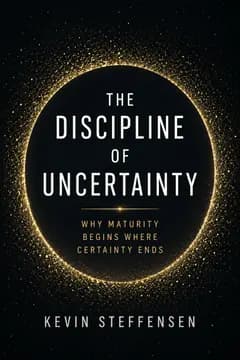
The Discipline of Uncertainty
Judgment, Restraint, and Decision Quality Under Incomplete Information
Field notes on judgment, restraint, and decision quality when information is incomplete.
View book
Book
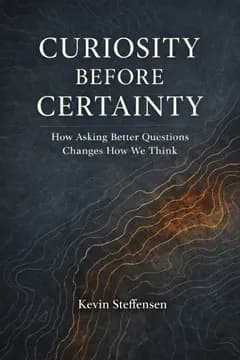
Curiosity Before Certainty
How Curiosity Helps Us Understand a Complex World
An argument for disciplined curiosity as a leadership and learning posture when easy certainty hides complexity and weakens judgment.
View book
Book
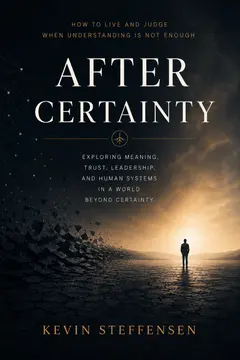
After Certainty
How to Live and Judge When Understanding is not Enough
How to live and judge once explanation reaches its limits—judgment, responsibility, and participation without replacement frameworks.
View book