
Pattern
Revisability Preserves Judgment
Revisability is what prevents judgment from hardening into dogma.
Judgment remains necessary when certainty weakens; people still must weigh tradeoffs and consequences without a final frame to hide inside. Finality no longer stabilizes judgment, yet paralysis and dogma are both available failures. - New information threatens prior commitments - Groups confuse openness with weakness - Revision must be practiced without infinite deferral - Coherence pressures compete with contact with reality Revisability is what prevents judgment from hardening into dogma. A leader publishes what would change their mind—and acts on the answer when it arrives.
Setup
Judgment remains necessary when certainty weakens; people still must weigh tradeoffs and consequences without a final frame to hide inside.
Problem
Finality no longer stabilizes judgment, yet paralysis and dogma are both available failures.
Forces
- New information threatens prior commitments
- Groups confuse openness with weakness
- Revision must be practiced without infinite deferral
- Coherence pressures compete with contact with reality
Observation
Revisability is what prevents judgment from hardening into dogma.
Example
A leader publishes what would change their mind—and acts on the answer when it arrives.
At a glance
What it does
Revisability is what prevents judgment from hardening into dogma.
Why it matters
Finality no longer stabilizes judgment, yet paralysis and dogma are both available failures.
Key risk
judgment is described as practice rather than verdict
Counterbalance
act without pretending the matter is finished
Recognition signals
- judgment is described as practice rather than verdict
- revision is framed as accountability, not collapse
- restraint is distinguished from indefinite waiting
- provisional decisions are named under partial understanding
Questions to ask
- What would revision look like if it were expected?
- Where are we using finality to compensate for uncertainty?
- What response is warranted given what we cannot know?
Counterbalances
- act without pretending the matter is finished
- publish what would change your mind
- separate restraint from fear of being wrong
Trajectory
Early signals
- judgment still draws lines and responds to harm
- people fear judgment means harsh final closure
Intensification
- severity increases when certainty underneath is thin
- waiting for more confidence delays warranted action
Failure modes
- revision threatens identity when judgment depends on finality
- paralysis masquerades as openness
Restoration paths
- treat new information as part of practice
- accept discomfort of no clean moral completion
Manifestations
leadership
- decisions carry consequences without claiming permanent settlement
- leaders model provisional commitment
organizations
- reviews are scheduled without punishing updates
- policies include revisability clauses
Reading trails featuring this pattern
Editorial paths that include this pattern as one stop in a longer sequence.
Judgment
Judgment Before Certainty
How to keep thinking, revising, and acting when the full picture has not arrived—and why false certainty is often the greater risk.
7 stops · ~138 min
Follow this trail →Judgment
Protected Judgment Under Speed
How acceleration relocates the constraint on thinking—and what institutions must protect if judgment is to remain possible.
6 stops · ~76 min
Follow this trail →Judgment
Room for the Unfitting Case
How rules compress reality for fairness—and what architecture keeps judgment possible when the leftover case becomes decisive.
6 stops · ~59 min
Follow this trail →Appears in chapters
- Chapter 1 — The End of Correctness
- Part II — What Can Still Be Practiced
- Chapter 4 — Judgment Without Finality
- Chapter 7 — The Discipline of Not Knowing
- Chapter 9 — When to Stop Interpreting
- Conclusion — Enough
- Appendix — Stabilizers and Distortions
- About the Author
And 46 more chapters with this association.
Related books6 books
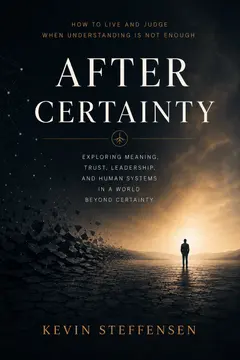
Book
After Certainty
How to Live and Judge When Understanding is not Enough
How to live and judge once explanation reaches its limits—judgment, responsibility, and participation without replacement frameworks.
View book
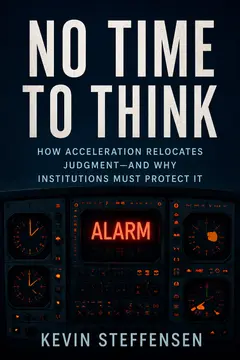
Book
No Time to Think
How Acceleration Relocates Judgment—and Why Institutions Must Protect It
Speed is not inherently careless, but judgment depends on conditions—time, attention, consequence contact, and stop authority. No Time to Think examines what happens when production accelerates faster than a system's capacity to understand, verify, integrate, maintain, and care for what it produces—and how institutions can design responsible speed.
View book
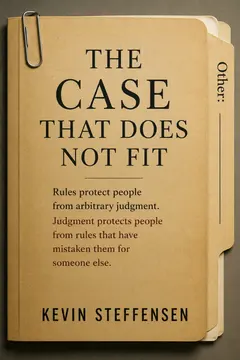
Book
The Case That Does Not Fit
How Rules Protect Us—and What Institutions Must Do When They Misread Us
Rules make shared life possible, but every rule is a compression. The Case That Does Not Fit examines what happens when the ignored detail becomes the morally decisive one—and how institutions can preserve both protection from arbitrary judgment and protection from rules that have mistaken a person for someone else.
View book
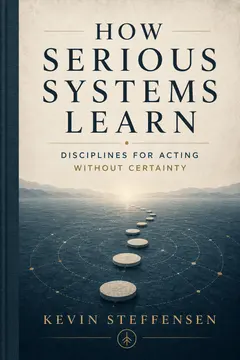
Book
How Serious Systems Learn
Disciplines for Acting Without Certainty
A handbook for teams and institutions that need to learn in motion, improve under pressure, and make better decisions without waiting for perfect information.
View book
Book
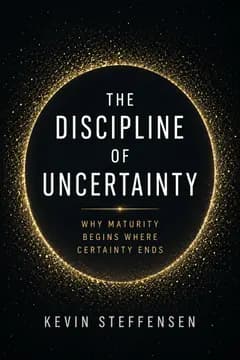
The Discipline of Uncertainty
Judgment, Restraint, and Decision Quality Under Incomplete Information
Field notes on judgment, restraint, and decision quality when information is incomplete.
View book
Book
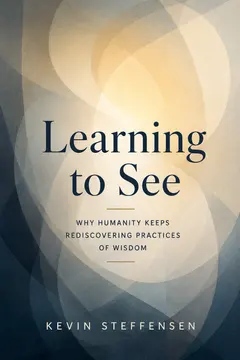
Learning to See
Why Humanity Keeps Rediscovering Practices of Wisdom
A comparative inquiry into how scientific, philosophical, psychological, and spiritual traditions develop practices that help people notice more honestly and live with uncertainty—without claiming those traditions are secretly the same.
View book
Related songs
Song
A Perfectly Reasonable Disaster
Psychedelic art-pop parable: Gerald moves a road sign six feet, everyone follows reasonably, and the world forgets its name.
View Song →
Song
A Perfectly Reasonable Disaster
Psychedelic art-pop parable: Gerald moves a road sign six feet, everyone follows reasonably, and the world forgets its name.
Song
Again, Differently
French-house vocoder anthem: returning to the same question and the same person, but nothing identical—again, differently.
View Song →
Song
Again, Differently
French-house vocoder anthem: returning to the same question and the same person, but nothing identical—again, differently.
Song
Just Don’t Grab the Wheel
Rootsy country-folk porch wisdom: welcome the backseat lecture from here to Chapel Hill, but keep your hands on your own wheel and leave room for what you have not learned.
View Song →
Song
Just Don’t Grab the Wheel
Rootsy country-folk porch wisdom: welcome the backseat lecture from here to Chapel Hill, but keep your hands on your own wheel and leave room for what you have not learned.
Song
L’Arrêt en Fait Partie
Experimental French math rock: clipped mantras, shifting meters, and sudden silences insist the stop is part of the groove, and that the small error knows something.
View Song →
Song
L’Arrêt en Fait Partie
Experimental French math rock: clipped mantras, shifting meters, and sudden silences insist the stop is part of the groove, and that the small error knows something.
Song
Le Formulaire Ne Connaît Pas Mardi
French retro-futurist art-pop: cheerful bureaucracy meets a door that sticks—Mardi is not a valid value on the form.
View Song →
Song
Le Formulaire Ne Connaît Pas Mardi
French retro-futurist art-pop: cheerful bureaucracy meets a door that sticks—Mardi is not a valid value on the form.
Song
Learning to See
Ethereal Celtic new-age hymn: a soft vow to keep learning to see, stay, and leave wonder inside beliefs, claiming no final window and no final view.
View Song →
Song
Learning to See
Ethereal Celtic new-age hymn: a soft vow to keep learning to see, stay, and leave wonder inside beliefs, claiming no final window and no final view.
Song
Nóg
Glacial Icelandic post-rock: a fragile voice chants Nóg—enough—to see, answer, and keep hands open without demanding peace, proof, or a final complete picture.
View Song →
Song
Nóg
Glacial Icelandic post-rock: a fragile voice chants Nóg—enough—to see, answer, and keep hands open without demanding peace, proof, or a final complete picture.
Song
NOT YET!
Neon techno J-pop at club tempo: three voices chant NOT YET while Japanese verses catch the mind writing a finished story from one glance, and English hooks keep every answer playfully provisional.
View Song →
Song
NOT YET!
Neon techno J-pop at club tempo: three voices chant NOT YET while Japanese verses catch the mind writing a finished story from one glance, and English hooks keep every answer playfully provisional.
Song
Right Until Further Notice
UK garage–zydeco story-song: everyone saw something different, and the tale stays right—until further notice.
View Song →
Song
Right Until Further Notice
UK garage–zydeco story-song: everyone saw something different, and the tale stays right—until further notice.
Song
Still We Go
Sunlit Swahili choral anthem: we do not know everything and do not see everything—INATOSHA—and still we go together with open hands and open eyes.
View Song →
Song
Still We Go
Sunlit Swahili choral anthem: we do not know everything and do not see everything—INATOSHA—and still we go together with open hands and open eyes.
Song
The Moon Is Probably Fine
Woozy Mellotron psychedelia: a three a.m. moon scare softens into probably fine—enough uncertain reassurance to leave the curtains open and let the night continue.
View Song →
Song
The Moon Is Probably Fine
Woozy Mellotron psychedelia: a three a.m. moon scare softens into probably fine—enough uncertain reassurance to leave the curtains open and let the night continue.
Song
The Truth Got a Side Door
Early-seventies psychedelic soul-funk: truth slips in barefoot through the side door while your polished speech and shining shoes wait on the front steps.
View Song →
Song
The Truth Got a Side Door
Early-seventies psychedelic soul-funk: truth slips in barefoot through the side door while your polished speech and shining shoes wait on the front steps.
Song
Wait, What?
Theatrical space-rap battle: Certainty vs Question, with mission-control swagger interrupted every time confidence outruns the evidence.
View Song →
Song
Wait, What?
Theatrical space-rap battle: Certainty vs Question, with mission-control swagger interrupted every time confidence outruns the evidence.