Pattern
Responsibility Persists Beyond Control
Care survives after control disappears; responsibility is not the same as mastery.
Outcomes often exceed personal influence, yet participation, attention, and response still matter where contact exists. Innocence becomes an escape from participation when systems feel too large to steer. - Scale makes withdrawal feel rational - Formal authority ends while influence continues - Care is mistaken for omnipotence - Answerability is confused with blame Care survives after control disappears; responsibility is not the same as mastery. An executive who has left a role still shapes what others do through permissions and precedents they normalized.
Setup
Outcomes often exceed personal influence, yet participation, attention, and response still matter where contact exists.
Problem
Innocence becomes an escape from participation when systems feel too large to steer.
Forces
- Scale makes withdrawal feel rational
- Formal authority ends while influence continues
- Care is mistaken for omnipotence
- Answerability is confused with blame
Observation
Care survives after control disappears; responsibility is not the same as mastery.
Example
An executive who has left a role still shapes what others do through permissions and precedents they normalized.
At a glance
What it does
Care survives after control disappears; responsibility is not the same as mastery.
Why it matters
Innocence becomes an escape from participation when systems feel too large to steer.
Key risk
she shows up without pretending agreement restores control
Counterbalance
remain present without pretending outcomes are steerable
Recognition signals
- she shows up without pretending agreement restores control
- innocence is attractive when systems feel too large to steer
- people act through rules and permissions others still inherit
- symbolic gestures substitute for sustained attention
Questions to ask
- Where is meaningful contact still possible without control?
- What participation continues after formal authority ends?
- Is this loyalty, avoidance, or answerability without mastery?
Counterbalances
- remain present without pretending outcomes are steerable
- notice effects rather than intentions alone
- refuse innocence as escape from participation
Trajectory
Early signals
- responsibility is assumed to require visible effectiveness
- distance feels justified when influence seems absent
Intensification
- harm persists while responsibility is treated as optional
- tradeoffs tolerated become precedents others follow
Failure modes
- care is abandoned because it cannot guarantee improvement
- abstraction replaces accountability at scale
Restoration paths
- narrow responsibility to human-scale contact
- document what you can still affect
Manifestations
leadership
- leaders remain answerable for permissions left ambiguous
- successors inherit normalized exceptions
organizations
- committees keep authority after the crisis ends
- symbolic statements replace remedy
Appears in chapters
- Part II — What Can Still Be Practiced
- Chapter 5 — Responsibility Without Control
- Conclusion — Enough
- Appendix — Stabilizers and Distortions
- 2. Responsibility as Cohesion
in Coupling
- Chapter 8 — Conflict, Confession, and Repair
- Chapter 11 — Responsibility After Certainty
- Part III — What the Result Demands
And 50 more chapters with this association.
Related books3 books
Book
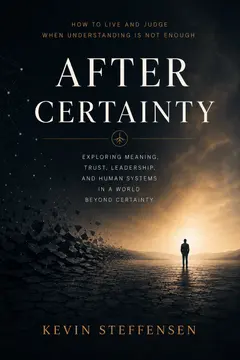
After Certainty
How to Live and Judge When Understanding is not Enough
How to live and judge once explanation reaches its limits—judgment, responsibility, and participation without replacement frameworks.
View book

Book
The World We Make Together
How Ordinary People, Unequal Power, and Shared Action Shape History
History is collective, but responsibility remains uneven. The World We Make Together follows ordinary objects—a switch, a ballot, a fence, a bowl, a scale—into the institutions and relationships through which people shape public life without becoming either solitary heroes or passive products of structure.
View book
Book
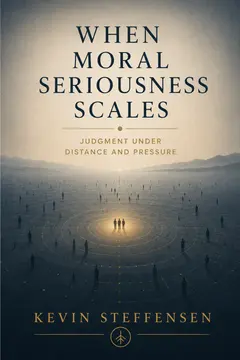
When Moral Seriousness Scales
Judgment Under Distance and Pressure
An exploration of how moral responsibility changes under scale, speed, and institutional distance, and how to preserve humane judgment anyway.
View book