
Concept
Agency
Agency names whether a person or institution can actually move the scene, not only be named on the org chart. It becomes important when speech, responsibility, or moral weight outrun real leverage.
Agency names whether a person or institution can actually move the scene, not only be named on the org chart. It becomes important when speech, responsibility, or moral weight outrun real leverage. It helps preserve honest coordination by distinguishing who can act from who must only absorb consequence, but can fail when low agency is mistaken for bad faith or when structural limits are narrated as personal failure. It differs from responsibility because responsibility can remain assigned when agency has thinned; it differs from judgment because agency is capacity to act, not the evaluative practice of deciding well.
Recognition signals
- speech promises agency when participation feels required
- structural causes soften agency until judgment delays
- inevitability slowly displaces choice in explanations
Questions to ask
- Where is agency real versus performed through language?
- What choice remains after complexity is established?
- When does speech substitute for contact?
Counterbalances
- name choices still available after context
- speak without claiming more agency than speech provides
- act where participation still changes contact
Trajectory
Early signals
- agency still feels available through speech and action
Intensification
- complexity absorbs moral energy
- agency is performed for audiences
Failure modes
- agency is claimed without effect on harm
Restoration paths
- return agency to human-scale participation
Manifestations
organizations
- statements express concern without consequence
Appears in chapters
- Chapter 5 — Responsibility Without Control
- Chapter 11 — Responsibility After Certainty
- Part III — What the Result Demands
- Chapter 5 — The Moral Language of Playing Hurt
- Chapter 6 — The Athlete Who Said No
- Introduction — The Switch
- Part I
- Chapter 1 — The Photograph
And 22 more chapters with this association.
Related books5 books
Book
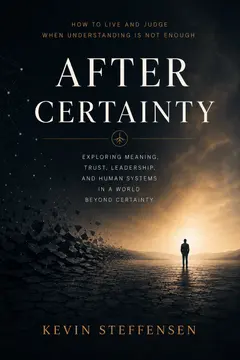
After Certainty
How to Live and Judge When Understanding is not Enough
How to live and judge once explanation reaches its limits—judgment, responsibility, and participation without replacement frameworks.
View book
Book
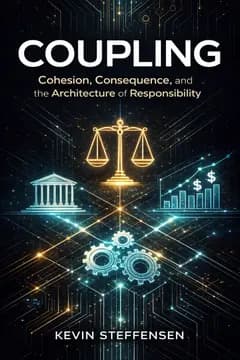
Coupling
Cohesion, Consequence, and the Architecture of Responsibility
A practical framework for seeing where systems are tightly joined, where they drift apart, and how those coupling choices shape accountability over time.
View book
Book
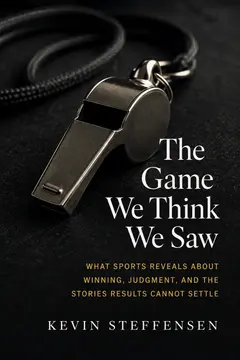
The Game We Think We Saw
What Sports Reveals About Winning, Judgment, and the Stories Results Cannot Settle
Sports gives us some of the clearest outcomes in public life. A score becomes final, a ruling takes effect, and one side advances. But the result cannot fully explain what produced it, why it should count, what it is allowed to justify, who carried its cost, or what the event will eventually mean. The Game We Think We Saw follows those unsettled questions from the scoreboard into the systems, bodies, judgments, and stories surrounding the game.
View book

Book
The World We Make Together
How Ordinary People, Unequal Power, and Shared Action Shape History
History is collective, but responsibility remains uneven. The World We Make Together follows ordinary objects—a switch, a ballot, a fence, a bowl, a scale—into the institutions and relationships through which people shape public life without becoming either solitary heroes or passive products of structure.
View book
Book
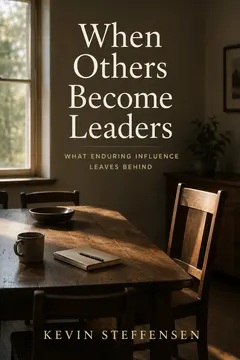
When Others Become Leaders
What Enduring Influence Leaves Behind
What kind of leadership increases the capacity of others to act, care, organize, and lead beyond the originating person.
View book
Thinkers & sources9 thinkers
Person
Charles M. Payne
Historian of the Mississippi freedom movement and the organizing tradition beneath charismatic leadership.
View Thinker →
Person
Douglas McGregor
Management theorist of Theory X/Y and the human side of enterprise.
View Thinker →
Person
John Stuart Mill
Liberal political philosopher of representative government, liberty, and public deliberation.
View Thinker →
Person
Mary Parker Follett
Organizational thinker of power-with, integration, and creative conflict in group life.
View Thinker →
Person
Naomi Osaka
Tennis champion whose TIME essay framed mental health and media refusal as athletic agency.
View Thinker →
Person
Paul S. Adler
Organization scholar of NUMMI and the learning bureaucracy as joint-venture practice.
View Thinker →
Person
Sidney Fine
Labor historian of the 1936–37 General Motors sit-down strike and industrial democracy.
View Thinker →
Person
Thomas Carlyle
Nineteenth-century essayist whose hero-worship lectures framed great-person theories of history.
View Thinker →
Person
Will Graves
Associated Press writer covering Simone Biles's Tokyo withdrawal and beam return.
View Thinker →
Outgoing dynamics2 relationships
contrasts
Responsibility can remain assigned when agency has thinned; agency is capacity to act.
contrasts
Agency is capacity to act, not the evaluative practice of deciding well.