Song
Somebody Feels It
Kevin Steffensen
Deep roots dub reggae: delayed vocals insist that every cost pushed downstream still lands—somebody, somewhere, carries the rest of the night.
Huge sub-bass, one-drop drums, and spring-reverb echoes make consequence linger as sound design.
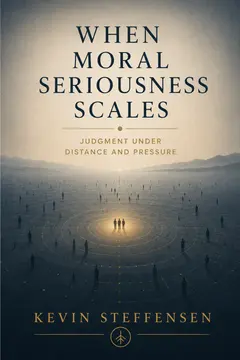
Huge sub-bass, one-drop drums, and spring-reverb echoes make consequence linger as sound design. Words leave one mouth light and arrive heavy elsewhere; a number changes far away and somebody pays; nothing disappears because we refuse to bear it. When Moral Seriousness Scales and Coupling verify distance from felt cost and consequence architecture. Patterns distance-conceals-consequence and responsibility-persists-beyond-control match weight that continues after hands let go. Knowing the reason does not lift what someone else must still breathe through until the morning comes.
- Languages
- en
Recordings
- Somebody Feels ItPrimary
4:50 · chirp-hawk v6
4:23 · chirp-auk v4.5-all
Related patterns3 patterns
Supporting · Obscuring
Distance Conceals Consequence
Those with the greatest authority may have the least direct contact with what their decisions produce. - Authority often sits far from effects - Distance makes consequence optional in practice The farther decisions are separated from their effects by time, place, role, abstraction, or organizational layers, the easier it becomes for consequences to disappear.
View Pattern →
Pattern
Responsibility Persists Beyond Control
Outcomes often exceed personal influence, yet participation, attention, and response still matter where contact exists. Innocence becomes an escape from participation when systems feel too large to steer. - Scale makes withdrawal feel rational - Formal authority ends while influence continues - Care is mistaken for omnipotence - Answerability is confused with blame Care survives after control disappears; responsibility is not the same as mastery. An executive who has left a role still shapes what others do through permissions and precedents they normalized.
View Pattern →
Supporting · Obscuring
Compression Loses the Person
Human systems require simplification to coordinate at scale, but the details removed by compression may contain the morally or practically decisive fact. - Scale requires compression - Decisive particulars may be what compression removes When complexity is compressed into categories, metrics, roles, averages, summaries, or stories, the person or particular case can disappear from view.
View Pattern →
Related concepts5 concepts
Concept
Distance
Distance names separation between decision and consequence, between action and its effects, between authority and those it governs. It becomes important as coordination extends beyond direct relational encounter—as scale grows and abstraction layers multiply. Distance makes harm harder to trace, feedback slower to arrive, and responsibility harder to locate. It helps coordination reach across space and time, enabling larger and more complex forms of collective action, but it thins the connection between choosers and those who live with the outcomes. As distance opens, action and reflection no longer meet in the same place; decisions travel while bodies receive the consequences; institutions record outcomes in ways that differ from how people experience them. Distance becomes built into the architecture of moral life at scale—not as failure but as structure. The question it raises is: how far does decision travel before consequence is felt? Who can see the full chain between policy and harm? Distance differs from mediation (routing through intermediaries) in that distance is the gap itself, while mediation is what fills or crosses the gap.
View Concept →
Concept
Consequence
Consequence names what happens as a result of decisions and actions—the lived effects that bodies, communities, and ecologies experience regardless of what policies, plans, or intentions recorded. It becomes important when distance, scale, or mediation open gaps between choosers and those who live with the outcomes, when responsibility becomes harder to trace and feedback slower to arrive. Consequence matters because moral life depends on contact between action and effect; accountability works when people can see, feel, or trace the chain between decision and harm. But as coordination extends beyond direct encounter, consequence can travel far from decision—files move while bodies wait, planners optimize logistics far from where effects land, institutions record outcomes in ways that differ from how people experience them. Distance between action and consequence can thin responsibility into role compliance, where doing the job correctly feels sufficient even when outcomes are troubling. The question consequence raises is: who stands where the consequence lands? How long between action and recognizable effect? Consequence differs from outcome (what systems record) in that consequence is what people actually experience, which may not match what was intended or measured.
View Concept →
Concept
Harm
Harm names where cost lands when influence is exercised—who absorbs it, who is kept in view, and what displacement is treated as acceptable. It marks the lived consequence of action, authority, design, or coordination. The visibility dimension matters—who is harmed in particular, not on average? Can they name it? Can they respond? Does the system register it or treat it as acceptable loss? Harm continues while interpretation expands, briefings make harm legible without smaller, people can still tell when something is doing harm. The question harm raises—is harm unchanged outside while we analyze inside? When does naming harm substitute for reducing it? The failure mode—harm persists while moral work feels complete, delays continue after excellent postmortems, harm becomes statistical at scale. The restoration path—return to particular harms and people, check effects outside the room after briefings, stop when outcomes for people are unchanged, pair analysis with named remedy attempts, accept harm as inevitable without abandoning response.
View Concept →
Concept
Asymmetry
Asymmetry names the structural unevenness that scale introduces—decision travels on paper while consequence arrives in bodies, authority operates where presence cannot follow, and responsibility distributes across offices rather than remaining in persons. It can appear across institutions, teams, politics, families, and systems wherever coordination separates action from consequence. Governors sign orders for villages they will never visit, clerks stamp files executed in provinces they cannot see, and accountability thins for those farthest from the seal. At scale, asymmetry becomes ordinary architecture rather than exceptional abuse—no one in the room feels fully responsible, yet harm continues.
View Concept →
Concept
Accountability
Accountability names whether consequence still reaches the people who can respond. It becomes important when scale, narrative, or abstraction thins contact between action and effect. It helps preserve correction and proportionate answerability, but can fail when moral sorting replaces sustained contact with outcomes. It differs from responsibility because accountability emphasizes exposure to consequence; responsibility includes the ongoing obligation to account even when control is partial.
View Concept →
Related books2 books

Book
When Moral Seriousness Scales
Judgment Under Distance and Pressure
An exploration of how moral responsibility changes under scale, speed, and institutional distance, and how to preserve humane judgment anyway.
View book

Book
When Authority Outlives Accountability
A Lens for Moral Leadership
A leadership lens on how authority can persist after accountability erodes, and what moral leadership requires to restore integrity in that gap.
View book