Song
Right Until Further Notice
Kevin Steffensen
UK garage–zydeco story-song: everyone saw something different, and the tale stays right—until further notice.
Shuffled 2-step and chopped accordion carry a crowded back-door dispute that never settles into one clean account. Witness piles on witness; provisional commitment and revisability keep the story usable without pretending it is finished.
Shuffled 2-step and chopped accordion carry a crowded back-door dispute that never settles into one clean account. Witness piles on witness; provisional commitment and revisability keep the story usable without pretending it is finished. The Game We Think We Saw and What We Cannot See fit partial sight; Curiosity Before Certainty fits raising a glass while the next fact arrives. Patterns revisability-preserves-judgment and contact-keeps-the-read-open match the hook's open clause: right until further notice.
- Languages
- en
Recordings
- Right Until Further NoticePrimary
4:26 · chirp-hawk v6
Related patterns4 patterns
Pattern
Revisability Preserves Judgment
Judgment remains necessary when certainty weakens; people still must weigh tradeoffs and consequences without a final frame to hide inside. Finality no longer stabilizes judgment, yet paralysis and dogma are both available failures. - New information threatens prior commitments - Groups confuse openness with weakness - Revision must be practiced without infinite deferral - Coherence pressures compete with contact with reality Revisability is what prevents judgment from hardening into dogma. A leader publishes what would change their mind—and acts on the answer when it arrives.
View Pattern →
Pattern
Contact Keeps the Read Open
People return to a difficult exchange with more context and lower reactivity. Early interpretation may be useful but still too rough. - Additional context widens what people can see - Lower emotional charge improves tolerance for ambiguity - Restraint keeps meaning revisable Additional context can sharpen understanding without fully resolving it. Contact keeps the read open when understanding tightens without the story having to close.
View Pattern →
Pattern
Dissent is Welcomed
Problems, risks, or failures show up inside a group or setting. Timely correction depends on whether bad news can reach those who decide. - Speaking up can cost people socially or at work - Reporting lines filter or delay information - Good news travels easier than bad news - People learn what is safe to say Problems show up early. Reality reaches those who decide in time. If you see a problem, say it now. Dissent is welcomed here—we can't fix what we don't raise while it's still small.
View Pattern →
Supporting · Corrective
Commitment Leaves Room
Systems must act before certainty arrives, but commitments become dangerous when correction threatens identity, legitimacy, sunk cost, or authority. - Action cannot wait for certainty - Closed commitment resists correction Commitment enables coordinated action while preserving room for revision when evidence, conditions, or consequences change.
View Pattern →
Related concepts5 concepts
Concept
Witness
Witness names a form of judgment that does not pretend to fix what it cannot yet change. It becomes important when mediating institutions are gone, damaged, or structurally unable to connect interpretation to consequence. It helps preserve memory, moral clarity, and refusal of erasure, but can fail when witness is mistaken for intervention—or when expressive condemnation substitutes for understanding structural limits. It differs from repair because witness does not assume standing can be restored; it differs from correction because witness may record harm without altering it; it differs from accountability because witness can persist where consequence pathways are blocked.
View Concept →
Concept
Contestability
Contestability names the condition where dispute can reopen without threatening shared coherence—where challenge does not mean collapse. It becomes important when legitimacy depends on more than coercion, when correction and revision matter for trust and adaptation. It helps preserve the capacity to learn from reality and adjust to changed conditions, but it thins when authority relocates legitimacy beyond ordinary revision—when sacred framing, canon, or procedure makes questioning feel dangerous. Contestability depends on whether revision feels survivable or indistinguishable from rupture. When small groups operate under mutual visibility, authority can be argued for even after it is obeyed. But under pressure—breakdown, threat, or instability—dissent begins to read as moral failure rather than political disagreement, and the range of acceptable interpretation narrows. Contestability thins while inherited certainty still coordinates; systems can run on compliance long after persuasion fades. It marks the moment just before certainty becomes difficult to question at all.
View Concept →
Concept
Provisional commitment
Acting on the best partial case while remaining structurally willing to revise when new information arrives.
View Concept →
Concept
Revisability
Revisability names the capacity to change course without pretending the first pass was final. It becomes important whenever uncertainty remains after action starts and harm can accumulate while people wait for closure. It helps preserve contact with changing conditions and proportionate response, but can fail when updating is labeled flip-flopping or when institutions punish revisions that unsettle prior verdicts. It differs from correction because revisability is the designed openness; correction is the specific act of noticing mismatch and updating. It differs from judgment because revisability keeps decisions attached to reality over time, not only at the moment of decision.
View Concept →
Concept
Judgment
Judgment names the capacity to decide when understanding is incomplete but harm, coordination, or responsibility will not wait. It becomes important whenever action must proceed under partial information and real consequence. It helps preserve proportionality, answerability, and room for revision, but can fail when judgment hardens into dogma, paralysis, or punitive finality. It differs from certainty because judgment accepts incomplete sight; it differs from preference because judgment weighs consequence beyond taste; it differs from optimization because judgment keeps contestability and human proportion in view; it differs from rule-following because judgment must still respond when rules lag reality.
View Concept →
Related books3 books

Book
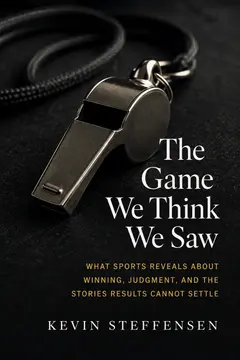
The Game We Think We Saw
What Sports Reveals About Winning, Judgment, and the Stories Results Cannot Settle
Sports gives us some of the clearest outcomes in public life. A score becomes final, a ruling takes effect, and one side advances. But the result cannot fully explain what produced it, why it should count, what it is allowed to justify, who carried its cost, or what the event will eventually mean. The Game We Think We Saw follows those unsettled questions from the scoreboard into the systems, bodies, judgments, and stories surrounding the game.
View book

Book
What We Cannot See
Bias, Judgment, and the Limits of Perspective
Why every perspective is necessarily partial, how individuals make responsible judgments despite those limitations, and why integration allows groups to construct understanding that exceeds any single person's perspective.
View book
Book
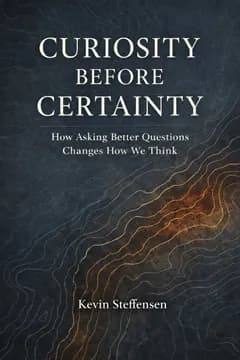
Curiosity Before Certainty
How Curiosity Helps Us Understand a Complex World
An argument for disciplined curiosity as a leadership and learning posture when easy certainty hides complexity and weakens judgment.
View book