Song
Nóg
Kevin Steffensen
Glacial Icelandic post-rock: a fragile voice chants Nóg—enough—to see, answer, and keep hands open without demanding peace, proof, or a final complete picture.
Long drones, bowed guitar, and late cavernous drums make sufficiency feel earned rather than glib.
Long drones, bowed guitar, and late cavernous drums make sufficiency feel earned rather than glib. Verses reject endless why-chains that never reach the wound, then redefine enough as attention, responsibility, and restraint—not certainty, answers, or solution. After Certainty and The Discipline of Uncertainty verify living and judging when understanding is incomplete. Commitment-leaves-room and revisability-preserves-judgment match open hands and the right to be wrong. The world does not resolve; the singer remains for now, which is the disciplined ending the ontology asks for.
- Languages
- is
Recordings
- NógPrimary
5:46 · chirp-hawk v6
7:37 · chirp-auk v4.5-all
Related patterns3 patterns
Supporting · Corrective
Commitment Leaves Room
Systems must act before certainty arrives, but commitments become dangerous when correction threatens identity, legitimacy, sunk cost, or authority. - Action cannot wait for certainty - Closed commitment resists correction Commitment enables coordinated action while preserving room for revision when evidence, conditions, or consequences change.
View Pattern →
Pattern
Revisability Preserves Judgment
Judgment remains necessary when certainty weakens; people still must weigh tradeoffs and consequences without a final frame to hide inside. Finality no longer stabilizes judgment, yet paralysis and dogma are both available failures. - New information threatens prior commitments - Groups confuse openness with weakness - Revision must be practiced without infinite deferral - Coherence pressures compete with contact with reality Revisability is what prevents judgment from hardening into dogma. A leader publishes what would change their mind—and acts on the answer when it arrives.
View Pattern →
Pattern
Finality Compensates for Uncertainty
When uncertainty feels intolerable, people reach for closure—harsh judgment, confident speech, or premature alignment. Severity and certainty provide emotional relief where epistemic stability no longer exists. - Ambiguity feels morally unstable - Confidence signals competence - Revision is delayed to preserve calm - Groups reward decisive tone over accurate scope Finality provides relief where certainty no longer exists; insecurity often sits underneath severity. A leader announces an irreversible policy so the room can stop inhabiting doubt together.
View Pattern →
Related concepts5 concepts
Concept
Uncertainty
Uncertainty names the condition moral and social systems are built to navigate—the space where coordination must happen before truth is settled, where lives are fragmented and behavior must hold together under incomplete information. It becomes important because human action cannot wait for perfect knowledge; groups must decide, move, and coordinate even when the future is unclear, when disagreement is costly, when explanation cannot travel fast enough to settle disputes before consequences arrive. Uncertainty is not a problem to eliminate but a condition to navigate—the ground on which moral life operates. Certainty emerges as an adaptive response to uncertainty, compressing ambiguity into stable expectations so action can proceed. But uncertainty itself is neither failure nor freedom; it is the default state that requires coordination tools. The After Certainty project explores how to practice judgment, accountability, and responsiveness inside uncertainty rather than demanding that uncertainty be resolved before moral life can begin. The question uncertainty raises is: what uncertainty is this system trying to reduce? Is ambiguity dangerous because the stakes are genuinely high, or because failure now scales? Uncertainty differs from ignorance in that uncertainty is about incomplete information in contexts requiring action, while ignorance is simply lack of knowledge.
View Concept →
Concept
Provisional commitment
Acting on the best partial case while remaining structurally willing to revise when new information arrives.
View Concept →
Concept
Judgment
Judgment names the capacity to decide when understanding is incomplete but harm, coordination, or responsibility will not wait. It becomes important whenever action must proceed under partial information and real consequence. It helps preserve proportionality, answerability, and room for revision, but can fail when judgment hardens into dogma, paralysis, or punitive finality. It differs from certainty because judgment accepts incomplete sight; it differs from preference because judgment weighs consequence beyond taste; it differs from optimization because judgment keeps contestability and human proportion in view; it differs from rule-following because judgment must still respond when rules lag reality.
View Concept →
Concept
Humility
Humility—naming tradeoffs, uncertainty, distributional conflict—is epistemically virtuous and politically costly at scale. Certainty orients anxious publics and protects institutions from looking paralyzed. The outperforming of humility is not proof audiences are childish; it is proof that orientation is scarce and fear is abundant. Under interpretive stress, humility also means acknowledging what summaries omit and who pays for resilience.
View Concept →
Concept
Attention
Attention names the scarce gate between signal and response. It becomes important whenever more reaches a person or institution than can be fully tracked. It helps preserve focus and timely response, but can fail when visibility metrics are mistaken for judgments about importance. In When Incentives Become the Moral Language, attention marks the domain where newsrooms still know some stories matter even if they will not perform—yet operational language shifted toward clicks, shares, and time on page. Audience behavior reflects habit, outrage, and placement, not the same thing as what the public needs for democratic judgment. It differs from bias because attention names the capacity itself; bias names the selective work performed through it.
View Concept →
Related books3 books

Book
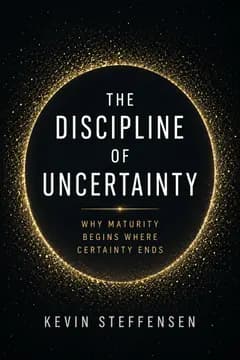
The Discipline of Uncertainty
Judgment, Restraint, and Decision Quality Under Incomplete Information
Field notes on judgment, restraint, and decision quality when information is incomplete.
View book
Book
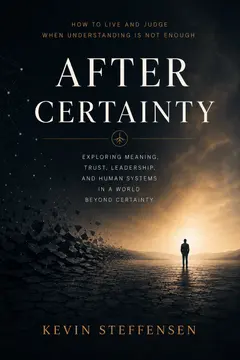
After Certainty
How to Live and Judge When Understanding is not Enough
How to live and judge once explanation reaches its limits—judgment, responsibility, and participation without replacement frameworks.
View book
Book
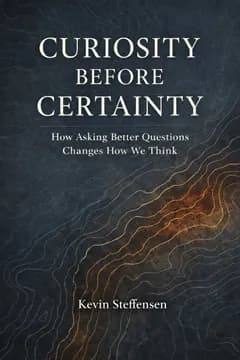
Curiosity Before Certainty
How Curiosity Helps Us Understand a Complex World
An argument for disciplined curiosity as a leadership and learning posture when easy certainty hides complexity and weakens judgment.
View book