
Supporting · Corrective
Bad News Reaches Power
Systems learn and correct only when uncomfortable evidence can reach people with the authority and capacity to act.
Hierarchy, success, identity, fear, and incentives filter bad news as it moves upward. - Correction requires uncomfortable evidence - Hierarchy filters what reaches authority Systems learn and correct only when uncomfortable evidence can reach people with the authority and capacity to act.
Problem
Hierarchy, success, identity, fear, and incentives filter bad news as it moves upward.
Forces
- Correction requires uncomfortable evidence
- Hierarchy filters what reaches authority
Observation
Systems learn and correct only when uncomfortable evidence can reach people with the authority and capacity to act.
Pattern language
- Supporting pattern
- Corrective dynamic — tends to restore contact with reality
- Organizing force: Contact
- Master pattern: Reality Answers Back
At a glance
What it does
Systems learn and correct only when uncomfortable evidence can reach people with the authority and capacity to act.
Why it matters
Hierarchy, success, identity, fear, and incentives filter bad news as it moves upward.
Counterbalance
Create short, safe, protected routes through which failures, exceptions, dissent, and unintended effects reach decision-makers
Counterbalances
- Create short, safe, protected routes through which failures, exceptions, dissent, and unintended effects reach decision-makers
Related books7 books

Book
How Serious Systems Learn
Disciplines for Acting Without Certainty
A handbook for teams and institutions that need to learn in motion, improve under pressure, and make better decisions without waiting for perfect information.
View book
Book
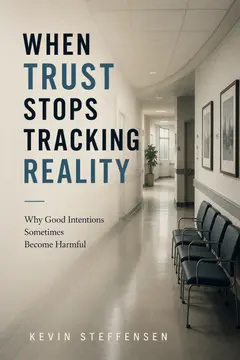
When Trust Stops Tracking Reality
Why Good Intentions Sometimes Become Harmful
How trust drifts from evidence when good intentions stop learning from feedback—through the fictional arc of Calder Family Health and real institutional patterns.
View book

Book
Coupling
Cohesion, Consequence, and the Architecture of Responsibility
A practical framework for seeing where systems are tightly joined, where they drift apart, and how those coupling choices shape accountability over time.
View book

Book
No Time to Think
How Acceleration Relocates Judgment—and Why Institutions Must Protect It
Speed is not inherently careless, but judgment depends on conditions—time, attention, consequence contact, and stop authority. No Time to Think examines what happens when production accelerates faster than a system's capacity to understand, verify, integrate, maintain, and care for what it produces—and how institutions can design responsible speed.
View book

Book
When Others Look to You
Renewal and Erosion in Leadership
A leadership field guide to how influence forms, how trust is renewed, and how erosion begins when responsibility drifts from practice.
View book
Book
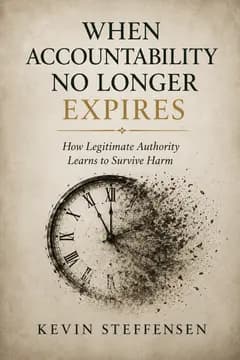
When Accountability No Longer Expires
How Legitimate Authority Learns to Survive Harm
An institutional lens on why legitimate authority can persist after harm. Organizations learn to survive scandal without resolving it.
View book

Book
Reality Pushes Back
What Happens When Our Models Meet the World
A narrative pattern language for the After Certainty corpus. Through ordinary life in one town across roughly fifteen years, twelve supporting patterns— organized by perception, power, time, and contact—show how every useful model leaves something out, and how reality answers through materials, people, and consequences the model did not contain.
View book
Outgoing dynamics2 relationships
expresses
Corrective dynamic: how systems remain open to reality answering back.
weakens
Bad news reaching power counteracts distance that conceals consequence.
Incoming dynamics6 relationships
enables
Participation Creates Legitimacy
Legitimate participation strengthens routes for bad news to reach power.
weakens
Relocated judgment can weaken routes for bad news to reach power.
enables
Keeping the read open strengthens routes for bad news to reach power.
weakens
Suppressed disagreement weakens the necessary condition that bad news reaches power.
distorts
Blame can substitute for bad news reaching power by producing a simpler but less useful explanation.