
Concept
Authority
Authority names who can coordinate action when full agreement is impossible. It becomes important whenever groups must move before every perspective aligns.
Authority names who can coordinate action when full agreement is impossible. It becomes important whenever groups must move before every perspective aligns. It helps preserve direction and collective capacity, but can fail when operational power outruns justified recognition or visible consequence. It differs from legitimacy because authority is the capacity to steer; legitimacy is whether that capacity reads as earned and revisable enough to coordinate trust rather than performative compliance.
Recognition signals
- correctness begins helping people claim authority over one another
- not knowing risks loss of authority in rooms that still require action
- formal authority ends while influence through precedents continues
Questions to ask
- Where is authority claimed without proportionate standing?
- What influence continues after the title changes?
- Who bears answerability for permissions still in force?
Counterbalances
- judge without authority you do not have
- audit permissions others still inherit
- separate seriousness from domination
Trajectory
Early signals
- authority still helps coordinate under uncertainty
Intensification
- being right becomes moral dominance
- authority closes rooms to revision
Failure modes
- authority substitutes for contact
Restoration paths
- practice judgment without finality instead of domination
Manifestations
leadership
- executives conflate being right with moral standing
Reading trails featuring this concept
Editorial paths that include this concept as one stop in a longer sequence.
Appears in chapters
- Part I — Constraint Before Choice
- Chapter 3 — From Power to Moral Legitimacy
- Chapter 4 — Population Growth and Social Density
- Chapter 6 — Writing as Moral Stabilizer
- Chapter 11 — Authority That Preserves Correction
- Part II bridge
- Chapter 5 — The Small States and the Senate
- Chapter 8 — The Building and the Gathering
And 64 more chapters with this association.
Related books11 books

Book
After Certainty
How to Live and Judge When Understanding is not Enough
How to live and judge once explanation reaches its limits—judgment, responsibility, and participation without replacement frameworks.
View book

Book
Before Certainty Arrives
How Moral Order Forms, Hardens, and Outlives Its Reasons
How moral order forms, hardens, and outlives its reasons—before certainty feels like the only available posture.
View book
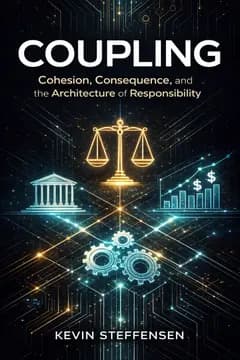
Book
Coupling
Cohesion, Consequence, and the Architecture of Responsibility
A practical framework for seeing where systems are tightly joined, where they drift apart, and how those coupling choices shape accountability over time.
View book

Book
The Game We Think We Saw
What Sports Reveals About Winning, Judgment, and the Stories Results Cannot Settle
Sports gives us some of the clearest outcomes in public life. A score becomes final, a ruling takes effect, and one side advances. But the result cannot fully explain what produced it, why it should count, what it is allowed to justify, who carried its cost, or what the event will eventually mean. The Game We Think We Saw follows those unsettled questions from the scoreboard into the systems, bodies, judgments, and stories surrounding the game.
View book
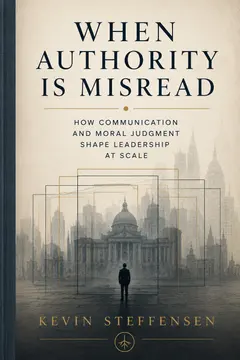
Book
When Authority Is Misread
How Communication and Moral Judgment Shape Leadership at Scale
An examination of what happens when signals of confidence are mistaken for legitimacy, and how that confusion distorts trust and decision-making.
View book
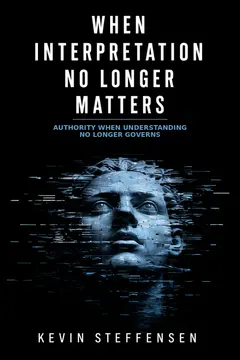
Book
When Interpretation No Longer Matters
Authority When Understanding No Longer Governs
When interpretation loses public consequence while understanding persists—and what kinds of authority remain when hearing no longer becomes legitimacy, accountability, or repair.
View book
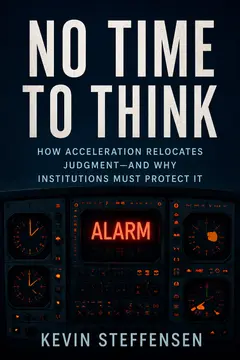
Book
No Time to Think
How Acceleration Relocates Judgment—and Why Institutions Must Protect It
Speed is not inherently careless, but judgment depends on conditions—time, attention, consequence contact, and stop authority. No Time to Think examines what happens when production accelerates faster than a system's capacity to understand, verify, integrate, maintain, and care for what it produces—and how institutions can design responsible speed.
View book
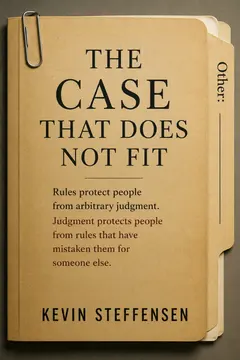
Book
The Case That Does Not Fit
How Rules Protect Us—and What Institutions Must Do When They Misread Us
Rules make shared life possible, but every rule is a compression. The Case That Does Not Fit examines what happens when the ignored detail becomes the morally decisive one—and how institutions can preserve both protection from arbitrary judgment and protection from rules that have mistaken a person for someone else.
View book

Book
The World We Make Together
How Ordinary People, Unequal Power, and Shared Action Shape History
History is collective, but responsibility remains uneven. The World We Make Together follows ordinary objects—a switch, a ballot, a fence, a bowl, a scale—into the institutions and relationships through which people shape public life without becoming either solitary heroes or passive products of structure.
View book
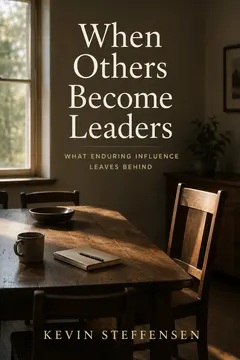
Book
When Others Become Leaders
What Enduring Influence Leaves Behind
What kind of leadership increases the capacity of others to act, care, organize, and lead beyond the originating person.
View book

Book
When Others Look to You: Companion Edition
Forming, Renewing, Eroding, Repeating
How leadership influence forms, renews, erodes, and repeats across the full cycle of responsibility in practice.
View book
Thinkers & sources11 thinkers
Person
Douglas McGregor
Management theorist of Theory X/Y and the human side of enterprise.
View Thinker →
Person
Hannah Arendt
Political theorist whose work helps frame authority, judgment, responsibility, violence, and public action.
View Thinker →
Person
John Feinstein
Sportswriter whose Season on the Brink made Bob Knight's method a durable public story about winning and cost.
View Thinker →
Person
John Stuart Mill
Liberal political philosopher of representative government, liberty, and public deliberation.
View Thinker →
Person
Mary Parker Follett
Organizational thinker of power-with, integration, and creative conflict in group life.
View Thinker →
Person
Max Weber
Sociologist of bureaucracy, authority types, rationalization, and the iron cage of modern institutions.
View Thinker →
Organization
NFL.com
NFL's official news site covering catch rulings, anthem policy, injuries, and commissioner statements.
View Thinker →
Person
Philip Selznick
Sociologist of leadership, institutional integrity, and how organizations acquire character and mission.
View Thinker →
Person
Richard P. Feynman
Physicist whose Challenger appendix modeled public technical judgment under institutional pressure.
View Thinker →
Person
Ronald A Heifetz
Leadership scholar of adaptive work—mobilizing people to tackle problems that require learning and loss.
View Thinker →
Person
Thomas Carlyle
Nineteenth-century essayist whose hero-worship lectures framed great-person theories of history.
View Thinker →
Structural tensions
Outgoing dynamics1 relationship
contrasts
Authority is operational power to steer; legitimacy is justified recognition of that power.
Incoming dynamics3 relationships
reproduces
Circulation allows authority structures to persist beyond individuals.
contrasts
Legitimacy is justified recognition; authority is operational power.
contrasts
Permission is granted socially through pattern and response; authority is granted formally through role.
Neighboring terrain (other connected entities)2 neighbors
concept
Circulation
Circulation is transmission and reproduction through systems: how norms, habits, and design choices move, repeat, and amplify
concept
Permission
Permission names the social authorization that makes action feel legitimate before anyone has formally granted it—the pattern the room teaches about whether stepping in, being credited, and stepping back are safe in practice. It becomes important in leadership formation because permission is often settled through repeated example rather than explicit delegation; people watch what happened after the last step-in before answering the next urgent call. Permission can come from formal role and explicit authorization, but it also accumulates through relationship, precedent, silence, imitation, and the room's visible response to those who act. It helps leadership capacity grow when stepping in is safe and stepping back does not carry hidden cost, when credit follows contribution and risk is shared rather than punished. But permission can fail when it remains open on paper but closed in practice, when only certain names may lead and the bench never forms, when stepping outside the official chain is treated as bypass or leakage. The question permission raises is: what did the room teach about the cost of leading without being asked? Permission differs from authority in that permission is granted socially through pattern and response, while authority is granted formally through role or structure.