Person
Ronald A Heifetz
Leadership scholar of adaptive work—mobilizing people to tackle problems that require learning and loss.
Why this matters
Heifetz distinguishes technical fixes from adaptive challenges—when authority must host discomfort rather than promise closure.
Related concepts6 concepts
Concept
Adaptability
The capacity of coordinated action to change direction when reality pushes back. Together with scalability, it sorts groups into the four states adaptive, entrenched, regenerative, and stalled, and underpins how renewal and erosion are read.
View Concept →
Concept
Authority
Authority names who can coordinate action when full agreement is impossible. It becomes important whenever groups must move before every perspective aligns. It helps preserve direction and collective capacity, but can fail when operational power outruns justified recognition or visible consequence. It differs from legitimacy because authority is the capacity to steer; legitimacy is whether that capacity reads as earned and revisable enough to coordinate trust rather than performative compliance.
View Concept →
Concept
Friction
Friction becomes important when speed threatens to bypass discernment—when the pressure for immediate response or continuous flow begins to compress the space where reflection, correction, or challenge might occur. Good friction preserves time and space for deliberation; bad friction is needless obstruction that protects neither coordination nor judgment. Friction can be protective adaptation under real constraint—postponed quarrels when immediate unity matters more than resolving grievance—or it can mark the erosion of judgment when compliance replaces discernment because no one can trace harm in time. Friction thins as scale favors throughput over discernment, as delay begins to read as weakness, and as law or procedure narrows discretion so coordination can persist without constant renegotiation. It differs from contestability in that friction is the slowness itself, while contestability is the capacity to reopen what has been settled.
View Concept →
Concept
Judgment
Judgment names the capacity to decide when understanding is incomplete but harm, coordination, or responsibility will not wait. It becomes important whenever action must proceed under partial information and real consequence. It helps preserve proportionality, answerability, and room for revision, but can fail when judgment hardens into dogma, paralysis, or punitive finality. It differs from certainty because judgment accepts incomplete sight; it differs from preference because judgment weighs consequence beyond taste; it differs from optimization because judgment keeps contestability and human proportion in view; it differs from rule-following because judgment must still respond when rules lag reality.
View Concept →
Concept
Responsibility
Responsibility names what continues after action—the obligation to remain responsive to what one's choices set in motion. It becomes important when systems scale beyond any one person's control but moral weight still accumulates. It helps preserve sustained answerability, but can fail when responsibility collapses into futility or when symbolic gestures replace contact with effects. It differs from accountability because responsibility names the enduring relation; accountability names whether consequence still reaches those who can respond.
View Concept →
Concept
Uncertainty
Uncertainty names the condition moral and social systems are built to navigate—the space where coordination must happen before truth is settled, where lives are fragmented and behavior must hold together under incomplete information. It becomes important because human action cannot wait for perfect knowledge; groups must decide, move, and coordinate even when the future is unclear, when disagreement is costly, when explanation cannot travel fast enough to settle disputes before consequences arrive. Uncertainty is not a problem to eliminate but a condition to navigate—the ground on which moral life operates. Certainty emerges as an adaptive response to uncertainty, compressing ambiguity into stable expectations so action can proceed. But uncertainty itself is neither failure nor freedom; it is the default state that requires coordination tools. The After Certainty project explores how to practice judgment, accountability, and responsiveness inside uncertainty rather than demanding that uncertainty be resolved before moral life can begin. The question uncertainty raises is: what uncertainty is this system trying to reduce? Is ambiguity dangerous because the stakes are genuinely high, or because failure now scales? Uncertainty differs from ignorance in that uncertainty is about incomplete information in contexts requiring action, while ignorance is simply lack of knowledge.
View Concept →
Related books2 books

Book
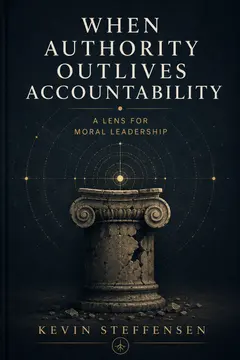
When Authority Outlives Accountability
A Lens for Moral Leadership
A leadership lens on how authority can persist after accountability erodes, and what moral leadership requires to restore integrity in that gap.
View book
Book
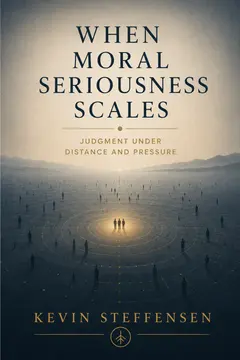
When Moral Seriousness Scales
Judgment Under Distance and Pressure
An exploration of how moral responsibility changes under scale, speed, and institutional distance, and how to preserve humane judgment anyway.
View book