
Nonfiction
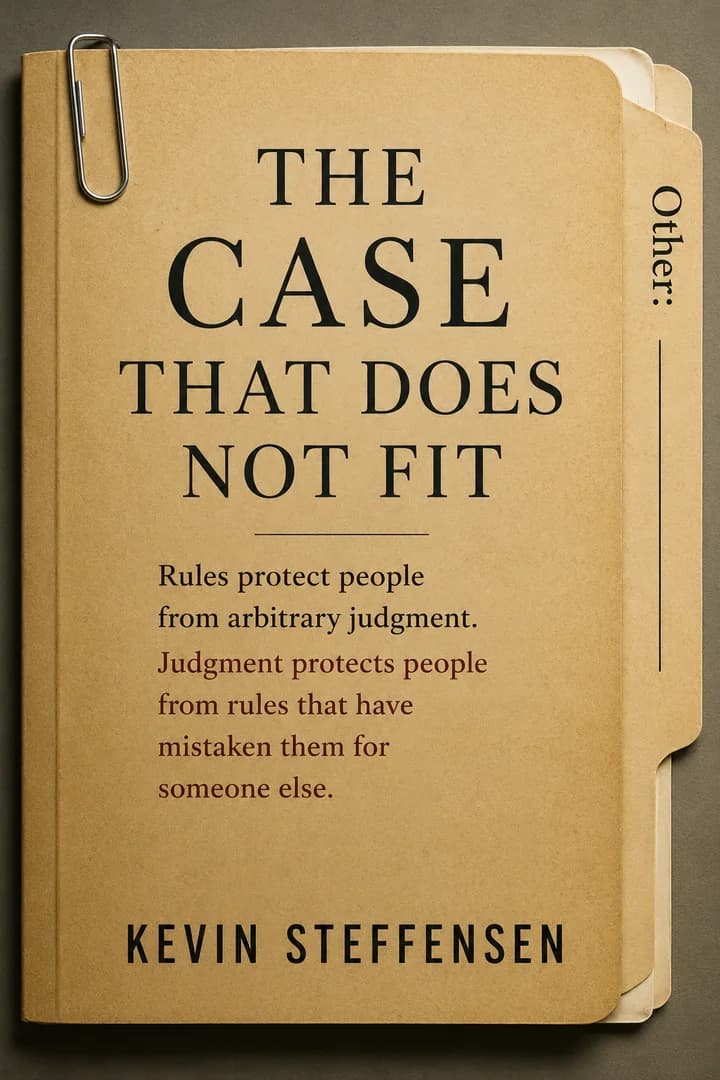
The Case That Does Not Fit
How Rules Protect Us—and What Institutions Must Do When They Misread Us
By Kevin Steffensen
Rules make shared life possible, but every rule is a compression. The Case That Does Not Fit examines what happens when the ignored detail becomes the morally decisive one—and how institutions can preserve both protection from arbitrary judgment and protection from rules that have mistaken a person for someone else.
Rules make shared life possible, but every rule is a compression. The Case That Does Not Fit examines what happens when the ignored detail becomes the morally decisive one—and how institutions can preserve both protection from arbitrary judgment and protection from rules that have mistaken a person for someone else.
Offered under open publishing terms (CC BY-SA). Download formats are free where available; purchase links support print editions.
- Type
- Nonfiction · monograph
- Author
- Kevin Steffensen
- Published
- 2026
- Chapters
- 16 chapters
- Formats
- EPUB, PDF, DOCX
On these shelves
Also in Systems and Organizations
View all 9 →
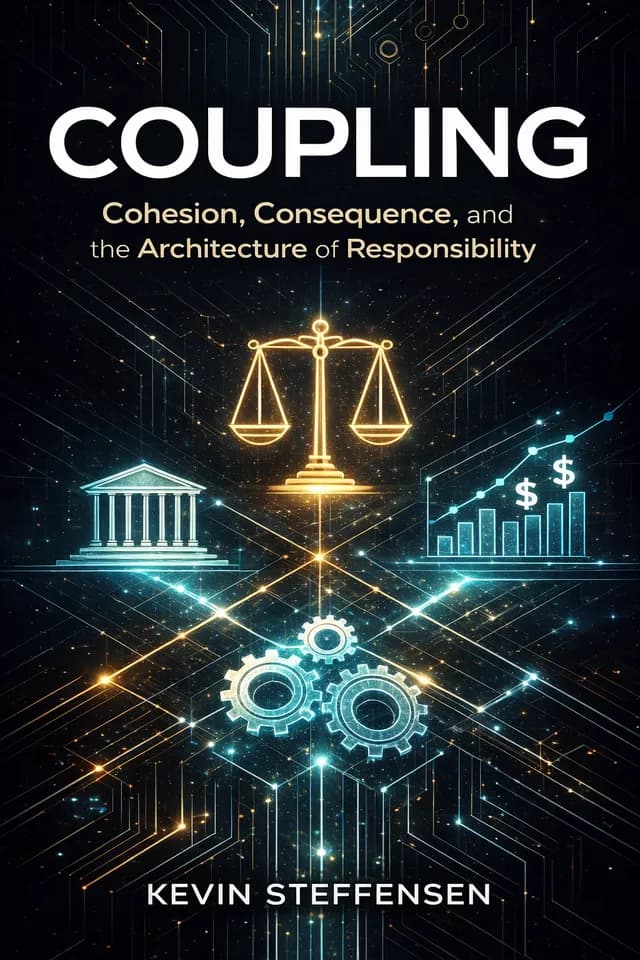
Coupling
Cohesion, Consequence, and the Architecture of Responsibility
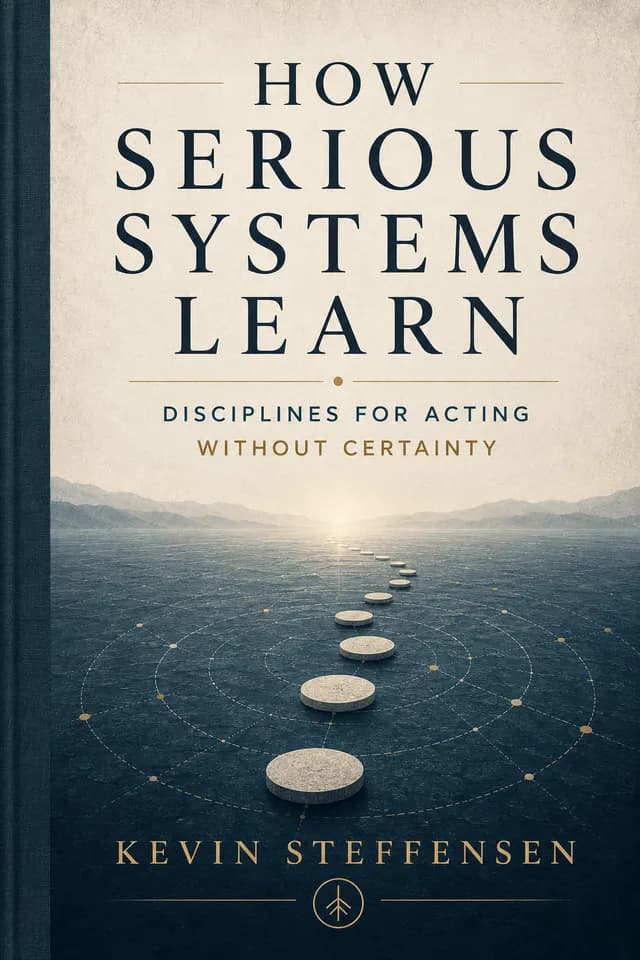
How Serious Systems Learn
Disciplines for Acting Without Certainty

The Discipline of Uncertainty
Judgment, Restraint, and Decision Quality Under Incomplete Information

Why Collaboration Is So Hard
And Why the Effort Still Matters

When Incentives Become the Moral Language
How Systems Decide For Us When Judgment No Longer Scales
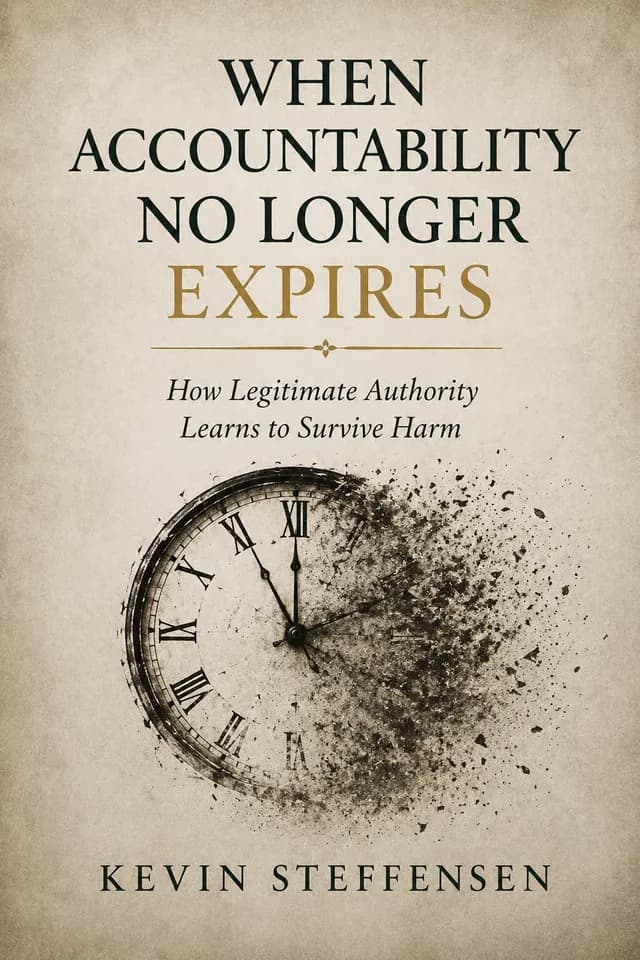
When Accountability No Longer Expires
How Legitimate Authority Learns to Survive Harm



The question this book explores
How can a system make room for the case its rules cannot understand without turning judgment into arbitrary power?
Why this book exists
Rules protect people from arbitrary judgment, but every rule compresses reality. When the ignored detail becomes decisive, institutions need architecture for reconsideration—appeals, accommodation, discretion, and designed correctability—without abandoning fairness or consistency.
Who it is for
Readers who work inside rules-bound institutions—administrators, clinicians, educators, engineers, lawyers, and citizens—who need language for when a category mistook the case.
What it is not
- It is not an argument against rules, consistency, or due process as such.
- It does not treat discretion as favoritism or nostalgia for unaccountable judgment.
- It is not a compliance checklist, litigation guide, or culture-war brief.
Central ideas
A curated handful of concepts and patterns this book develops — not the full inventory.
Concept
Judgment
In this book: Names what rules cannot fully replace—recognizing when a compression has mistaken a particular life for someone else's case.
Explore the conceptConcept
Compression
In this book: Central mechanism: every rule selects differences that count and ignores the rest; the book follows what happens when ignored detail becomes morally decisive.
Explore the conceptConcept
Revisability
In this book: Tracks designed room to reopen a category—appeals, accommodation, blank lines—without dissolving the rule into arbitrary local power.
Explore the conceptConcept
Legitimacy
In this book: Holds both protections at once: protection from arbitrary judgment and protection from rules that mistook the person.
Explore the conceptConcept
Accountability
In this book: Keeps reconsideration answerable—who may reopen a decision, on what record, and with what standing—so correction does not become favoritism.
Explore the conceptConcept
Authority
In this book: Frames who may interpret, override, or refuse a category when the form's blank line fails to capture the case.
Explore the conceptPattern
Revisability Preserves Judgment
In this book: Deepens why appeals, accommodation, and designed pause keep judgment alive after a category has already decided.
Explore the patternPattern
Finality Compensates for Uncertainty
In this book: Shows how institutions close cases early to manage uncertainty—and what that costs the person who does not fit.
Explore the patternPattern
Dissent is Welcomed
In this book: Anchors protected disagreement and reconsideration channels as architecture, not optional courtesy.
Explore the pattern
Inside this book
How the book is organized — parts, chapters, and what each section investigates.
About 140 min of reading across 16 sections in 4 parts.
Part I — The Cases Before Us
5 sections
Part I — The Cases Before Us
5 sections- Chapter 1 — The Checkbox11 min
- Chapter 2 — The Keycard11 min
Part II — The Pattern Before Us
6 sections
Part II — The Pattern Before Us
6 sections- Chapter 5 — The Petition12 min
Part III — Institutions That Can Reconsider
3 sections
Part III — Institutions That Can Reconsider
3 sectionsOther sections
2 sections
Other sections
2 sectionsWhere it fits
Suggested reading order and nearby volumes — not a mandatory sequence.
Continue exploring
- Next book — How Serious Systems Learn
- Start with a question — How can a system make room for the case its rules cannot understand without turning judgment into arbitrary power?
Reading trails featuring this book
Editorial paths that include this book as one stop in a longer sequence.
Full related inventoryShowHide
Complete concept, pattern, and thinker lists for readers who want the full semantic map.
Major concepts
Concept
Accountability
Accountability names whether consequence still reaches the people who can respond. It becomes important when scale, narrative, or abstraction thins contact between action and effect. It helps preserve correction and proportionate answerability, but can fail when moral sorting replaces sustained contact with outcomes. It differs from responsibility because accountability emphasizes exposure to consequence; responsibility includes the ongoing obligation to account even when control is partial.
View Concept →
Concept
Accountability
Accountability names whether consequence still reaches the people who can respond. It becomes important when scale, narrative, or abstraction thins contact between action and effect. It helps preserve correction and proportionate answerability, but can fail when moral sorting replaces sustained contact with outcomes. It differs from responsibility because accountability emphasizes exposure to consequence; responsibility includes the ongoing obligation to account even when control is partial.
Concept
Authority
Authority names who can coordinate action when full agreement is impossible. It becomes important whenever groups must move before every perspective aligns. It helps preserve direction and collective capacity, but can fail when operational power outruns justified recognition or visible consequence. It differs from legitimacy because authority is the capacity to steer; legitimacy is whether that capacity reads as earned and revisable enough to coordinate trust rather than performative compliance.
View Concept →
Concept
Authority
Authority names who can coordinate action when full agreement is impossible. It becomes important whenever groups must move before every perspective aligns. It helps preserve direction and collective capacity, but can fail when operational power outruns justified recognition or visible consequence. It differs from legitimacy because authority is the capacity to steer; legitimacy is whether that capacity reads as earned and revisable enough to coordinate trust rather than performative compliance.
Concept
Compression
Compression reduces moral complexity for transmission at scale. Collapse gives way to compression, compression produces stabilization, and stabilization hardens into inheritance. When populations must coordinate across distance and strangers must share rules, compression lets expectations travel—law narrows discretion so the same words will be read tomorrow, canon fixes meaning so provinces can align. Compression is adaptation under pressure—instability demands it before truth is settled, acceptable interpretation shrinks while exposure widens. At its best, compression preserves coordination when full discernment is too costly; at its worst, tools built to compress instability begin to constrain adaptation, and compression outlives the conditions that required it.
View Concept →
Concept
Compression
Compression reduces moral complexity for transmission at scale. Collapse gives way to compression, compression produces stabilization, and stabilization hardens into inheritance. When populations must coordinate across distance and strangers must share rules, compression lets expectations travel—law narrows discretion so the same words will be read tomorrow, canon fixes meaning so provinces can align. Compression is adaptation under pressure—instability demands it before truth is settled, acceptable interpretation shrinks while exposure widens. At its best, compression preserves coordination when full discernment is too costly; at its worst, tools built to compress instability begin to constrain adaptation, and compression outlives the conditions that required it.
Concept
Judgment
Judgment names the capacity to decide when understanding is incomplete but harm, coordination, or responsibility will not wait. It becomes important whenever action must proceed under partial information and real consequence. It helps preserve proportionality, answerability, and room for revision, but can fail when judgment hardens into dogma, paralysis, or punitive finality. It differs from certainty because judgment accepts incomplete sight; it differs from preference because judgment weighs consequence beyond taste; it differs from optimization because judgment keeps contestability and human proportion in view; it differs from rule-following because judgment must still respond when rules lag reality.
View Concept →
Concept
Judgment
Judgment names the capacity to decide when understanding is incomplete but harm, coordination, or responsibility will not wait. It becomes important whenever action must proceed under partial information and real consequence. It helps preserve proportionality, answerability, and room for revision, but can fail when judgment hardens into dogma, paralysis, or punitive finality. It differs from certainty because judgment accepts incomplete sight; it differs from preference because judgment weighs consequence beyond taste; it differs from optimization because judgment keeps contestability and human proportion in view; it differs from rule-following because judgment must still respond when rules lag reality.
Concept
Legitimacy
Legitimacy names the standing that lets authority coordinate without constant coercion. It becomes important when scale, abstraction, or time separate decision-makers from lived consequence. It helps preserve trust and willing participation, but can fail when smooth operation is mistaken for moral standing or when scrutiny is treated as disloyalty. It differs from alignment because legitimacy still invites proportionate inquiry; alignment can bind through belonging signals alone.
View Concept →
Concept
Legitimacy
Legitimacy names the standing that lets authority coordinate without constant coercion. It becomes important when scale, abstraction, or time separate decision-makers from lived consequence. It helps preserve trust and willing participation, but can fail when smooth operation is mistaken for moral standing or when scrutiny is treated as disloyalty. It differs from alignment because legitimacy still invites proportionate inquiry; alignment can bind through belonging signals alone.
Concept
Revisability
Revisability names the capacity to change course without pretending the first pass was final. It becomes important whenever uncertainty remains after action starts and harm can accumulate while people wait for closure. It helps preserve contact with changing conditions and proportionate response, but can fail when updating is labeled flip-flopping or when institutions punish revisions that unsettle prior verdicts. It differs from correction because revisability is the designed openness; correction is the specific act of noticing mismatch and updating. It differs from judgment because revisability keeps decisions attached to reality over time, not only at the moment of decision.
View Concept →
Concept
Revisability
Revisability names the capacity to change course without pretending the first pass was final. It becomes important whenever uncertainty remains after action starts and harm can accumulate while people wait for closure. It helps preserve contact with changing conditions and proportionate response, but can fail when updating is labeled flip-flopping or when institutions punish revisions that unsettle prior verdicts. It differs from correction because revisability is the designed openness; correction is the specific act of noticing mismatch and updating. It differs from judgment because revisability keeps decisions attached to reality over time, not only at the moment of decision.
Major patterns
Supporting · Corrective
Care Preserves Particulars
Pure discretion can become arbitrary, but pure rule-following can misread the person or case. - Rules protect floors - Particulars require attentive judgment Care keeps the specific person, case, circumstance, and context visible when rules and averages would otherwise erase them.
View Pattern →
Supporting · Corrective
Care Preserves Particulars
Pure discretion can become arbitrary, but pure rule-following can misread the person or case. - Rules protect floors - Particulars require attentive judgment Care keeps the specific person, case, circumstance, and context visible when rules and averages would otherwise erase them.
Supporting · Obscuring
Compression Loses the Person
Human systems require simplification to coordinate at scale, but the details removed by compression may contain the morally or practically decisive fact. - Scale requires compression - Decisive particulars may be what compression removes When complexity is compressed into categories, metrics, roles, averages, summaries, or stories, the person or particular case can disappear from view.
View Pattern →
Supporting · Obscuring
Compression Loses the Person
Human systems require simplification to coordinate at scale, but the details removed by compression may contain the morally or practically decisive fact. - Scale requires compression - Decisive particulars may be what compression removes When complexity is compressed into categories, metrics, roles, averages, summaries, or stories, the person or particular case can disappear from view.
Pattern
Dissent is Welcomed
Problems, risks, or failures show up inside a group or setting. Timely correction depends on whether bad news can reach those who decide. - Speaking up can cost people socially or at work - Reporting lines filter or delay information - Good news travels easier than bad news - People learn what is safe to say Problems show up early. Reality reaches those who decide in time. If you see a problem, say it now. Dissent is welcomed here—we can't fix what we don't raise while it's still small.
View Pattern →
Pattern
Dissent is Welcomed
Problems, risks, or failures show up inside a group or setting. Timely correction depends on whether bad news can reach those who decide. - Speaking up can cost people socially or at work - Reporting lines filter or delay information - Good news travels easier than bad news - People learn what is safe to say Problems show up early. Reality reaches those who decide in time. If you see a problem, say it now. Dissent is welcomed here—we can't fix what we don't raise while it's still small.
Pattern
Finality Compensates for Uncertainty
When uncertainty feels intolerable, people reach for closure—harsh judgment, confident speech, or premature alignment. Severity and certainty provide emotional relief where epistemic stability no longer exists. - Ambiguity feels morally unstable - Confidence signals competence - Revision is delayed to preserve calm - Groups reward decisive tone over accurate scope Finality provides relief where certainty no longer exists; insecurity often sits underneath severity. A leader announces an irreversible policy so the room can stop inhabiting doubt together.
View Pattern →
Pattern
Finality Compensates for Uncertainty
When uncertainty feels intolerable, people reach for closure—harsh judgment, confident speech, or premature alignment. Severity and certainty provide emotional relief where epistemic stability no longer exists. - Ambiguity feels morally unstable - Confidence signals competence - Revision is delayed to preserve calm - Groups reward decisive tone over accurate scope Finality provides relief where certainty no longer exists; insecurity often sits underneath severity. A leader announces an irreversible policy so the room can stop inhabiting doubt together.
Supporting · Corrective
Participation Creates Legitimacy
Centralized direction may be faster, but systems imposed without meaningful participation often lose legitimacy and local knowledge. - Speed favors centralized direction - Legitimacy requires consequential voice People are more likely to trust, sustain, and recognize a shared order when they have a consequential role in shaping, contesting, or repairing it.
View Pattern →
Supporting · Corrective
Participation Creates Legitimacy
Centralized direction may be faster, but systems imposed without meaningful participation often lose legitimacy and local knowledge. - Speed favors centralized direction - Legitimacy requires consequential voice People are more likely to trust, sustain, and recognize a shared order when they have a consequential role in shaping, contesting, or repairing it.
Master pattern
Reality Answers Back
Human systems must simplify reality in order to perceive, decide, coordinate, and act. Those simplifications necessarily leave out people, consequences, perspectives, history, and changed conditions. - Simplification is required for coordinated action - What is left out eventually returns - Systems need paths for revision before collapse Every abstraction, institution, decision, and model eventually encounters the reality it only partially captured. Reality answers through failures, exceptions, dissent, unintended behavior, lived experience, or consequences the model did not contain.
View Pattern →
Master pattern
Reality Answers Back
Human systems must simplify reality in order to perceive, decide, coordinate, and act. Those simplifications necessarily leave out people, consequences, perspectives, history, and changed conditions. - Simplification is required for coordinated action - What is left out eventually returns - Systems need paths for revision before collapse Every abstraction, institution, decision, and model eventually encounters the reality it only partially captured. Reality answers through failures, exceptions, dissent, unintended behavior, lived experience, or consequences the model did not contain.
Supporting · Corrective
Responsibility Follows Leverage
Collective explanations can dissolve responsibility, while individual blame can conceal unequal power and structural production. - Leverage is uneven - Blame and collectivity can both obscure capacity The greater a person's or institution's capacity to shape outcomes, prevent harm, benefit from a system, or repair consequences, the greater its responsibility.
View Pattern →
Supporting · Corrective
Responsibility Follows Leverage
Collective explanations can dissolve responsibility, while individual blame can conceal unequal power and structural production. - Leverage is uneven - Blame and collectivity can both obscure capacity The greater a person's or institution's capacity to shape outcomes, prevent harm, benefit from a system, or repair consequences, the greater its responsibility.
Pattern
Revisability Preserves Judgment
Judgment remains necessary when certainty weakens; people still must weigh tradeoffs and consequences without a final frame to hide inside. Finality no longer stabilizes judgment, yet paralysis and dogma are both available failures. - New information threatens prior commitments - Groups confuse openness with weakness - Revision must be practiced without infinite deferral - Coherence pressures compete with contact with reality Revisability is what prevents judgment from hardening into dogma. A leader publishes what would change their mind—and acts on the answer when it arrives.
View Pattern →
Pattern
Revisability Preserves Judgment
Judgment remains necessary when certainty weakens; people still must weigh tradeoffs and consequences without a final frame to hide inside. Finality no longer stabilizes judgment, yet paralysis and dogma are both available failures. - New information threatens prior commitments - Groups confuse openness with weakness - Revision must be practiced without infinite deferral - Coherence pressures compete with contact with reality Revisability is what prevents judgment from hardening into dogma. A leader publishes what would change their mind—and acts on the answer when it arrives.