
book
The Human Condition
Arendt, Hannah. The Human Condition. 2nd ed. Chicago: University of Chicago Press, 1998.
Related concepts2 concepts
Concept
Authority
Authority names who can coordinate action when full agreement is impossible. It becomes important whenever groups must move before every perspective aligns. It helps preserve direction and collective capacity, but can fail when operational power outruns justified recognition or visible consequence. It differs from legitimacy because authority is the capacity to steer; legitimacy is whether that capacity reads as earned and revisable enough to coordinate trust rather than performative compliance.
View Concept →
Concept
Public interpretation
Public interpretation names evaluative activity that still connects reasons to standing across boundaries. It becomes important whenever legitimacy depends on more than enforcement or belonging alone. It helps preserve contestability and repair, but can fail when communication intensifies while evaluative space vanishes. It differs from private understanding because public interpretation must be able to matter publicly; it differs from interpretive collapse because collapse is the loss of this shared function, not failed comprehension alone.
View Concept →
Related books3 books

Book
How Trust Forms
Why Participation Becomes Possible
How people become willing to participate with one another under uncertainty—beliefs, actions, outcomes, and the trust cycle.
View book

Book
Living in Sediment
How Structures Outlive Their Reasons
We live inside inherited systems built for constraints that no longer exist. When structures survive after their reasons disappear, meaning drifts—and the danger is forgetting the sediment is sediment.
View book
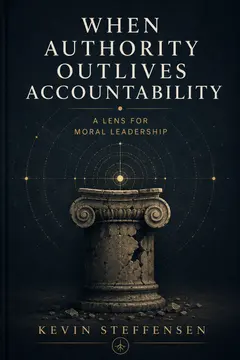
Book
When Authority Outlives Accountability
A Lens for Moral Leadership
A leadership lens on how authority can persist after accountability erodes, and what moral leadership requires to restore integrity in that gap.
View book