book
Economy and Society: An Outline of Interpretive Sociology
Weber, Max. Economy and Society: An Outline of Interpretive Sociology. Vol. 1. Edited by Guenther Roth and Claus Wittich. Berkeley: University of California Press, 1978.
Related concepts4 concepts
Concept
Authority
Authority names who can coordinate action when full agreement is impossible. It becomes important whenever groups must move before every perspective aligns. It helps preserve direction and collective capacity, but can fail when operational power outruns justified recognition or visible consequence. It differs from legitimacy because authority is the capacity to steer; legitimacy is whether that capacity reads as earned and revisable enough to coordinate trust rather than performative compliance.
View Concept →
Concept
Bureaucracy
Bureaucracy extends permanence into practice—rules replacing discretion, procedures replacing judgment, roles replacing relationships. At industrial scale it functions as moral infrastructure, coordinating strangers through files, stamps, and queues that must still recognize a name long enough for life to continue. Bureaucracy makes expectations visible and portable—the same form, the same stamp, the same queue number tomorrow—so thousands can coordinate without knowing one another's names. The room feels like Tuesday before the first form is stamped; box seven rather than box four determines whether a lease continues. No one feels cruel; no one feels fully responsible either. Bureaucracy coordinates while meaning quietly thins, systems function without anyone tracing harm, and the machinery keeps its appointments whether or not it still fits the lives it was meant to serve.
View Concept →
Concept
Distance
Distance names separation between decision and consequence, between action and its effects, between authority and those it governs. It becomes important as coordination extends beyond direct relational encounter—as scale grows and abstraction layers multiply. Distance makes harm harder to trace, feedback slower to arrive, and responsibility harder to locate. It helps coordination reach across space and time, enabling larger and more complex forms of collective action, but it thins the connection between choosers and those who live with the outcomes. As distance opens, action and reflection no longer meet in the same place; decisions travel while bodies receive the consequences; institutions record outcomes in ways that differ from how people experience them. Distance becomes built into the architecture of moral life at scale—not as failure but as structure. The question it raises is: how far does decision travel before consequence is felt? Who can see the full chain between policy and harm? Distance differs from mediation (routing through intermediaries) in that distance is the gap itself, while mediation is what fills or crosses the gap.
View Concept →
Concept
Legitimacy
Legitimacy names the standing that lets authority coordinate without constant coercion. It becomes important when scale, abstraction, or time separate decision-makers from lived consequence. It helps preserve trust and willing participation, but can fail when smooth operation is mistaken for moral standing or when scrutiny is treated as disloyalty. It differs from alignment because legitimacy still invites proportionate inquiry; alignment can bind through belonging signals alone.
View Concept →
Related books11 books

Book
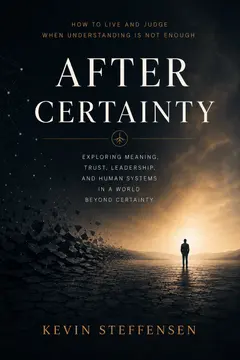
After Certainty
How to Live and Judge When Understanding is not Enough
How to live and judge once explanation reaches its limits—judgment, responsibility, and participation without replacement frameworks.
View book

Book
Before Certainty Arrives
How Moral Order Forms, Hardens, and Outlives Its Reasons
How moral order forms, hardens, and outlives its reasons—before certainty feels like the only available posture.
View book
Book
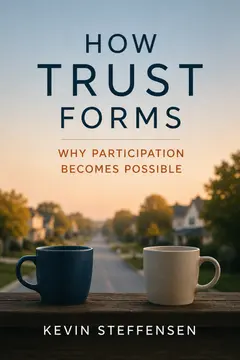
How Trust Forms
Why Participation Becomes Possible
How people become willing to participate with one another under uncertainty—beliefs, actions, outcomes, and the trust cycle.
View book

Book
Living in Sediment
How Structures Outlive Their Reasons
We live inside inherited systems built for constraints that no longer exist. When structures survive after their reasons disappear, meaning drifts—and the danger is forgetting the sediment is sediment.
View book
Book
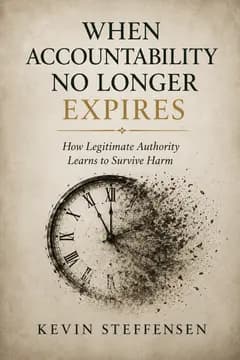
When Accountability No Longer Expires
How Legitimate Authority Learns to Survive Harm
An institutional lens on why legitimate authority can persist after harm. Organizations learn to survive scandal without resolving it.
View book
Book
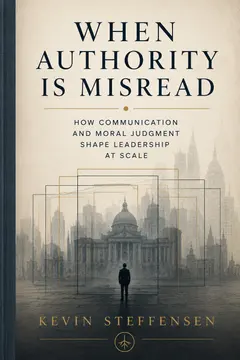
When Authority Is Misread
How Communication and Moral Judgment Shape Leadership at Scale
An examination of what happens when signals of confidence are mistaken for legitimacy, and how that confusion distorts trust and decision-making.
View book
Book
When Authority Outlives Accountability
A Lens for Moral Leadership
A leadership lens on how authority can persist after accountability erodes, and what moral leadership requires to restore integrity in that gap.
View book
Book
When Moral Seriousness Scales
Judgment Under Distance and Pressure
An exploration of how moral responsibility changes under scale, speed, and institutional distance, and how to preserve humane judgment anyway.
View book

Book
When Others Look to You
Renewal and Erosion in Leadership
A leadership field guide to how influence forms, how trust is renewed, and how erosion begins when responsibility drifts from practice.
View book

Book
When Others Look to You: Companion Edition
Forming, Renewing, Eroding, Repeating
How leadership influence forms, renews, erodes, and repeats across the full cycle of responsibility in practice.
View book
Book
When Trust Stops Tracking Reality
Why Good Intentions Sometimes Become Harmful
How trust drifts from evidence when good intentions stop learning from feedback—through the fictional arc of Calder Family Health and real institutional patterns.
View book