
Pattern
Admiration Becomes Insulation
The admired person is protected less by trust than by narrative attachment.
Admiration enables trust, imitation, and moral aspiration toward people who seem to carry more than their share of complexity. Heroic narratives stabilize; contradiction becomes hard to absorb without collapsing the story. - Harm is reframed as tradeoff - Context expands selectively around the admired figure - Accountability weakens to preserve narrative coherence - Scrutiny feels like betrayal of belonging The admired person is protected less by trust than by narrative attachment. A leader's harmful call is debated as "what the role required" while proportionate inquiry is treated as disloyalty.
Setup
Admiration enables trust, imitation, and moral aspiration toward people who seem to carry more than their share of complexity.
Problem
Heroic narratives stabilize; contradiction becomes hard to absorb without collapsing the story.
Forces
- Harm is reframed as tradeoff
- Context expands selectively around the admired figure
- Accountability weakens to preserve narrative coherence
- Scrutiny feels like betrayal of belonging
Observation
The admired person is protected less by trust than by narrative attachment.
Example
A leader's harmful call is debated as "what the role required" while proportionate inquiry is treated as disloyalty.
At a glance
What it does
The admired person is protected less by trust than by narrative attachment.
Why it matters
Heroic narratives stabilize; contradiction becomes hard to absorb without collapsing the story.
Key risk
contradictory details are adapted into a purer villain and victim
Counterbalance
ask proportionate questions without recasting heroes as villains
Recognition signals
- contradictory details are adapted into a purer villain and victim
- the thread speeds up rather than slowing for uneven facts
- harm around a heroic figure is reframed as tradeoff or necessity
- questioning the sorting risks sounding disloyal to the harm
Questions to ask
- What detail would reopen the story we are protecting?
- Who benefits when admiration forecloses proportionate inquiry?
- Where is trust insulation rather than trust?
Counterbalances
- ask proportionate questions without recasting heroes as villains
- slow the thread when facts do not fit the moral sorting
- keep legitimacy open to revision without cynicism
Trajectory
Early signals
- the story arrives already sorted into hero and villain
- admiration attaches to a coherent moral narrative
Intensification
- outrage spreads faster than verification
- information threatening the story feels destabilizing
Failure modes
- the admired person is protected by audience reluctance
- accountability weakens to preserve coherence
Restoration paths
- practice scrutiny that preserves trust
- replace archetypes with attention to effects
Manifestations
leadership
- boards interpret harm around executives as necessary tradeoffs
- contradiction near a leader is treated as disloyalty
organizations
- comment threads reward emotionally complete narratives
- whistle paths are framed as betraying the harm itself
politics
- public moral sorting outruns verification
Appears in chapters
- Chapter 3 — Releasing the Need for Heroes and Villains
- Appendix — Stabilizers and Distortions
- Chapter 2 — When the Star Becomes the Explanation
- Chapter 4 — What Winning Is Allowed to Excuse
- Chapter 1 — Heartbridge
in Velorum
- Chapter 8 — The Road to Kestrel Gate
in Velorum
- Chapter 9 — The Magistrate
in Velorum
- Chapter 12 — The Attack on Kestrel Gate
in Velorum
And 15 more chapters with this association.
Related books2 books
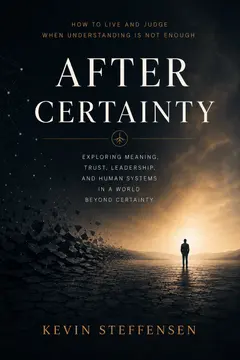
Book
After Certainty
How to Live and Judge When Understanding is not Enough
How to live and judge once explanation reaches its limits—judgment, responsibility, and participation without replacement frameworks.
View book

Book
When Others Become Leaders
What Enduring Influence Leaves Behind
What kind of leadership increases the capacity of others to act, care, organize, and lead beyond the originating person.
View book