book
Seeing Like a State: How Certain Schemes to Improve the Human Condition Have Failed
Scott, James C. Seeing Like a State: How Certain Schemes to Improve the Human Condition Have Failed. New Haven, CT: Yale University Press, 1998.
Related concepts4 concepts
Concept
Abstraction
Abstraction is mediation away from direct encounter: compression of complexity as systems scale, valued when it preserves accountability signal at the boundaries where behavior can still be redesigned
View Concept →
Concept
Distance
Distance names separation between decision and consequence, between action and its effects, between authority and those it governs. It becomes important as coordination extends beyond direct relational encounter—as scale grows and abstraction layers multiply. Distance makes harm harder to trace, feedback slower to arrive, and responsibility harder to locate. It helps coordination reach across space and time, enabling larger and more complex forms of collective action, but it thins the connection between choosers and those who live with the outcomes. As distance opens, action and reflection no longer meet in the same place; decisions travel while bodies receive the consequences; institutions record outcomes in ways that differ from how people experience them. Distance becomes built into the architecture of moral life at scale—not as failure but as structure. The question it raises is: how far does decision travel before consequence is felt? Who can see the full chain between policy and harm? Distance differs from mediation (routing through intermediaries) in that distance is the gap itself, while mediation is what fills or crosses the gap.
View Concept →
Concept
Harm
Harm names where cost lands when influence is exercised—who absorbs it, who is kept in view, and what displacement is treated as acceptable. It marks the lived consequence of action, authority, design, or coordination. The visibility dimension matters—who is harmed in particular, not on average? Can they name it? Can they respond? Does the system register it or treat it as acceptable loss? Harm continues while interpretation expands, briefings make harm legible without smaller, people can still tell when something is doing harm. The question harm raises—is harm unchanged outside while we analyze inside? When does naming harm substitute for reducing it? The failure mode—harm persists while moral work feels complete, delays continue after excellent postmortems, harm becomes statistical at scale. The restoration path—return to particular harms and people, check effects outside the room after briefings, stop when outcomes for people are unchanged, pair analysis with named remedy attempts, accept harm as inevitable without abandoning response.
View Concept →
Concept
Legibility
Legibility names the degree to which work, contribution, harm, or signal can be perceived and evaluated by those at distance—especially by those who grade, fund, allocate resources, or make promotion decisions. It becomes important because visibility shapes what gets valued, rewarded, and sustained. What becomes legible can be measured, managed, and integrated into formal systems; what remains illegible often goes unrecognized even when it is essential. Legibility helps coordination at scale by making expectations clear, progress trackable, and accountability visible. But uneven legibility is not the same as uneven value; legibility is a visibility structure, not a measure of worth. Legibility becomes dangerous when it substitutes for trust rather than serving it, when dashboards calm funders while field coordination narrows, when metrics answer anxiety rather than shared questions, when legibility demands consume the work they were meant to track. The question legibility raises is: is legibility serving trust or substituting for it? What work becomes invisible when only counted activity feels real?
View Concept →
Related books8 books

Book
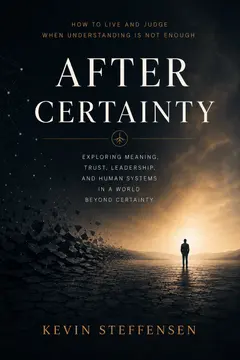
After Certainty
How to Live and Judge When Understanding is not Enough
How to live and judge once explanation reaches its limits—judgment, responsibility, and participation without replacement frameworks.
View book

Book
Coupling
Cohesion, Consequence, and the Architecture of Responsibility
A practical framework for seeing where systems are tightly joined, where they drift apart, and how those coupling choices shape accountability over time.
View book
Book
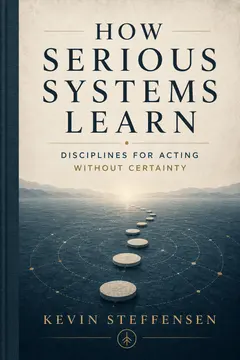
How Serious Systems Learn
Disciplines for Acting Without Certainty
A handbook for teams and institutions that need to learn in motion, improve under pressure, and make better decisions without waiting for perfect information.
View book
Book
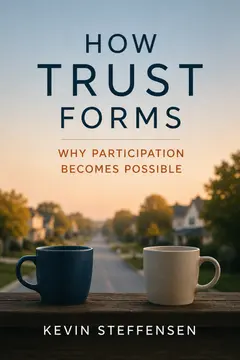
How Trust Forms
Why Participation Becomes Possible
How people become willing to participate with one another under uncertainty—beliefs, actions, outcomes, and the trust cycle.
View book

Book
Living in Sediment
How Structures Outlive Their Reasons
We live inside inherited systems built for constraints that no longer exist. When structures survive after their reasons disappear, meaning drifts—and the danger is forgetting the sediment is sediment.
View book

Book
When Incentives Become the Moral Language
How Systems Decide For Us When Judgment No Longer Scales
How metrics and incentives become the moral language of institutions when coordination outruns shared meaning.
View book
Book
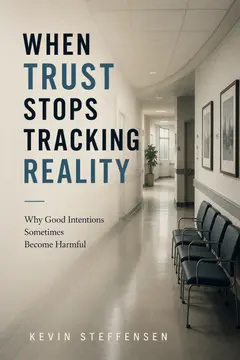
When Trust Stops Tracking Reality
Why Good Intentions Sometimes Become Harmful
How trust drifts from evidence when good intentions stop learning from feedback—through the fictional arc of Calder Family Health and real institutional patterns.
View book
Book
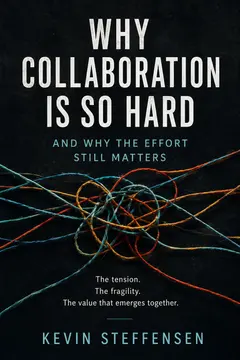
Why Collaboration Is So Hard
And Why the Effort Still Matters
Why joint work fails when incentives, trust, and shared understanding do not line up—and why the effort to collaborate still matters.
View book