
Situation
Temporary fixes becoming permanent
Emergency workarounds and exceptions stop reading as temporary; they become the normal way work gets done.
Recognition signals
- workarounds outlive the crisis they were created for
- new hires are trained on exceptions, not on the original standard
- rollback plans exist on paper but never get executed
Questions to ask
- Which temporary measures are still in place a year after the emergency ended?
- Who would notice if we restored the pre-crisis standard?
Counterbalances
- schedule explicit sunset dates for exceptions
- restore one visible correction loop leaders cannot bypass
Trajectory
Early signals
- leaders describe a measure as "just until things calm down"
- audits flag growing exception lists
Intensification
- exception requests become routine approval work
- metrics are redefined to match the workaround
Failure modes
- correction is treated as disruption rather than maintenance
Restoration paths
- retire exceptions in batches with named owners
- pair each exception with a review date and success criterion
Manifestations
software
- emergency deploy channels remain the default after incidents close
- temporary feature flags and bypass paths never revert
leadership
- crisis committees and emergency approvers stay on the org chart after calm returns
organizations
- onboarding teaches the workaround route instead of the standard that still exists on paper
- bureaucracy adds scar tissue after each failure without retiring old workarounds
- coordination machinery grows around exceptions instead of restoring standards
family
- a temporary house rule for a hard month becomes how everyone expects decisions to run
Related books7 books

Book
When Others Look to You
Renewal and Erosion in Leadership
A leadership field guide to how influence forms, how trust is renewed, and how erosion begins when responsibility drifts from practice.
View book
Book
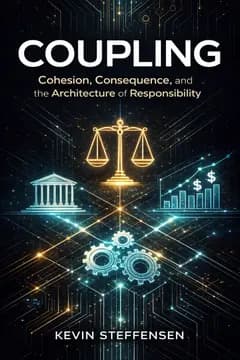
Coupling
Cohesion, Consequence, and the Architecture of Responsibility
A practical framework for seeing where systems are tightly joined, where they drift apart, and how those coupling choices shape accountability over time.
View book
Book
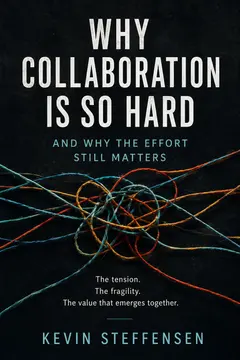
Why Collaboration Is So Hard
And Why the Effort Still Matters
Why joint work fails when incentives, trust, and shared understanding do not line up—and why the effort to collaborate still matters.
View book

Book
Boundary Conditions
A Literary Organizational Fiction Novel
Organizational fiction about invisible coordination work, authorization boundaries, and the cost of becoming indispensable inside complex systems.
View book

Book
Living in Sediment
How Structures Outlive Their Reasons
We live inside inherited systems built for constraints that no longer exist. When structures survive after their reasons disappear, meaning drifts—and the danger is forgetting the sediment is sediment.
View book

Book
The Relay
A Social Science Fiction Novel
A courier notices silence where explanations should be — and a civilization-sized blind spot emerges one perspective at a time. When circulation collapses, people reach for the nearest clear answer; the work is learning how to keep asking without that comfort.
View book
Book
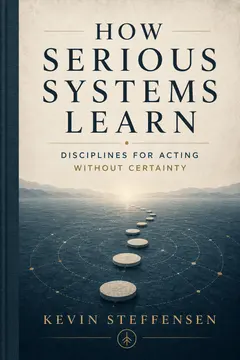
How Serious Systems Learn
Disciplines for Acting Without Certainty
A handbook for teams and institutions that need to learn in motion, improve under pressure, and make better decisions without waiting for perfect information.
View book