
Situation
The reliable person becomes the route
Work, exceptions, and rescue requests route toward one reliable person until that person becomes informal infrastructure—and absorbing the gap is praised as character.
Recognition signals
- everyone routes exceptions to the same name
- helping slowly becomes absorbing
- praise for reliability hides missing system capacity
Questions to ask
- What work is the system learning not to carry?
- Where has reliability become architecture?
Counterbalances
- name routing as a design choice, not only a personality trait
- transfer capacity instead of celebrating endless absorption
Active patterns2 patterns
Pattern
Responsibility Persists Beyond Control
Outcomes often exceed personal influence, yet participation, attention, and response still matter where contact exists. Innocence becomes an escape from participation when systems feel too large to steer. - Scale makes withdrawal feel rational - Formal authority ends while influence continues - Care is mistaken for omnipotence - Answerability is confused with blame Care survives after control disappears; responsibility is not the same as mastery. An executive who has left a role still shapes what others do through permissions and precedents they normalized.
View Pattern →
Pattern
Leaders Feel the Consequences
A decision creates cost, risk, or gain for people in a group. Where people decide and where costs land can separate. - Incentives favor visible wins over visible cost - In large settings, effects land unevenly - Distance makes harm easier to miss - Pushing pain downhill is easier Those who decide stay tied to what their choices do to others. If we called it, we sit with the fallout. Leaders feel the consequences on this; we're not sliding the pain down a layer.
View Pattern →
Related books3 books

Book
Boundary Conditions
A Literary Organizational Fiction Novel
Organizational fiction about invisible coordination work, authorization boundaries, and the cost of becoming indispensable inside complex systems.
View book
Book
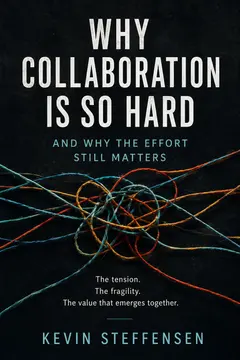
Why Collaboration Is So Hard
And Why the Effort Still Matters
Why joint work fails when incentives, trust, and shared understanding do not line up—and why the effort to collaborate still matters.
View book

Book
Coupling
Cohesion, Consequence, and the Architecture of Responsibility
A practical framework for seeing where systems are tightly joined, where they drift apart, and how those coupling choices shape accountability over time.
View book