
Situation
Responsibility outruns control
Care and answerability persist after the ability to steer outcomes has thinned; responsibility is not the same as mastery.
Recognition signals
- people remain answerable for effects they cannot fully direct
- control thins while obligation does not
- revising a judgment feels costly even when new information arrives
- finality compensates for uncertainty rather than contact with effects
- care survives after mastery disappears
Questions to ask
- What are you still answerable for that you can no longer steer?
- Where would revisability restore judgment without demanding false certainty?
Counterbalances
- practice responsibility as responsiveness to effects, not only control
- preserve revisability when finality would only protect comfort
Trajectory
Early signals
- scope of responsibility exceeds scope of influence
- people keep explaining because action under uncertainty feels unsafe
Intensification
- judgment hardens to compensate for what cannot be controlled
- care continues while agency thins
Failure modes
- responsibility collapses into guilt or performance without contact
- revisability is lost while obligation remains
Restoration paths
- name what can still be responded to even when it cannot be mastered
- stop when additional knowing no longer changes what responsibility requires
Manifestations
software
- an on-call engineer remains answerable for an outage shaped by architectural decisions they did not make
leadership
- a public official faces judgment for outcomes distributed across institutions
organizations
- a manager carries harm pathways that reports obscure until too late
family
- a caregiver remains responsible for a parent's decline they cannot reverse
Active patterns2 patterns
Pattern
Responsibility Persists Beyond Control
Outcomes often exceed personal influence, yet participation, attention, and response still matter where contact exists. Innocence becomes an escape from participation when systems feel too large to steer. - Scale makes withdrawal feel rational - Formal authority ends while influence continues - Care is mistaken for omnipotence - Answerability is confused with blame Care survives after control disappears; responsibility is not the same as mastery. An executive who has left a role still shapes what others do through permissions and precedents they normalized.
View Pattern →
Pattern
Revisability Preserves Judgment
Judgment remains necessary when certainty weakens; people still must weigh tradeoffs and consequences without a final frame to hide inside. Finality no longer stabilizes judgment, yet paralysis and dogma are both available failures. - New information threatens prior commitments - Groups confuse openness with weakness - Revision must be practiced without infinite deferral - Coherence pressures compete with contact with reality Revisability is what prevents judgment from hardening into dogma. A leader publishes what would change their mind—and acts on the answer when it arrives.
View Pattern →
Related books3 books
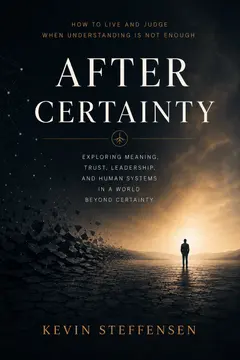
Book
After Certainty
How to Live and Judge When Understanding is not Enough
How to live and judge once explanation reaches its limits—judgment, responsibility, and participation without replacement frameworks.
View book
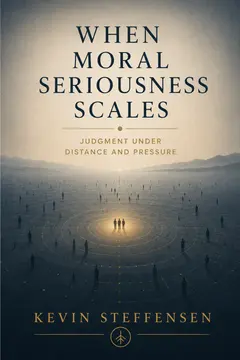
Book
When Moral Seriousness Scales
Judgment Under Distance and Pressure
An exploration of how moral responsibility changes under scale, speed, and institutional distance, and how to preserve humane judgment anyway.
View book

Book
The Relay
A Social Science Fiction Novel
A courier notices silence where explanations should be — and a civilization-sized blind spot emerges one perspective at a time. When circulation collapses, people reach for the nearest clear answer; the work is learning how to keep asking without that comfort.
View book