Person
Herbert A Simon
Nobel laureate in economics; bounded rationality, satisficing, and administrative behavior in organizations.
Why this matters
Simon grounds why judgment is always constrained—and why institutions must design for that fact.
Works3 sources
book
Organizations
March, James G., and Herbert A. Simon. Organizations. New York: Wiley, 1958.
View Source →
article
A Behavioral Model of Rational Choice.
Simon, Herbert A. "A Behavioral Model of Rational Choice." Quarterly Journal of Economics 69, no. 1 (1955): 99–118.
View Source →
book
Administrative Behavior: A Study of Decision-Making Processes in Administrative Organizations
Simon, Herbert A. Administrative Behavior: A Study of Decision-Making Processes in Administrative Organizations. 4th ed. New York: Free Press, 1997.
View Source →
Related concepts5 concepts
Concept
Attention
Attention names the scarce gate between signal and response. It becomes important whenever more reaches a person or institution than can be fully tracked. It helps preserve focus and timely response, but can fail when visibility metrics are mistaken for judgments about importance. In When Incentives Become the Moral Language, attention marks the domain where newsrooms still know some stories matter even if they will not perform—yet operational language shifted toward clicks, shares, and time on page. Audience behavior reflects habit, outrage, and placement, not the same thing as what the public needs for democratic judgment. It differs from bias because attention names the capacity itself; bias names the selective work performed through it.
View Concept →
Concept
Constraints
Constraints names the present-tense architecture of what can be done—rules, budgets, timelines, approvals, and technical ceilings. Good constraints channel behavior toward learning and accountability; poor constraints hide tradeoffs or displace consequence. It differs from constraint because constraints describes limits inside an operating system; constraint describes the originating pressure that once made a moral order necessary.
View Concept →
Concept
Finite perspective
Finite perspective names the condition under which all sight in this project begins. It becomes important whenever someone speaks as if their view were complete, neutral, or uninfluenced by position. It helps preserve humility, integration, and honest disagreement, but can fail when partial sight is treated as moral failure or when institutions demand omniscience from individuals. It differs from bias because finite perspective names the structural condition of partiality; bias names the selective work performed within it. It differs from trust because trust extends action beyond firsthand sight without pretending the extension erases partiality.
View Concept →
Concept
Judgment
Judgment names the capacity to decide when understanding is incomplete but harm, coordination, or responsibility will not wait. It becomes important whenever action must proceed under partial information and real consequence. It helps preserve proportionality, answerability, and room for revision, but can fail when judgment hardens into dogma, paralysis, or punitive finality. It differs from certainty because judgment accepts incomplete sight; it differs from preference because judgment weighs consequence beyond taste; it differs from optimization because judgment keeps contestability and human proportion in view; it differs from rule-following because judgment must still respond when rules lag reality.
View Concept →
Concept
Uncertainty
Uncertainty names the condition moral and social systems are built to navigate—the space where coordination must happen before truth is settled, where lives are fragmented and behavior must hold together under incomplete information. It becomes important because human action cannot wait for perfect knowledge; groups must decide, move, and coordinate even when the future is unclear, when disagreement is costly, when explanation cannot travel fast enough to settle disputes before consequences arrive. Uncertainty is not a problem to eliminate but a condition to navigate—the ground on which moral life operates. Certainty emerges as an adaptive response to uncertainty, compressing ambiguity into stable expectations so action can proceed. But uncertainty itself is neither failure nor freedom; it is the default state that requires coordination tools. The After Certainty project explores how to practice judgment, accountability, and responsiveness inside uncertainty rather than demanding that uncertainty be resolved before moral life can begin. The question uncertainty raises is: what uncertainty is this system trying to reduce? Is ambiguity dangerous because the stakes are genuinely high, or because failure now scales? Uncertainty differs from ignorance in that uncertainty is about incomplete information in contexts requiring action, while ignorance is simply lack of knowledge.
View Concept →
Related books6 books

Book
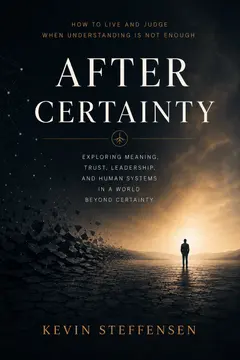
After Certainty
How to Live and Judge When Understanding is not Enough
How to live and judge once explanation reaches its limits—judgment, responsibility, and participation without replacement frameworks.
View book
Book
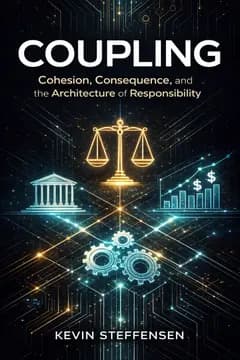
Coupling
Cohesion, Consequence, and the Architecture of Responsibility
A practical framework for seeing where systems are tightly joined, where they drift apart, and how those coupling choices shape accountability over time.
View book
Book
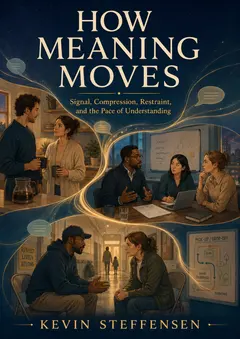
How Meaning Moves
Signal, Compression, Restraint, and the Pace of Understanding
Before people disagree, they interpret. How meaning forms through signal, compression, and restraint—long before anyone is obviously wrong, and often while the sentence is still forming.
View book

Book
Living in Sediment
How Structures Outlive Their Reasons
We live inside inherited systems built for constraints that no longer exist. When structures survive after their reasons disappear, meaning drifts—and the danger is forgetting the sediment is sediment.
View book
Book
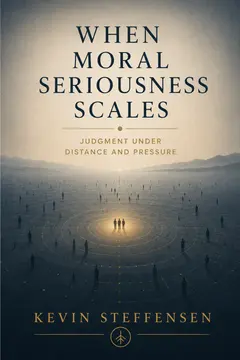
When Moral Seriousness Scales
Judgment Under Distance and Pressure
An exploration of how moral responsibility changes under scale, speed, and institutional distance, and how to preserve humane judgment anyway.
View book
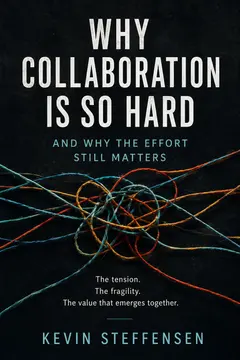
Book
Why Collaboration Is So Hard
And Why the Effort Still Matters
Why joint work fails when incentives, trust, and shared understanding do not line up—and why the effort to collaborate still matters.
View book