book
Drift into Failure: From Hunting Broken Components to Understanding Complex Systems
Dekker, Sidney. Drift into Failure: From Hunting Broken Components to Understanding Complex Systems. Farnham, UK: Ashgate, 2011.
Related concepts3 concepts
Concept
Coupling
Coupling names the strength of the link between what was decided and what later arrives. It becomes important when scale, abstraction, or delay lengthen the chain between decision and lived harm. It helps preserve learning and legitimacy, but can fail when dashboards stay green while frontline frustration grows. It differs from cohesion because coupling tracks action-to-effect attachment; cohesion tracks whether responsibility is clearly held. It differs from consequence-architecture because coupling describes the attachment; consequence-architecture describes intentional design of boundaries, feedback, and escalation.
View Concept →
Concept
Drift
Drift names slow misalignment—meaning drifts as it travels, role compliance replaces discernment, systems continue without admitting conditions have shifted. It becomes important when continuity masks thinning fit and inherited tools coordinate long after they stop persuading. It helps recognize strain before rupture feels sudden, but can fail when drift is mistaken for stability because the machinery still turns. It differs from inheritance because drift emphasizes loss of fit over time; inheritance emphasizes what persists. It differs from normalization because drift is the movement; normalization is drift settling into expected background.
View Concept →
Concept
Harm
Harm names where cost lands when influence is exercised—who absorbs it, who is kept in view, and what displacement is treated as acceptable. It marks the lived consequence of action, authority, design, or coordination. The visibility dimension matters—who is harmed in particular, not on average? Can they name it? Can they respond? Does the system register it or treat it as acceptable loss? Harm continues while interpretation expands, briefings make harm legible without smaller, people can still tell when something is doing harm. The question harm raises—is harm unchanged outside while we analyze inside? When does naming harm substitute for reducing it? The failure mode—harm persists while moral work feels complete, delays continue after excellent postmortems, harm becomes statistical at scale. The restoration path—return to particular harms and people, check effects outside the room after briefings, stop when outcomes for people are unchanged, pair analysis with named remedy attempts, accept harm as inevitable without abandoning response.
View Concept →
Related books2 books

Book
Coupling
Cohesion, Consequence, and the Architecture of Responsibility
A practical framework for seeing where systems are tightly joined, where they drift apart, and how those coupling choices shape accountability over time.
View book
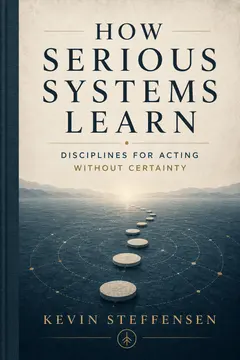
Book
How Serious Systems Learn
Disciplines for Acting Without Certainty
A handbook for teams and institutions that need to learn in motion, improve under pressure, and make better decisions without waiting for perfect information.
View book