
Song
Almost Completely True
Kevin Steffensen
Uneasy late-nineties art rock: badges, rating faces, and captchas accept an almost-you, while something that would not fit the question surfaces for a second and vanishes.
Brittle clean guitars, glitches, and ironic falsetto on Almost completely true stage legibility’s quiet violence.
Brittle clean guitars, glitches, and ironic falsetto on Almost completely true stage legibility’s quiet violence. A badge flickers red then green within tolerance; lunchtime feedback has no face for I do not know, so fine wins; consent checkboxes proceed until something goes wrong. When Incentives Become the Moral Language and When Interpretation No Longer Matters verify metric and procedure theater. Compression-loses-the-person, stale-representation, and machine-perspective match the camera that wants expression removed. The remainder that almost fit inside the question is the After Certainty signal the system cannot record.
- Languages
- en
Recordings
- Almost Completely TruePrimary
4:25 · chirp-hawk v6
4:53 · chirp-auk v4.5-all
Related patterns3 patterns
Supporting · Obscuring
Compression Loses the Person
Human systems require simplification to coordinate at scale, but the details removed by compression may contain the morally or practically decisive fact. - Scale requires compression - Decisive particulars may be what compression removes When complexity is compressed into categories, metrics, roles, averages, summaries, or stories, the person or particular case can disappear from view.
View Pattern →
Supporting · Obscuring
Results Conceal the Game
Scores, profits, elections, rulings, promotions, failures, and dashboards are easy to communicate and therefore become explanations rather than evidence. - Results travel easily - The field that produced them does not Visible outcomes and metrics reveal that something happened, but often conceal the broader field of causes, constraints, costs, and meanings that produced it.
View Pattern →
Pattern
Finality Compensates for Uncertainty
When uncertainty feels intolerable, people reach for closure—harsh judgment, confident speech, or premature alignment. Severity and certainty provide emotional relief where epistemic stability no longer exists. - Ambiguity feels morally unstable - Confidence signals competence - Revision is delayed to preserve calm - Groups reward decisive tone over accurate scope Finality provides relief where certainty no longer exists; insecurity often sits underneath severity. A leader announces an irreversible policy so the room can stop inhabiting doubt together.
View Pattern →
Related concepts5 concepts
Concept
Legibility
Legibility names the degree to which work, contribution, harm, or signal can be perceived and evaluated by those at distance—especially by those who grade, fund, allocate resources, or make promotion decisions. It becomes important because visibility shapes what gets valued, rewarded, and sustained. What becomes legible can be measured, managed, and integrated into formal systems; what remains illegible often goes unrecognized even when it is essential. Legibility helps coordination at scale by making expectations clear, progress trackable, and accountability visible. But uneven legibility is not the same as uneven value; legibility is a visibility structure, not a measure of worth. Legibility becomes dangerous when it substitutes for trust rather than serving it, when dashboards calm funders while field coordination narrows, when metrics answer anxiety rather than shared questions, when legibility demands consume the work they were meant to track. The question legibility raises is: is legibility serving trust or substituting for it? What work becomes invisible when only counted activity feels real?
View Concept →
Concept
Compression
Compression reduces moral complexity for transmission at scale. Collapse gives way to compression, compression produces stabilization, and stabilization hardens into inheritance. When populations must coordinate across distance and strangers must share rules, compression lets expectations travel—law narrows discretion so the same words will be read tomorrow, canon fixes meaning so provinces can align. Compression is adaptation under pressure—instability demands it before truth is settled, acceptable interpretation shrinks while exposure widens. At its best, compression preserves coordination when full discernment is too costly; at its worst, tools built to compress instability begin to constrain adaptation, and compression outlives the conditions that required it.
View Concept →
Concept
Stale Representation
A compressed summary of system state that was accurate enough when produced and misleading by the time it governs action. Stale representation appears in dashboards, compliance reports, model cards, filings, and risk metrics. It is a coupling failure: consequence changes faster than the return path that would force revision at a redesign-capable boundary.
View Concept →
Concept
Machine perspective
Machine perspective names a partial view assembled from data, architecture, and deployment—not oracle, not mere noise, but useful extension that requires answerability. Models read corpora, logs, or scans faster than teams can in the time available, summaries feel like someone already did the second pass, scores substitute for judgment in court or clinic. Hospital chart models summarize visits but invent referrals never made, engagement-optimized rankings become attention budgets at scale, families trust fluent online answers as if firsthand verification were unnecessary. Machine perspective connects to finite perspective (all sight is partial), bias (architecture of partial sight), trust (when to rely on outputs), judgment (when human verification is required), and accountability (who answers for deployment choices). Fluent prose or confident scores arrive faster than human second passes can check, automation bias lets humans stop questioning because syntax looks authoritative, debiasing talk treats partial sight as bug to eliminate rather than design for. What partial view did we just add to the decision—and who is answerable for letting it count? Where does machine sight extend reach, and where does it outrank what it was never built to carry? The restoration path—integrate model output as one sketch among sketches, not the terrain; keep clinicians, tenants, and dissenting engineers in the co-creation loop; require roles that answer for deployment choices.
View Concept →
Concept
Certainty
Certainty names the compression of choice and ambiguity into stable expectation—roles, law, and moral systems that make behavior predictable enough to coordinate under pressure. It is not truth discovered once and for all, but adaptation hardened under instability. It becomes important when coordination breaks down faster than explanation can travel, when seasons will not wait for debate, when strangers must act together without shared context. Certainty enables collective action by reducing the decision space, making tomorrow recognizable from yesterday, allowing people to act together even when they do not agree on reasons. It becomes dangerous when it outlives the conditions that first made it workable—when compression persists after instability has passed, when revision begins to feel like betrayal, when systems still run while the fit between structure and reality thins. It differs from conviction in that certainty is social and structural, while conviction is personal belief.
View Concept →
Related books3 books

Book
When Incentives Become the Moral Language
How Systems Decide For Us When Judgment No Longer Scales
How metrics and incentives become the moral language of institutions when coordination outruns shared meaning.
View book
Book
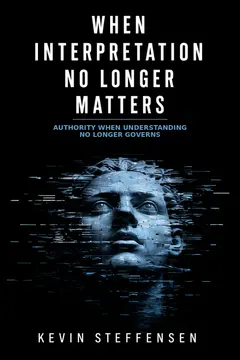
When Interpretation No Longer Matters
Authority When Understanding No Longer Governs
When interpretation loses public consequence while understanding persists—and what kinds of authority remain when hearing no longer becomes legitimacy, accountability, or repair.
View book

Book
Reality Pushes Back
What Happens When Our Models Meet the World
A narrative pattern language for the After Certainty corpus. Through ordinary life in one town across roughly fifteen years, twelve supporting patterns— organized by perception, power, time, and contact—show how every useful model leaves something out, and how reality answers through materials, people, and consequences the model did not contain.
View book