
Situation
Leadership reproduces under pressure
Who gets copied, promoted, and imitated under stress shapes the next round of leaders before anyone names the succession.
Recognition signals
- crisis behavior becomes the template for "how we lead here"
- the person who held the center during pressure gets fast-tracked without debate
- newcomers imitate emergency norms that were never retired
- tradeoffs made under urgency become the story of what good leadership looks like
- succession conversations assume the last crisis style is the standard
Questions to ask
- Which leadership habits from the last pressure cycle are we now selecting for?
- Who learned to lead by copying behavior that was meant to be temporary?
Counterbalances
- name which emergency behaviors sunset before the next promotion cycle
- pair succession decisions with examples from calm weeks, not only crises
Trajectory
Early signals
- one person's crisis moves get repeated as best practice
- attention coalesces on a single escalation point
Intensification
- emergency precedent hardens into governance language
- dissent thins around whoever held the center during the rush
Failure modes
- the next generation of leaders inherits narrowed correction channels
- scale amplifies habits that worked once under abnormal conditions
Restoration paths
- document what was temporary before it becomes training material
- rotate who holds the center when pressure drops
Manifestations
software
- the engineer who shipped the hotfix becomes the default approver for all risky changes
leadership
- crisis committees stay on the org chart and shape who gets promoted next
organizations
- onboarding teaches the workaround route instead of the standard on paper
family
- the parent who managed the hard month becomes the permanent decider for that domain
Active patterns3 patterns
Pattern
Leadership Reproduces Itself
A group has settled on visible leadership habits—what gets rewarded, what gets punished, what gets ignored. People read those habits as personal style and as the local picture of “how things work here.” That picture travels. - Copying is faster than being taught step by step - People credit what they can see, not hidden setup - New members learn from example before they learn from rules - What gets rewarded and repeated is what gets copied People copy leadership habits and norms. That shapes how the next round of leaders forms. "Watch what gets praised in public—that's what people will imitate. Leadership reproduces itself through what last looked…
View Pattern →
Pattern
Leadership Coalesces
A group repeatedly turns to the same person when decisions are unclear. On paper, who decides is unclear. Or the role is assigned, but the work still slides to the same person. - Repetition builds familiarity and trust - Speed favors the usual decision path - Dodging unclear ground reinforces habit - Informal authority can feel easier than formal handoff The group defaults to the same person. That can happen even when no formal authority exists. It's not on the chart, but leadership coalesces around you—every time it's fuzzy, the call still comes back to you.
View Pattern →
Pattern
Examples Accumulate
A leader reacts to a mistake, competing pressures, or unclear ground in a shared setting. People need to know what counts as OK. Clear rules are missing or thin. - People watch others when things are unclear - What people see moves faster than written rules - Early reactions set what feels allowed - Silence and emphasis both send a signal What the leader does—especially under pressure—quickly sets what others treat as acceptable. Careful what we model in the room; examples accumulate faster than anything we post on the wiki.
View Pattern →
Related books2 books

Book
When Others Look to You
Renewal and Erosion in Leadership
A leadership field guide to how influence forms, how trust is renewed, and how erosion begins when responsibility drifts from practice.
View book
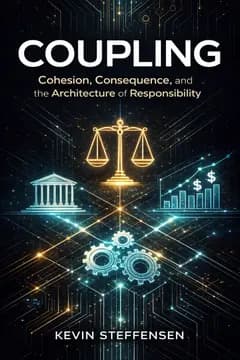
Book
Coupling
Cohesion, Consequence, and the Architecture of Responsibility
A practical framework for seeing where systems are tightly joined, where they drift apart, and how those coupling choices shape accountability over time.
View book