
Pattern
Meaning Drifts Over Time
Interpretation slowly changes as memory, context, and repetition accumulate.
People revisit events after additional conversations, outcomes, and memory updates. Interpretation is treated as fixed even though context keeps changing. - Memory gets rebuilt over time, not replayed exactly - Repetition favors convenient summaries - New context changes what earlier events seem to mean Interpretation slowly changes as memory, context, and repetition accumulate. Meaning drifts over time and rarely stays where it first landed.
Setup
People revisit events after additional conversations, outcomes, and memory updates.
Problem
Interpretation is treated as fixed even though context keeps changing.
Forces
- Memory gets rebuilt over time, not replayed exactly
- Repetition favors convenient summaries
- New context changes what earlier events seem to mean
Observation
Interpretation slowly changes as memory, context, and repetition accumulate.
Example
Meaning drifts over time and rarely stays where it first landed.
At a glance
What it does
Interpretation slowly changes as memory, context, and repetition accumulate.
Why it matters
Interpretation is treated as fixed even though context keeps changing.
Key risk
retellings of the same event steadily change emphasis or blame
Counterbalance
revisit source wording rather than the latest retelling
Recognition signals
- retellings of the same event steadily change emphasis or blame
- new outcomes rewrite what earlier moments seemed to mean
- convenient summaries replace messy original exchanges
- people disagree more even when no new facts arrived
- today's sentence gets heard through yesterday's story
Questions to ask
- How has the story of this moment changed since it first happened?
- What new context is doing retrospective work on the old exchange?
- Which summary became easier to repeat than accurate to revisit?
Counterbalances
- revisit source wording rather than the latest retelling
- note what new outcome or conversation changed the frame
- keep one provisional label on old events instead of locking a moral verdict
Trajectory
Early signals
- events get retold after additional conversations or outcomes
- memory smooths complexity into repeatable narrative
Intensification
- repetition makes the current version feel like what always happened
- new context retroactively sharpens or softens earlier meaning
Failure modes
- people argue from different evolved versions of the same afternoon
- drift makes repair harder because no one shares the same origin story
Restoration paths
- return to what was actually said near the time, not the latest summary
- name how context changed before treating drift as truth
Manifestations
family
- an old comment gains new injury as later disappointments pile up
- the echoed ordinary sentence carries more weight years later in retelling
leadership
- past decisions get re-read through present outcomes and legitimacy
- organizational folklore replaces contact with what was actually decided
organizations
- incident postmortems slowly become stories about who people are
- alignment narratives drift away from the exchanges that started them
Appears in chapters
- Part III — Inherited Certainty
- Chapter 7 — Medieval Re-Adaptation
- Chapter 10 — The Moment Before Failure
- Conclusion — Recognition Without Instruction
- Chapter 7 — Memory, Ritual, and Tradition
- Bridge — What Traditions Carry
- Chapter 10 — Cultural Sediment
- Prologue — September Is Not Seven
And 24 more chapters with this association.
Related books2 books
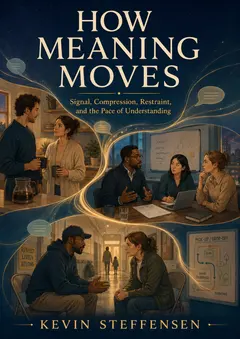
Book
How Meaning Moves
Signal, Compression, Restraint, and the Pace of Understanding
Before people disagree, they interpret. How meaning forms through signal, compression, and restraint—long before anyone is obviously wrong, and often while the sentence is still forming.
View book
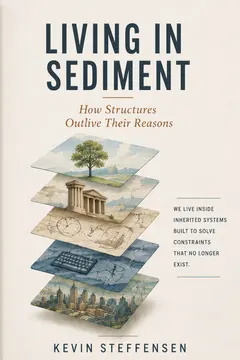
Book
Living in Sediment
How Structures Outlive Their Reasons
We live inside inherited systems built for constraints that no longer exist. When structures survive after their reasons disappear, meaning drifts—and the danger is forgetting the sediment is sediment.
View book
Related songs
Song
Dead Reasons
Thick nineties grunge: inherited rooms, yearly paint over spreading cracks, and a raw shout that dead reasons still hold the walls long after anyone recalls why they were built.
View Song →
Song
Dead Reasons
Thick nineties grunge: inherited rooms, yearly paint over spreading cracks, and a raw shout that dead reasons still hold the walls long after anyone recalls why they were built.
Song
It Moves Through You
Euphoric-then-dark synth-pop: three voices pass kindness, fear, custom, and power through each other until inheritance becomes a conscious choice about what keeps moving.
View Song →
Song
It Moves Through You
Euphoric-then-dark synth-pop: three voices pass kindness, fear, custom, and power through each other until inheritance becomes a conscious choice about what keeps moving.
Song
PASA
Nocturnal Latin electronic with Spanish vocals and trumpet: PASA chants laughs, fears, and mother-phrases traveling hand to hand, refusing to return unchanged.
View Song →
Song
PASA
Nocturnal Latin electronic with Spanish vocals and trumpet: PASA chants laughs, fears, and mother-phrases traveling hand to hand, refusing to return unchanged.
Song
The Grain Remains
Hypnotic seventies space rock: white paint, sleeping levels, and a sparse refrain that the grain remains under every closed line, filled hole, and measured wall.
View Song →
Song
The Grain Remains
Hypnotic seventies space rock: white paint, sleeping levels, and a sparse refrain that the grain remains under every closed line, filled hole, and measured wall.