Concept
Formation
Formation names the domain where measurable outcomes replace developmental judgment in schools. Education exists to form human beings
Formation names the domain where measurable outcomes replace developmental judgment in schools. Education exists to form human beings—not only transmit information but build judgment, character, attention, and restraint. Saying "scores improved" closes the meeting while "this student is growing in ways the test cannot capture" invites skepticism. Educators carry moral residue when metric pressure conflicts with developmental judgment standards cannot name.
Recognition signals
- schools say scores improved closes the meeting while growing in ways the test cannot capture invites skepticism
- instruction orients toward tested content while untested formation shrinks
- teachers are evaluated as score technicians while asked to form persons
- report cards look fine while parents sense missing attention, integrity, and common life
- data-driven and student-centered converts formation into service delivery
Questions to ask
- What developmental judgment do rubrics undercount that educators perceive daily?
- When measurement becomes default moral language, what habits never become data?
- Who cannot own the whole child in public terms across competing stakeholders?
Counterbalances
- honor off-spreadsheet work in evaluation and institutional speech where possible
- separate accountability for inequity and basic skills from claims about character formation
- give teachers language to name growth metrics miss without career penalty
Trajectory
Early signals
- report cards captured part of the work; the rest lived in classrooms and corrections
- each stakeholder demands evidence that its priority was served
- standardized testing, graduation rates, and rankings drive measurable language
Intensification
- test preparation crowds out discussion; counseling loads grow; pastoral care becomes extracurricular
- a successful school is defined by scores and rates that travel across audits
- metric pressure conflicts with developmental judgment as accumulating moral residue
Failure modes
- formation is practiced locally, rarely owned publicly
- curiosity, courage, restraint, and slow judgment stay invisible to proficiency bands
- education is treated as a positional good rather than a shared developmental task
Restoration paths
- institutions admit standards are not formation in public accountability speech
- classrooms protect disagreement practice and habit-building rubrics do not name
- data-driven claims are paired with developmental accounts boards can hear
Manifestations
leadership
- principals answer to districts measured by cohort graduation and test performance
- school boards close meetings on score gains while developmental claims invite skepticism
organizations
- public school ratings turn formation into competition across unequal communities
- teachers spend a year on habits no rubric names while evaluated as score technicians
politics
- legislatures tie funding and intervention to standardized exam accountability
- international benchmarks compress formation into comparison regimes
family
- parents sense something essential missing in attention and integrity while report cards look fine
Appears in chapters
- Chapter 1 — Life Under Constraint
- Chapter 5 — Shared Conditions, Not Shared Revelation
- Beliefs Become Visible
- Introduction — Learning to See
- Chapter 1 — The Experiment I Had Never Tried
- Chapter 3 — The Limits of Seeing Alone
- Bridge — The Practices We Build Around Our Limits
- Chapter 4 — What Attention Makes Visible
And 31 more chapters with this association.
Related books3 books

Book
When Incentives Become the Moral Language
How Systems Decide For Us When Judgment No Longer Scales
How metrics and incentives become the moral language of institutions when coordination outruns shared meaning.
View book

Book
When Others Look to You: Companion Edition
Forming, Renewing, Eroding, Repeating
How leadership influence forms, renews, erodes, and repeats across the full cycle of responsibility in practice.
View book
Book
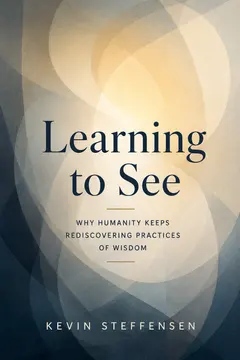
Learning to See
Why Humanity Keeps Rediscovering Practices of Wisdom
A comparative inquiry into how scientific, philosophical, psychological, and spiritual traditions develop practices that help people notice more honestly and live with uncertainty—without claiming those traditions are secretly the same.
View book