A Map of the Movement
Skip to chapter textPart I — What Arrives First
A Map of the Movement
The first three chapters have stayed close to the earliest movement of meaning.
Something catches attention before the words have fully settled. The mind completes what remains unfinished. A person then decides—sometimes consciously, often not—whether the interpretation can remain open long enough for contact to change it.
Those movements rarely occur alone.
A signal draws attention because an interpretation is already beginning to form. A gap invites completion because language cannot carry everything surrounding it. Pressure speeds that completion. History changes what a present sentence resembles. Repetition then teaches people what they should expect to hear next.
Signal, compression, restraint, connection, and pace move across the whole map. They are forces rather than stages. The named patterns describe recurring forms those forces take when meaning begins, fills its gaps, changes under pressure, reopens or hardens, and begins shaping what people notice next. Reachability sits outside the pattern list because it names a later condition: whether revised understanding still has somewhere to land.
Connection is the ongoing relationship or consequence that keeps lives coupled. Contact is remaining close enough to what was said and what is unresolved for interpretation to be revised. Reachability is whether later truth can still matter after a reading has hardened.
The patterns in this book are grouped into five clusters:
Formation names how interpretation begins.
Completion names how missing meaning is supplied.
Movement names how interpretation changes under pressure and through time.
Resolution names what allows meaning either to reopen or harden.
Reinforcement names how an earlier interpretation begins shaping what people notice later.
These are not stages that every conversation follows in order. Several may be operating at once. A sentence can carry an early signal, awaken an old story, acquire institutional weight, and begin reinforcing itself before anyone in the room believes a decision has been made.
The map below is therefore not a process diagram. It is a way of seeing relationships among the forces the chapters follow.
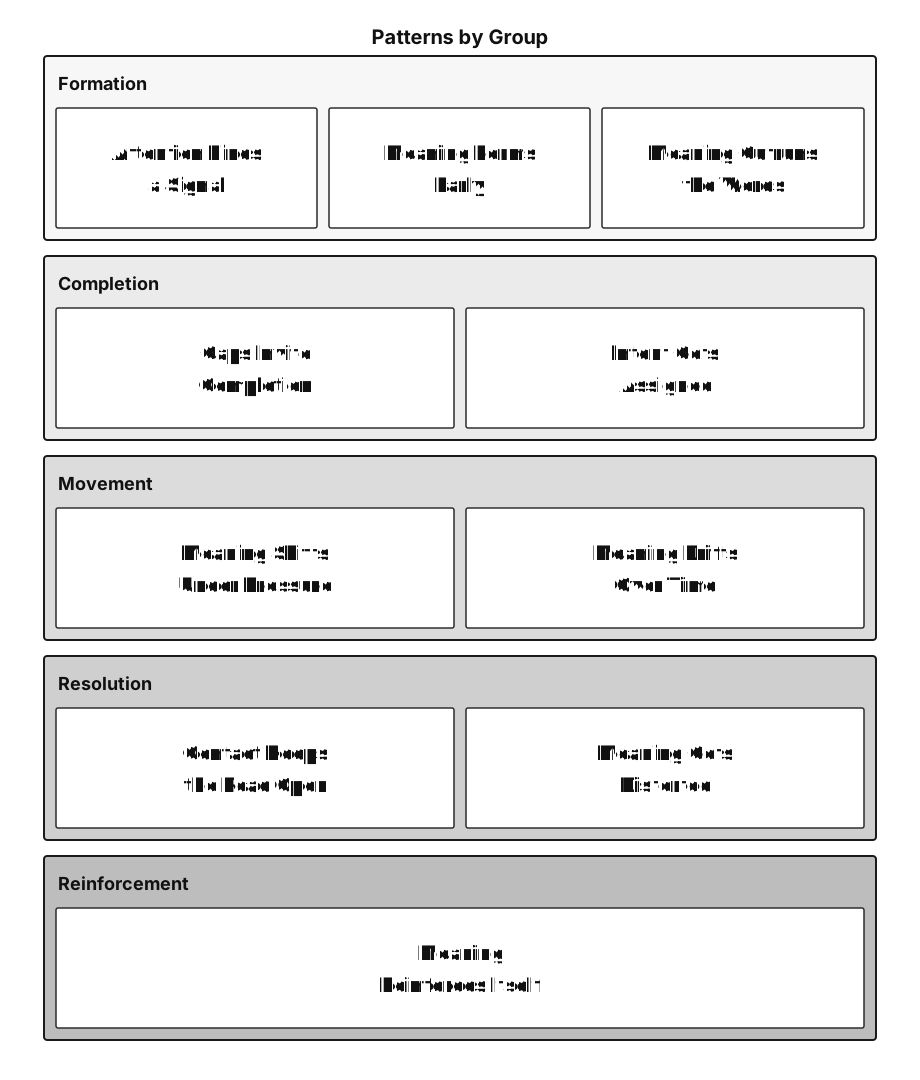
Some patterns have already appeared directly. Others have been present at the edges of the scenes and will become more visible in the chapters ahead.
The map will matter less as something to remember than as something to return to. Its purpose is not to classify every conversation correctly. It is to help notice when a familiar movement has begun before certainty makes that movement difficult to see.